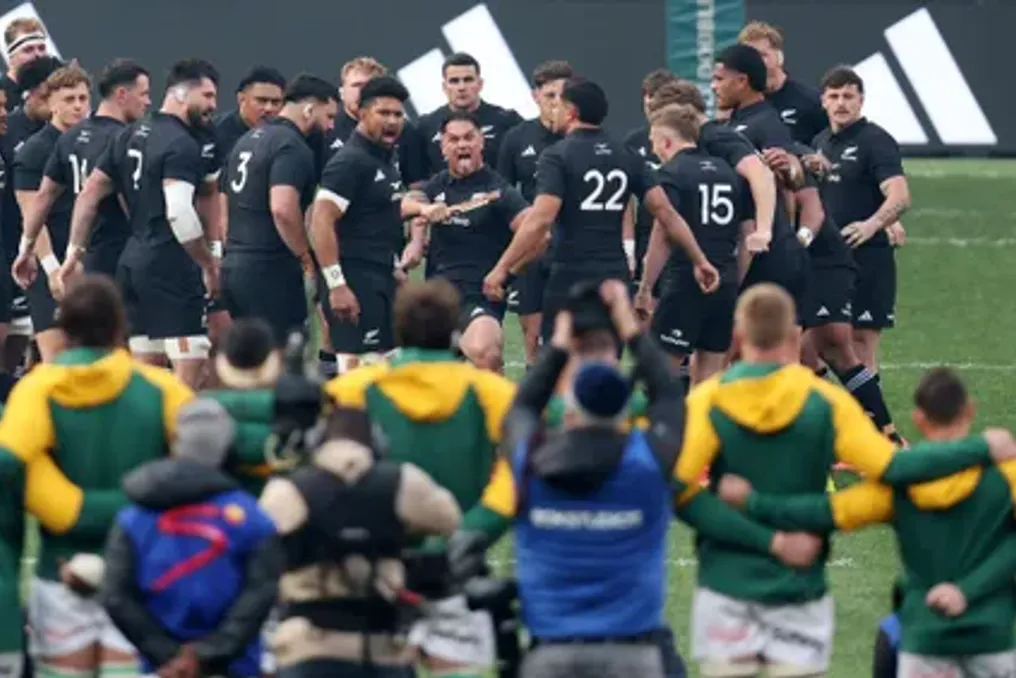
The Significance of Springboks' Victory Over New Zealand for World Cup Preparation
Read more
IOL
iol.co.za

The Significance of Springboks' Victory Over New Zealand for World Cup Preparation

Despite the South Africa loss to New Zealand by a score of 3:1 being a significant achievement that allowed Rassie Erasmus to gain tactical insights and time to prepare for the upcoming World Cup, the true value of this victory may only be revealed in thirteen months, at the tournament in Australia.

The victory over an old rival in such a convincing manner cannot be underestimated. This win is valued higher than winning a Rugby championship title and is comparable to the series of matches against the British and Irish Lions, only surpassed by a World Cup victory. Thus, the series of victories over major rivals holds immense importance for Rassie Erasmus.

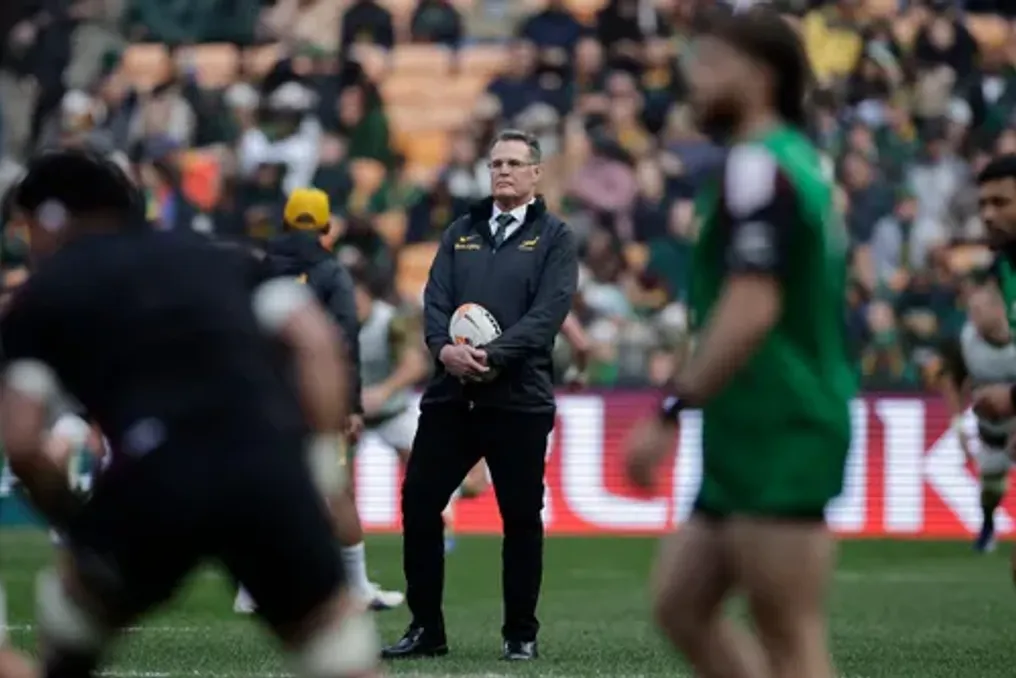
Having secured this trophy at the SA Rugby office in Cape Town and cemented the monumental victory, the coach can now fully concentrate on building the campaign for Australia 2027. During the RGR (Rugby’s Greatest Rivalry) series, Erasmus managed to answer many questions, gaining a clearer picture of the players who are likely to make the World Cup squad, as well as those aspects of the game that still require refinement. Importantly, the victory provided him with the opportunity to assess the reserve squad.

Most of the RGR stars will likely be in attendance in Perth on Sunday, September 27th, to watch the refreshed team battle the Wallabies. The success also gives Erasmus the option to keep some heroes—especially those over 30, of whom there are many—at home during the trip to Europe for the November World Cup, where the Boks will play Ireland, France, and Italy, concluding the series in Twickenham.

It is worth recalling Erasmus's cautious comments regarding the World Cup shortly before it began, after the victory over England at Ellis Park on July 4th. He was diplomatic, essentially stating that the Springboks would evaluate the tournament as it unfolded. However, they achieved victories over England, Scotland, and Wales. Nevertheless, the motivation was never to achieve the best position for November; the goal was to achieve combat readiness for the confrontation with the All Blacks.

A crucial point is that next year will host a full Rugby Championship, not a mini-version as is often the case in the year of the World Cup. This means the Boks, All Blacks, Argentina, and Australia will each play six matches, all taking place just a few months before the start on October 1st in Sydney. Erasmus needs to focus specifically on this Rugby Championship.

To do this, he cannot afford to overload his top players in an exhausting end-of-year tour. These players also have club commitments, whether playing in Japan or in the United Rugby Championship. The Sharks, Stormers, Lions, and Bulls teams naturally want their share, and the Springboks might be involved in action in October for the third round of the new URC.

The Boks team is entitled to a mandatory eight-week break in the season. Sharks coach JP Pietersen has designated February and March as the ideal time for the Springboks to rest, and the other three South African franchises could do something similar. However, before Boks fans start reacting negatively to the idea of canceling the World Cup in November, it will never happen under Erasmus's leadership.

Boks has a very deep squad, and the reserves possess a great desire. These players desperately strive to make the World Cup roster, and every opportunity to prove themselves must be utilized. A prime example was the Boks' 42-18 victory over Scotland at Loftus Versfeld in July. Erasmus formed a completely new team for that match after his main players defeated England the previous week. The Scots played with a full squad and were one of the best teams in recent years, but the second Boks team played with confidence and quality to secure the win.

The players who participated in this match will likely bear the brunt of the workload during the November tour, alongside others vying for a spot in the squad. Among the wingers are Ben-Jason Dixon, Cameron Hanekom, Elraig Louw, Evan Russ, Vincent Tsituka, Kobus Wiese, and Roan Vanter, some of whom may also play as playmakers. In the front row are Carlu Seedi, Zack Potten, Boan Vanter, Marnus van der Merwe, Jan-Hendrik Vessels, Johan Grobbelaar, and Ntutuko Mchunu. And among the backline are Morne van den Berg, Sebastian de Clercq, Canaan Moody, Andre Esterhoizen, Embros Papier, Quan Horn, Grant Williams, Edvil van der Merwe, and Aphelele FASSI. This is an impressive squad. Do not be surprised if this group secures another trophy for the Boks in November.
Similar stories

Test match between Springboks and Wallabies in Perth seen as preparation for the 2027 Rugby World Cup playoffs
Read more
iol.co.za

Test match between Springboks and Wallabies in Perth seen as preparation for the 2027 Rugby World Cup playoffs

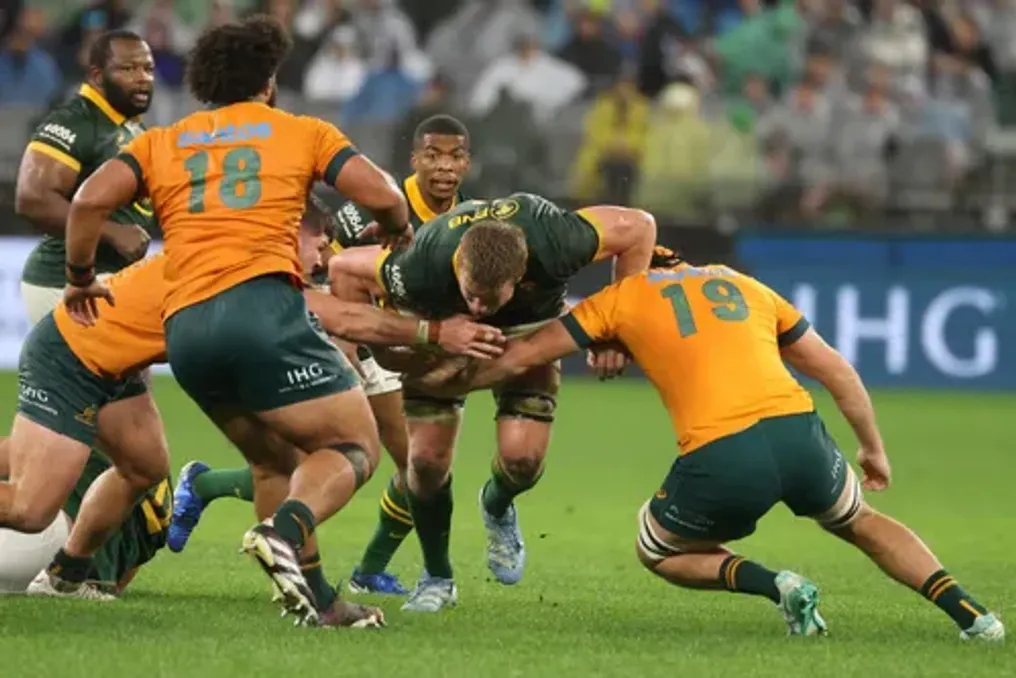
The upcoming test match between the Springboks and the Wallabies in Perth provides the Springboks team with an opportunity to conduct practical training ahead of the 2027 Rugby World Cup playoffs.

Despite the immediate goal of winning away against the Wallabies, the coaching staff under Rassie Erasmus is already analyzing all logistical and game details in anticipation of defending the title next year in Australia.

The Springboks are scheduled to return to this venue in October 2027, where they will face Romania in the third group match of the World Cup, making this test match a strategic operational rehearsal.

The group match itself is expected to be predetermined, as the Boks are likely to easily defeat the Romanian team. However, it is the first playoff match in Perth that will command the full attention of the Springboks.

Since the Springboks are likely to finish first in Group B, they will face the best team that finished third in Groups D, E, or F in the Round of 16. Siya Kolisi's team is expected to meet one of the teams from Japan, Samoa, or Tonga in this match before a possible quarter-final clash against their long-time rivals, the All Blacks.

Playing in Perth next Saturday allows the Boks to adapt in advance to the specific environmental conditions and logistical features of the city. Furthermore, Western Australia has a large South African community, and the upcoming match will give the Boks insight into the loud support in 'Perthfontein' that they might expect in 2027.

When South Africa meets Romania next year, as well as whoever awaits them in the Round of 16, the opponents may differ, but the environment will remain the same. By conducting rehearsals at the stadium, hotels, and training facilities now, Erasmus ensures that his team eliminates unknown variables, striving to reach peak form by the start of the main World Cup stage.

In the World Cup campaign, where success is determined by minor advantages, this early reconnaissance in Perth could prove to be a subtle yet decisive edge.

Springboks demonstrate growing superiority over All Blacks in series of matches
Read more
iol.co.za

Springboks demonstrate growing superiority over All Blacks in series of matches

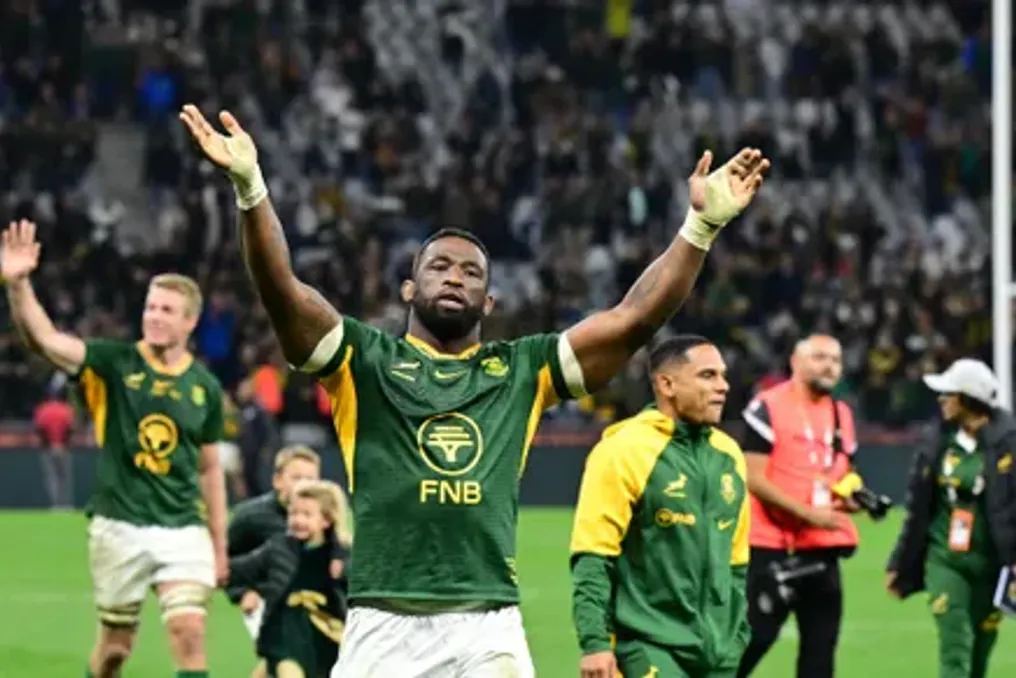
Springboks captain Siya Kolisi and his teammates achieved an impressive result against the All Blacks led by Russell Erasmus, further solidifying the team's dominance over their arch-rival.

The triumphant series for the Springboks, with a score of 3:1 against the All Blacks, revealed a significant gap between these two Southern Hemisphere giants. After the fourth test in the greatest rugby rivalry in Baltimore, where the world champions won 43:28 and secured their first trophy, it is becoming increasingly difficult to claim that these two teams are evenly matched.

The Boks are now operating at a different level, and even the mighty representatives of New Zealand are struggling to keep up. To win three consecutive matches against the All Blacks requires a special team, and this is exactly what the Boks did, concluding the series after a loss in the first match at Ellis Park in August. However, three dominant performances, backed by immense squad depth, allowed them to defeat their bitter rivals.

Squad depth is the defining advantage of the Springboks

What makes the defeat of the world's second-ranked team even more significant is that in the last 10 encounters, the Springboks have won eight times, while the All Blacks have managed only two victories—one in Auckland and one in Ellis Park.

Meanwhile, the Boks have dominated them, especially in the match where they crushed the team 35:7 in Twickenham, the 43:10 victory in Wellington, and the latest win in Baltimore. This indicates that the evolution of the Springboks machine has surpassed the development of the mighty black team, and they are currently dominating their competitors. It is almost unheard of for the New Zealanders to lose three consecutive matches to the same team, let alone eight out of the last ten meetings against them.

However, this is the current situation between the two sides. And the most worrying thing is that in none of the Greatest Rivalry matches were the Boks playing at their best level. Issues such as lineup changes due to injuries, uncharacteristic errors, inability to convert numerous attacks in the 22-meter zone into points, and a high number of penalties slowed down the Springboks at various times. Nevertheless, even making these mistakes, the world champions find a way to win.

This is what currently distinguishes the teams: the depth of the Boks' squad, the ability of all players to fulfill any role, and the quality of that depth. New Zealand has failed to catch up over four tests, and injuries have severely undermined them, with the loss of captain Ardie Savea in the third match likely being the most significant. South Africa has shown them how to cope and win despite various changes, and this kind of depth is currently unprecedented in world rugby. The task now is to continue moving in this direction. Erasmus has demonstrated that they can change tactics and still beat the best in the world.

A warning for the 2027 World Cup

Before the matches against the Wallabies and Italy, before they meet France and Ireland in the Nations Cup, opportunities open up for further squad experimentation from Erasmus and his management. If they manage to include players such as Paul de Villiers, Cameron Hanekom, Johan Grobbelaar, Jan-Hendrik Vessels, Morne van den Berg, Ntutuku Mchunu, Zack Porten, Ben-Jason Dixon, Ethan Hooker, and Edwill van der Merwe, it will put the Boks in an even stronger position ahead of the 2027 Rugby World Cup.

The Boks have already won the World Cup, defeated the All Blacks on home soil, dominated them in South Africa, and crushed them on neutral ground. More importantly, they did this with different combinations, different players, and under different circumstances. Perhaps this is the biggest wake-up call for the rest of the world: this Springboks team is not just beating the All Blacks—it is building sustainable dominance over them, making it a dangerous contender. Currently, the New Zealanders are chasing the world champions, and Erasmus and his management will want to maintain this state for many years to come.

The rivalry between the Springboks and All Blacks remains the greatest in rugby due to mutual respect
Read more
iol.co.za

The rivalry between the Springboks and All Blacks remains the greatest in rugby due to mutual respect

Despite the rivalry between the Springboks and the All Blacks being arguably the greatest in world rugby, respect between the players and teams is maintained even after the match concludes.

Unlike many other sporting confrontations where players might avoid interacting after the game, the opposite occurs in this rivalry. Although players fight fiercely during the 80 minutes of play, and coaches sometimes exchange sharp remarks at press conferences, the atmosphere quickly normalizes after the match ends, and both teams demonstrate mutual respect.

Erasmus and ReNNy shared a beer

This rivalry between South Africa and New Zealand illustrates the essence of the sport. The Springboks coach Rassie Erasmus and his colleague from the All Blacks, Dave Rennie, although they may have tactical disagreements, set these differences aside after the final whistle and media duties.

These two coaches have repeatedly met over a pint before and after various series matches, serving as a reminder that their confrontation is based on respect, not hatred. Erasmus mentioned that they drank beer after the match and planned to meet in Cape Town.

Dave Rennie confirmed that they shared a beer immediately after the game, despite verbal sparring over the score.

This friendly relationship extends to the players. Springboks captain Siya Kolisi and All Blacks captain Ardie Savea have developed a deep friendship that goes beyond rugby. They have attended church together, and Savea's children show particular affection for the Springboks captain, calling him 'Uncle Siya.'

Kolisi emphasized that when he plays against a friend, he shows respect by giving everything he can on the field, which he believes is very important. This says a lot about what lies beneath what could be considered the most intense rivalry in international rugby.

For 80 minutes, Kolisi and Savea lead their teams into battle, ready to risk their bodies for victory. Although Kolisi delivered a strong hit to Savea in Cape Town, Savea admitted feeling it, but after the battle, respect remains.

Springboks and All Blacks share a flight

The rivalry does not need to become personal. On the contrary, the mutual respect between the players makes this spectacle special. This was demonstrated in an unusual way before the fourth and final match in Baltimore, when the Springboks and All Blacks traveled together on a charter flight from Johannesburg to Washington.

Most of the journey passed in silence, according to eighth player Jasper Wiese, but the mere fact of the joint long journey was symbolic. The silence was understandable, as one team had won while the other had lost. Despite harsh words, powerful hits, tactical battles, and continuous competition, it is still rugby, and that is why the Springboks and All Blacks rivalry will go down in history as perhaps the greatest contest on the planet outside the Rugby World Cup. Because the Boks and the All Blacks might want to destroy each other for 80 minutes, running the oval ball across the field, but when it is over, they can still share a beer, eat together, attend church, and call each other friends.

Popular