Mozambican association denounces 55 women's murders since January and calls for specific law against femicide
Read more
Noticias ao Minuto
noticiasaominuto.com

Mozambican association denounces 55 women's murders since January and calls for specific law against femicide

A Mozambican association denounced the murder of 55 women since January, warning that the actual number of femicide cases may be much higher than registered.

Dalila Macuácua, director of the association ASCHA, expressed concern over the murders of women and girls simply because they are female. She stated that only between January and September of this year, 55 femicide cases were counted, but she believes the reality is even more serious.

The survey conducted by ASCHA was carried out in collaboration with UN Women in Mozambique. The organization requested greater involvement of men in initiatives aimed at female protection, in addition to the urgent need to create specific legislation to combat femicide.

Dalila Macuácua emphasized the desire for a law that first prevents violence against women, offers adequate responses to it, and establishes effective legal mechanisms to punish such crimes.

ASCHA is composed mainly of young women and girls dedicated to promoting and defending human rights, empowerment, and gender equality, with a special focus on orphaned and vulnerable children, adolescents, and youth. The association advocates for a feminist identity of equality, ensuring that girls and boys have equitable access to affective, material, and financial resources essential for their autonomy and improvement of community conditions.

Data released by the Government in April indicated that Mozambique recorded 40 deaths of women in a total of 18,365 cases of Gender-Based Violence (GBV) in 2025. The Government is evaluating the revision of the Penal Code to institute a law dedicated to femicide.

Abdul Esmail, Secretary of State for Gender and Social Action, stressed that these numbers transcend mere statistics, representing threatened lives, stories, and futures, constituting an urgent appeal for action. According to him, of the 18,365 reported cases, about 79% affected women and girls, with the data pointing to 40 deaths from homicide of women, demonstrating the persistence of the most extreme forms of this violence.

The government official declared that they will proceed with the revision of Law 29/2009 until it is determined that approval is unfeasible without a reassessment of the penal code, arguing that this move must enable the revision of the penal code to have a specific law that addresses current challenges, given that homicide is a scourge.

Abdul Esmail also appealed to society in general to participate in the search for methods to combat femicide, urging everyone to support the cause and not retreat until the law is approved.

On March 8, the President of Mozambique, Daniel Chapo, expressed his concern about the increase in gender-based violence incidents, considering it an obstacle to the country's development efforts. Additionally, on March 5, a collective of a thousand Mozambican women requested the classification of the crime of femicide, the criminalization of obstetric and digital violence, the creation of specialized judicial sectors for domestic violence, rape, and harassment, as well as the guarantee of economic independence of the courts.
Similar stories

Runners protest murders of women in Kempton Park over the disappearance of Elizabeth Moselakgomo
Read more
iol.co.za

Runners protest murders of women in Kempton Park over the disappearance of Elizabeth Moselakgomo

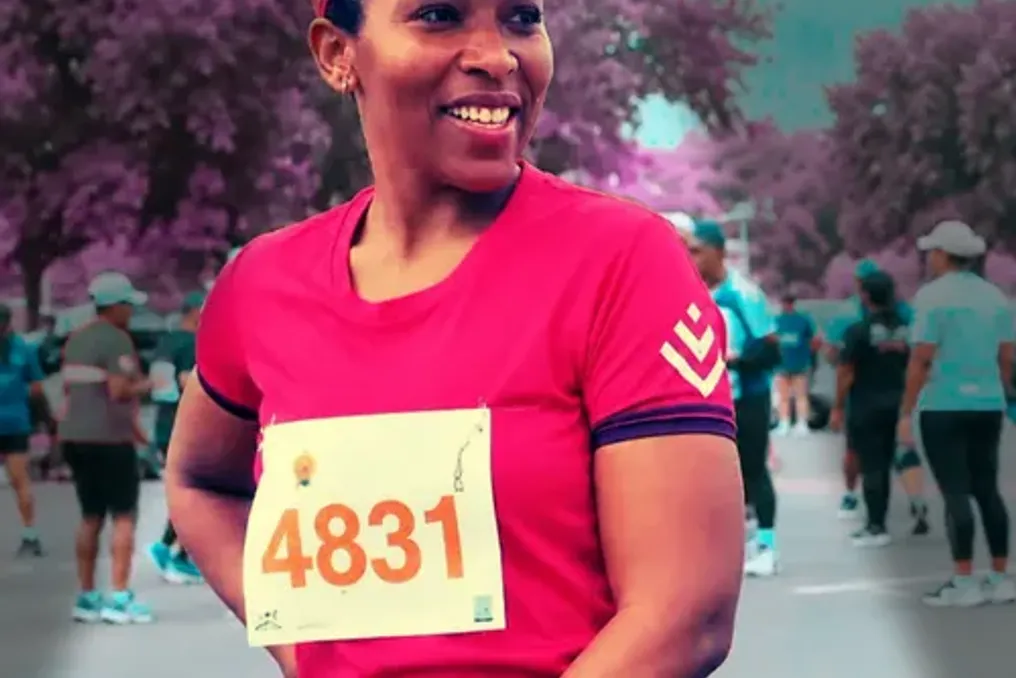
Runners from South Africa dedicated their runs to the memory of Elizabeth 'Tsontho' Moselakgomo after the 38-year-old woman went missing while jogging in Kempton Park, and her body was later found. Hundreds of runners gathered in Kempton Park, near Johannesburg, on Saturday, where the body of a 38-year-old mother was found earlier this month—one of nine women murdered in the area over two months.

Elizabeth Moselakgomo, a well-known local resident, was last seen alive on September 9th when she went for a run. Her body was discovered three days later. She left behind an eight-year-old daughter.

South Africa faces a high rate of killings, averaging over 60 cases per day, which is one of the highest rates globally. However, only in this specific area, east of Johannesburg, between July 15th and mid-September, have nine women been murdered, sparking growing fear and anger across the country.

In recent days, ordinary citizens have been gathering—from Kempton Park to Cape Town—to pay tribute to the victims and demand action to stop the killings.

On Saturday morning in Kempton Park, several hundred runners responded to calls from various local running clubs, covering 13 kilometers as part of their protest.

47-year-old Khlompho Matji, a runner and data analyst for an accounting firm living in the same area as the victim, stated: 'We should not look back. We must be constantly protected. We want our streets back.' He added that he had not run all the previous week due to fear.

The discovery of the women's bodies, some of whom were partially undressed and beaten, has intensified concerns about the possibility of a serial killer or group of killers operating in the area. Investigators currently refuse to confirm any of these theories but have established that some women were killed elsewhere than where their bodies were found.

According to United Nations data, one in three women in South Africa experiences physical or sexual violence during her lifetime. The country's government has labeled the level of gender-based violence a national catastrophe.

Busisive Pakati, a 53-year-old software engineer who is also an experienced runner, stated: 'This must stop because they are taking away our freedom, they are taking away our confidence now.'

Mkhuleko Tshabalala, a 50-year-old financial consultant from Kempton Park, also joined the gathering. He recounted seeing the victim here before as a running companion, and they walked together to where she passed, which was very emotional.

The location where the body was found was marked with several extinguished candles and a bouquet of flowers, situated along an inconspicuous driveway squeezed between a highway and a concrete wall behind a hotel. On the opposite side of the highway, the red-white-blue tail of a British Airways plane could be seen, serving as a reminder of the proximity of O.R. Tambo International Airport in Johannesburg.

The area borders a green residential neighborhood, ideal for running, but is only accessible from central Kempton via main roads lined with car dealerships and empty lots.

More than 1400 km away, in the tourist center of Cape Town, over a thousand students held their own vigil on the university campus on Friday. One poster held by a student read: 'I want to live, not just survive.'

Kithso Mojapelo, leader of the student movement at the University of Cape Town, noted: 'Every day there is a murder, and there is always the thought that it could be my mother, my sister, one of my cousins, one of my classmates, my teachers, my peers. And the silence continues from the country... the list of government failures continues. Enough.'

Moselakgomo will be buried on Sunday in the small town of Phakwe, in the Mpumalanga province in the northeast.

Despite declaring GBVF a national catastrophe, murders of women continue in South Africa
Read more
iol.co.za

Despite declaring GBVF a national catastrophe, murders of women continue in South Africa

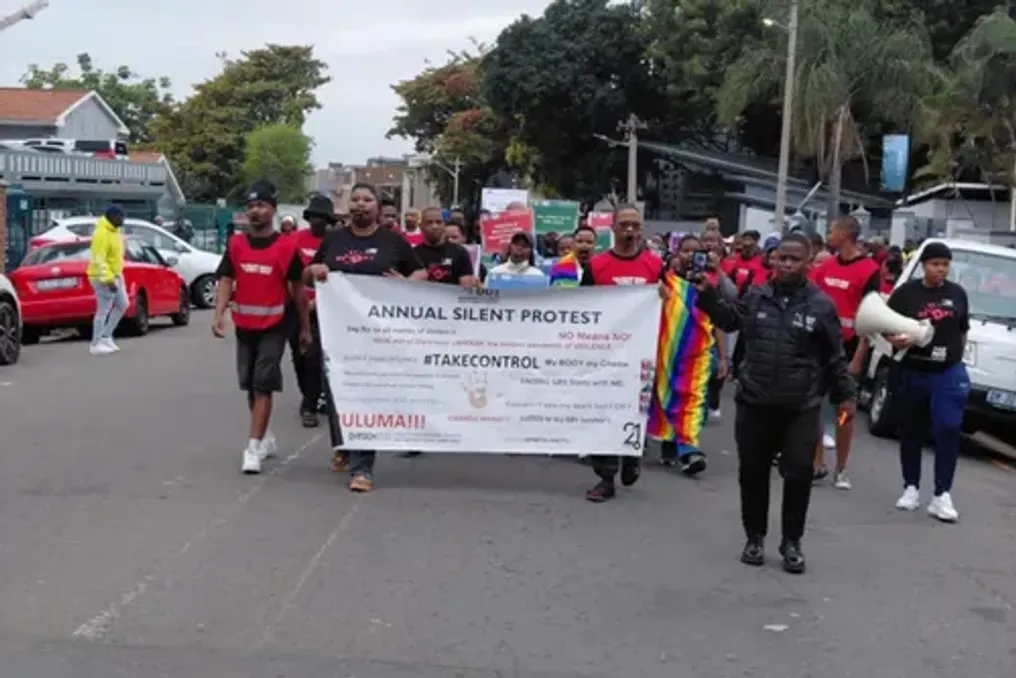
In South Africa, students and staff from DUT marched silently through Durban to honor the memory of victims of gender-based violence and femicide, and to call for an end to violence, fear, and silence.

In the eThekwini area, the body of a sixth woman was found in approximately two months. Police are investigating possible links between these cases but warn that it is too early to speak of a serial killer's guilt.

Nevertheless, this should not distract from the broader crisis. South Africa does not lack reports of GBVF; it lacks consequences, protection, and urgency.

The case of 38-year-old Elizabeth 'Ntontso' Moselakgomo intensified public anger. Moselakgomo, a mother, went missing after going for a run. Her family later identified her body at the Germiston morgue. The police deployed specialized resources to investigate her death alongside other murders.

The circumstances of the deaths are still being determined, and it would be irresponsible to claim that the women were killed by the same person before investigators establish that. However, six bodies in a concentrated geographical area demand an exceptional response.

Police have already involved multidisciplinary investigators and forensic specialists. One suspect is in custody in connection with the first body found in July. Investigators are now working to identify connections between these cases. Therefore, the public needs more than just assurances that investigations are underway; it needs results.

Because for the women living in eThekwini, the question is not whether the authorities will eventually explain what happened, but whether the state can prevent the next woman from becoming another case.

Murders in eThekwini occur against the backdrop of a national crisis. SAPS registered the murder of 569 women between April and June 2026, as well as 9201 rape cases. Over 60% of the rape cases sampled occurred in residential premises, challenging the notion that violence against women is a danger lurking somewhere outside the home.

The scale of this is precisely what led the government to classify GBVF as a national catastrophe in November 2025. This classification was intended to allow the government to coordinate its response, direct resources to the crisis, and strengthen accountability. The government also established a National GBVF Council to coordinate the national response.

However, almost a year after the declaration of the catastrophe, frontline organizations continue to report serious resource issues. The South African National Shelter Movement states that about 90% of shelters supported by them are struggling with funding and other forms of support. These facilities may be necessary for women trying to escape abusive homes, receive counseling, legal aid, or protect their children.

This reveals a fundamental contradiction. If GBVF is a national catastrophe, the infrastructure protecting its victims cannot be treated as a secondary issue.

South Africa is not alone in the fight against femicide. In Cameroon, reports indicate that over 120 women have been killed by intimate partners since the beginning of the year. In response, the government launched a three-month national campaign targeting femicide, domestic violence, gender inequality, and male dominance, focusing on prevention, reporting crimes, and prosecution.

Cameroon's campaign itself does not solve the problem. Campaigns only make sense when backed by functioning institutions. But the comparison raises an important question for South Africa: what does emergency action look like when a crisis has already been officially recognized?

It should mean swift police investigations. It should mean adequately funded shelters. It should mean prosecutors effectively handling cases. It should mean the enforcement of protection orders. It should mean early intervention when patterns of abuse emerge. And it should mean confronting the attitudes among men who normalize control, the right to dominate, and violence against women.

The most dangerous response right now will be another cycle of outrage followed by another declaration. The state has already acknowledged the problem. President Cyril Ramaphosa declared GBVF a national catastrophe, and the government established a status National Council and promised increased policing, survivor support, and prevention programs.

The question is no longer whether the government understands the crisis. The question is whether the system delivers results. This means publishing measurable targets for investigations, prosecutions, convictions, protection orders, shelter capacity, and police responsiveness. It means identifying where resources are lacking and addressing those gaps instead of creating another layer of bureaucracy. And it means that men must become part of the solution, not just receive instructions to condemn violence after another woman dies.

The women found in eThekwini cannot be reduced to statistics. Nor can the 569 murdered women in three months be reduced to statistics. South Africa has already named GBVF a national catastrophe. Now the state must act as if it believes its own declaration.

Popular