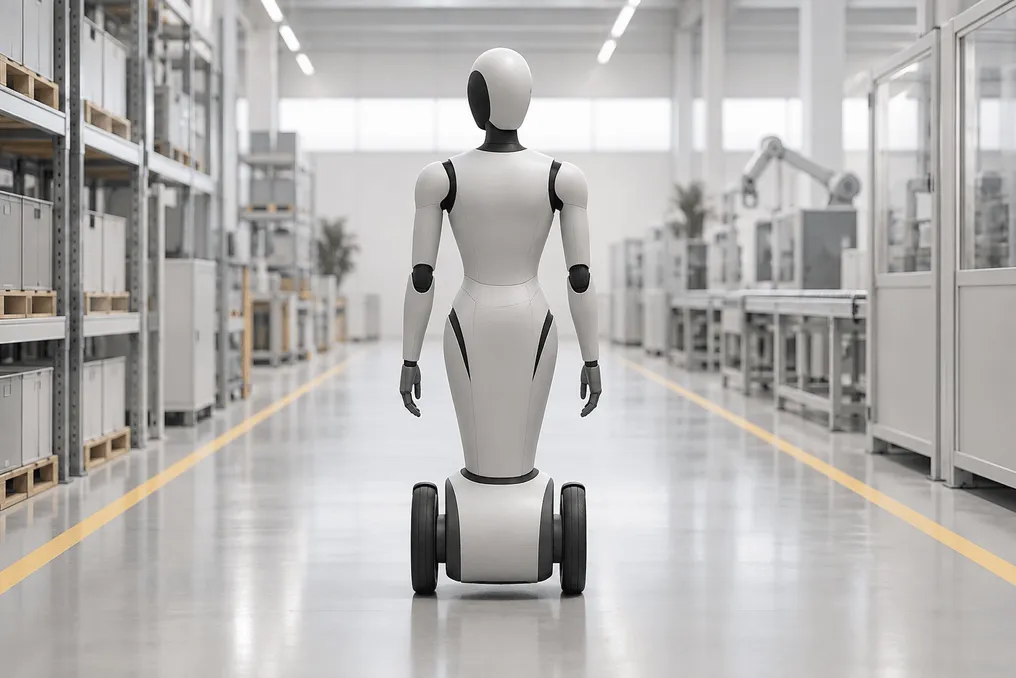
Spirit AI has announced that dozens of its wheeled humanoid robots, the Moz1 model, are already operating on the production lines of battery manufacturer CATL and retailer JD.com. Co-founder and Chief Scientist Gao Yang told Reuters that he expects a 'GPT-3 moment' for brain robots by mid-2027. Under this concept, the robot will be able to accept instructions in natural language and attempt to execute the corresponding sequence of physical actions.
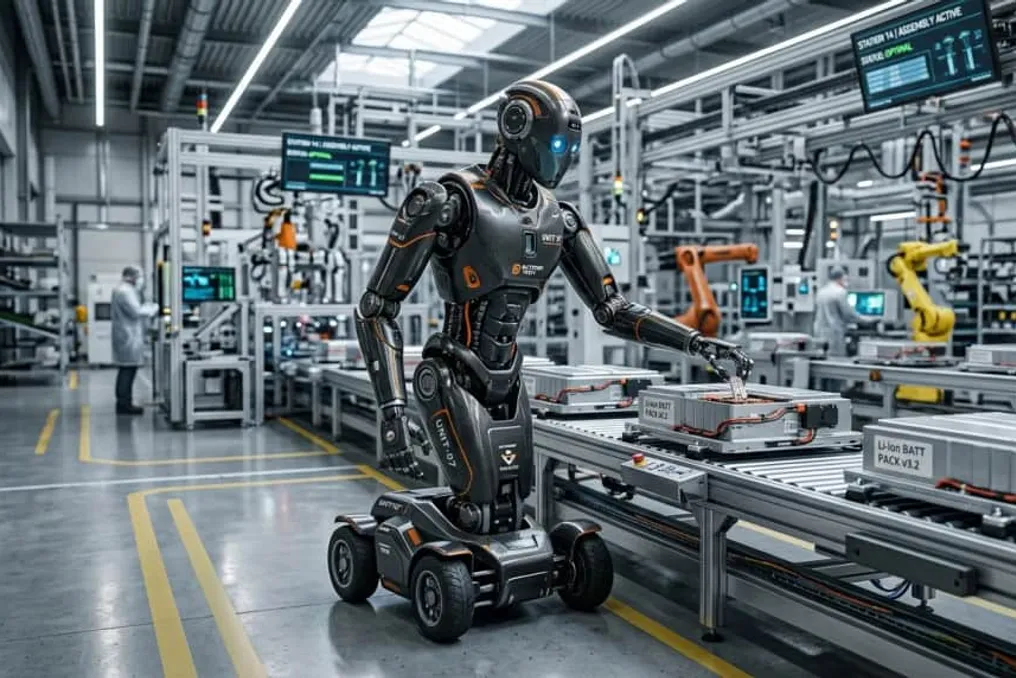
Specifically, at CATL in Zhongzhou, the Moz humanoid from Spirit performs tasks related to line completion and inserting DCR connectors on power battery module lines. This line is a flexible stage with multiple SKUs and small batches, which previously required manual work with high-voltage plugs, posing risks of sparking and uneven quality.
The robot, which operates based on an end-to-end model of vision, language, and action, is capable of adapting to changes in the posture of incoming parts, regulating force on flexible harnesses, maintaining insertion success rates above 99% in cycles comparable to skilled workers, increasing daily output threefold during continuous operation across multiple models, and switching to patrol inspection between main tasks to note harness anomalies.
Gao, who is also an associate professor of robotics at Tsinghua University, asserts that the weakest link currently is the software intelligence, not hardware tricks like sprinting or somersaults. He predicts that a window for industrial application will open within the next one to two years, and commercial service roles with simpler tasks may appear in about two years. However, he believes that creating useful home robots will remain significantly more difficult, requiring, in his estimation, at least eight years.
Spirit emphasizes the importance of teleoperation in real-world conditions and data from wearable sensors collected from approximately 1000 contractors, compared to simulations for deformable objects such as cables. The company reports a 90% success rate in simple tasks in structured home environments, but fine motor skills, such as unscrewing a bottle cap, still pose challenges for the models.
Safety measures noted include whole-body force control with automatic emergency braking upon excessive interaction force. Gao noted that the risks associated with uncontrolled agents are less immediate while physical models remain immature, but coordination work will become more significant once basic models reach a more autonomous level. This information differs from previous releases of Spirit's open models as it focuses on the deployment of the Moz1 line and Gao's timeline regarding brain robots by mid-2027.