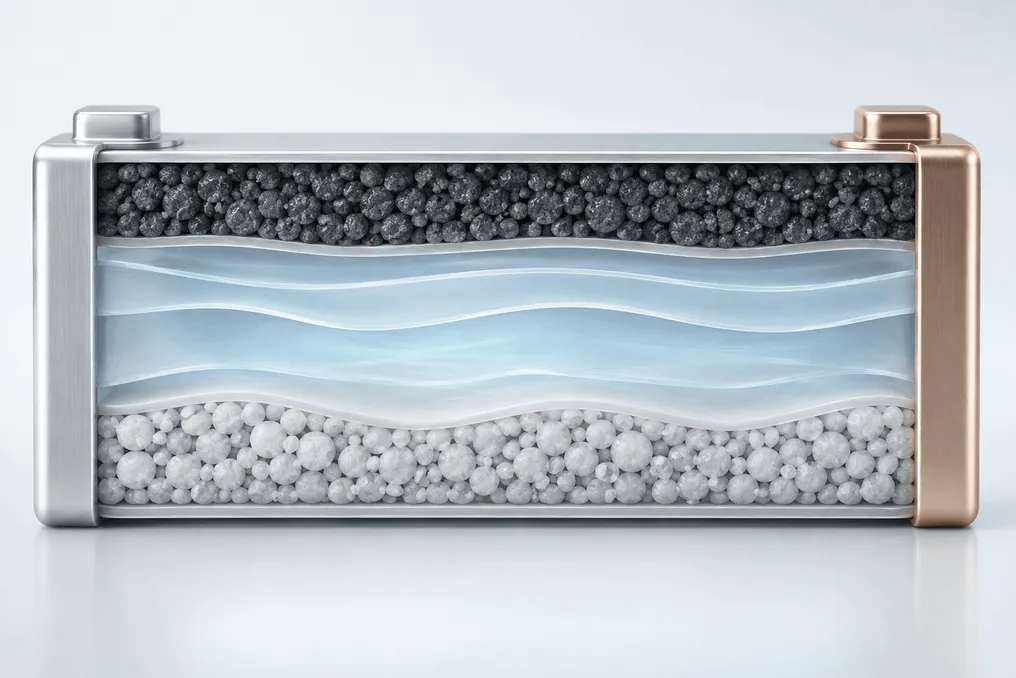
BYD plans to introduce solid-state battery electric vehicle in 2027; FinDreams prepares sulfide samples
Read more
Pandaily
pandaily.com

BYD plans to introduce solid-state battery electric vehicle in 2027; FinDreams prepares sulfide samples

BYD has announced plans to integrate solid-state battery technology into its vehicles by 2027. This was reported by Executive Vice President Stella Li in an interview with Carwow.es, where she also addressed the topic of European expansion and the Denza brand.

Li emphasized that BYD is studying 'any battery technology' as part of its R&D activities and stated its leading position in both commercialization and the technology itself. She specified that next year's model will be the first BYD car equipped with a solid-state battery pack. However, she did not disclose the specific model, battery characteristics, range figures, or the date of mass retail production.

BYD's battery division, FinDreams, is focused on developing a path using a sulfide solid electrolyte, including materials based on lithium phosphate and sulfur chloride. The company discussed prototypes with capacities of 20 Ah and 60 Ah, which are approaching a cell-level density of 400 Wh/kg, although these figures do not guarantee similar performance at the entire power pack level.

Engineering challenges remain before implementation: loss of contact at the solid-solid interface boundary during electrode expansion and contraction, maintaining constant mechanical pressure in the packs, exposure to vibration and thermal cycles in a running vehicle, and the necessity of producing dry electrodes to prevent solvent reactions with sulfides and strict humidity control, as hydrolysis can cause hydrogen sulfide formation.

FinDreams is collaborating with domestic equipment suppliers on dry PTFE fibrillation processes at pilot sites. Furthermore, intellectual property applications demonstrate work on composite cathodes and the sulfide-halide interface.

Previously, FinDreams executives, including Technical Director Sun Huaijuna, pointed to the limited production of sulfide systems and testing in small batches, estimated at around 1,000 vehicles, around 2027. Larger commercial volumes are expected closer to 2030. Initial installations are anticipated on premium platforms such as Yangwang and the flagship Denza before moving to more mass-market BYD models, as the initial cost of solid-state batteries is easier to offset in these segments.

Chief Scientist Liang Yubo previously noted that fully solid-state systems have reached a critical stage, but they still face obstacles, and that liquid lithium-ion and solid-state batteries may coexist for 15–20 years.

As additional information, CATL independently set a goal to begin small-scale production of fully solid-state batteries in 2027, representing a parallel industry timeline rather than a market comparison. This material focuses exclusively on the product and process stages of BYD and FinDreams.
Similar stories

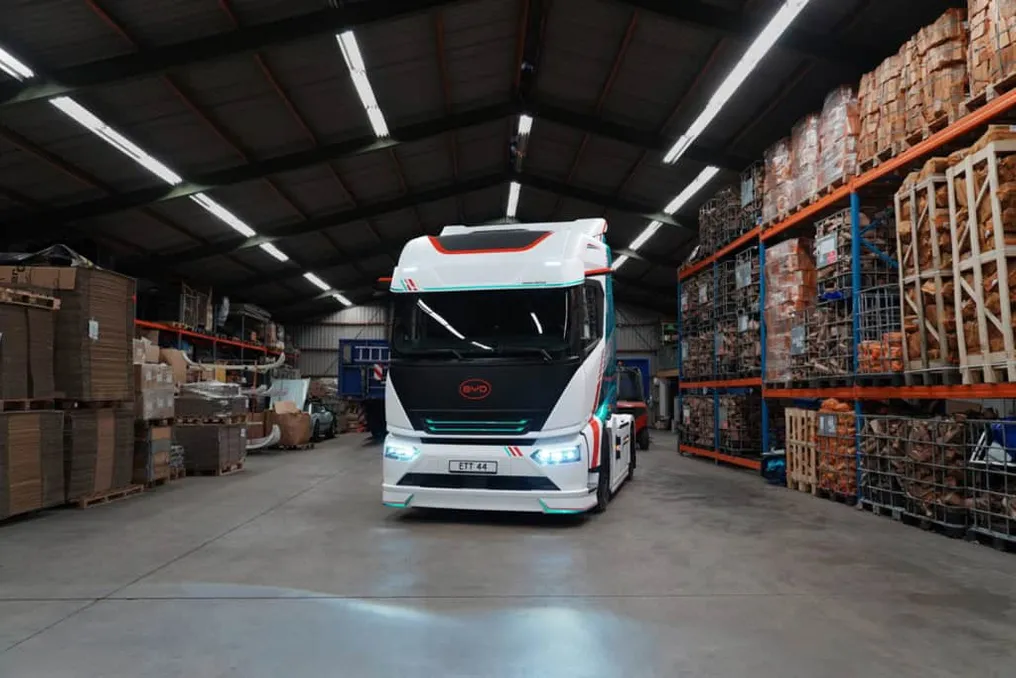
New BYD ETT 44 electric truck charges in just 20 minutes
Read more
olhardigital.com.br

New BYD ETT 44 electric truck charges in just 20 minutes

BYD unveiled its most comprehensive heavy electric truck, the ETT 44 model, at the IAA Transportation 2026 exhibition in Hanover. This truck boasts a range of up to 600 km, is equipped with a 651 kWh battery, and supports charging power exceeding 1.5 MW.

The manufacturer has integrated fast-charging technology, used in their electric vehicles, into these transport vehicles. The goal is to reduce truck downtime and advance the company in the European heavy transport market.

The ETT 44 is a 4x2 tractor designed for combinations weighing up to 44 tons. It utilizes a 651 kWh Blade battery and an 851 V architecture. Its nominal power is 743 hp, with a maximum of 1000 hp.

The battery comes with a 10-year or 1.2 million kilometer warranty. When using a DC CCS2 charger, the truck accepts up to 420 kW and charges from 20% to 80% in approximately one hour.

Thanks to BYD's Megawatt Charging system, the power exceeds 1.5 MW. In this mode, the same charging duration takes about 20 minutes, adding up to 400 kilometers of range. The company previously applied FLASH Charging technology in passenger cars and is now implementing it in commercial transport, starting with trucks.

Stella Li, Executive Vice President of BYD, emphasized this concept, stating: 'Less time charging. More time on the road.'

In addition to the ETT 44, BYD also presented rigid 4x2 and 6x2 trucks in Hanover, including 26-ton versions for hauling with body swap capability, as well as hooklift models. The company's portfolio also includes the E-Vali electric van and the EYT 2.0 electric warehouse tractor, covering vehicles from 3.5 to 44 tons.

The ETT 44 is also equipped with features such as adaptive cruise control, automatic emergency braking, lane keeping, and blind spot detection. The manufacturer calls its strategy 'Total Cost of Mobility,' which combines vehicles and all necessary elements for operation.

According to BYD data, its commercial vehicles are already operating in over 100 countries and more than 400 cities. Competitors such as Daimler Truck, Volvo, Scania, and MAN are also developing electric trucks, and megawatt charging is becoming an important element of this competition. Theoretically, the ETT 44 offers a range of 600 km and a charging power of over 1.5 MW.

Additional Information

BYD states that it has installed 10,000 1500 kW chargers in five months and plans to reach 15,000 megawatt charging stations in China. Furthermore, the company intends to bring this technology to the Canadian market. This strategy positions BYD differently in European competition, as the manufacturer works with both the vehicles and the charging infrastructure. It remains to be seen whether the company can replicate the success it achieves with electric vehicles in the truck market.

The answer also depends on the regulatory environment. The European Union has already introduced tariffs on Chinese electric vehicles, while BYD aims to expand its presence in the European heavy transport market.

Popular