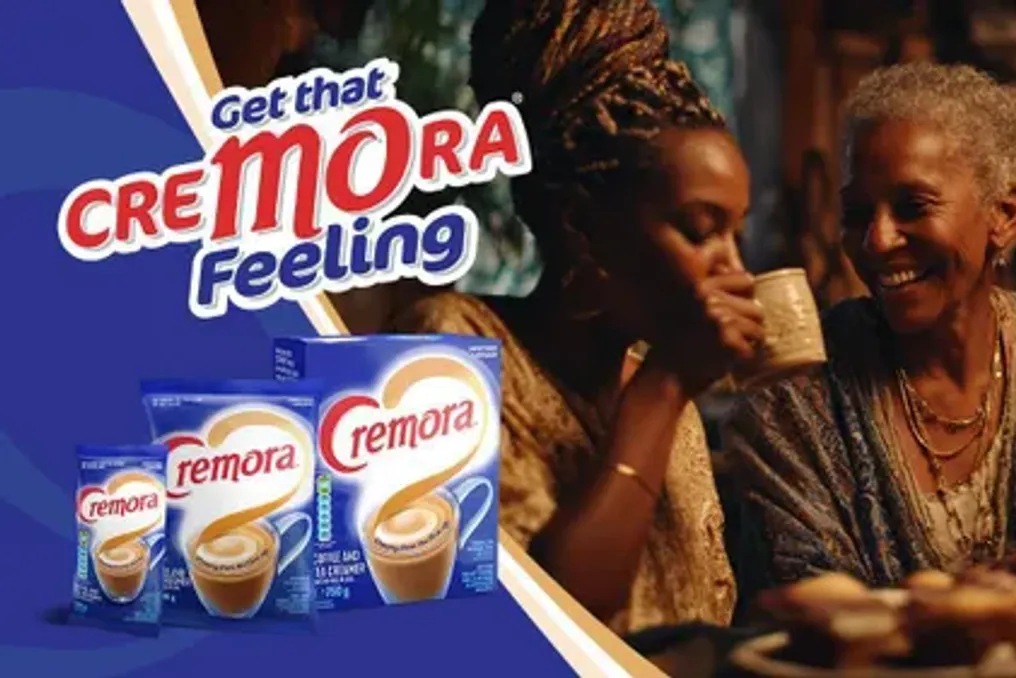
For generations of South Africans, the phrase 'It’s not inside, it’s on top' requires neither a brand nor an explanation. Despite changes in ownership, shifts in South Africa, and generational changes in coffee consumers, six words from a 1985 commercial can be considered Cremora's greatest legacy.
There are advertising slogans, and there are phrases that transcend the television screen to become part of the language. This phrase originated in a Cremora advertisement shown in 1985. In the commercial, a man making coffee desperately searches for cream in the refrigerator, then turns to his wife, stating that Cremora is missing from the fridge. Her irritated response became iconic: 'It’s not inside, it’s on top.'
The man repeats this phrase, drawing out the sound 'on,' before finally looking up and spotting Cremora sitting on top of the refrigerator. Forty-one years later, this phrase remains so closely tied to the brand that when Cremora changed owners last year, the new owner, Lactalis South Africa, welcomed it with the hashtag #ItsNotInsideItsOnTop.
The Age of Cremora
Asking the age of Cremora might be impolite, as even its owners cannot agree. Nestlé claimed in 2012 that Cremora was first launched in South Africa in 1966, which would have made the brand sixty years old that year. In 2021, the company repeated the 1966 date when reviewing Cremora's history.
A more recent corporate history gives Cremora an older age. When Lactalis acquired the business, it described Cremora as a product that had been the staple of South African households for almost 80 years. Other materials related to the deal indicated an age of 77 years, and its own website .co.za cited this age. The site states: 'Cremora is a beloved cream brand that has been the staple of South African households for over 77 years and is highly valued by coffee and tea lovers.'
Thus, Cremora could be 60, 77, or approaching 80 years old as a name in South Africa. What is much easier to establish is that the brand has existed long enough to become part of popular South African culture.
Advertising That Refused to Die
The original 'Mrs Cremora' advertisement appeared in 1985 when Cremora belonged to the American food company Borden. It was difficult for it to disappear. When Nestlé acquired the brand in 1998, it revamped the advertisement for modern South Africa. The core humor remained the same, but now the couple was Black, and the wife was named Thandi instead of Helen.
Nestlé later explained that it wanted to present the advertisement to a younger generation, making it more representative of the country after the first democratic elections. Then, in 2021, Cremora returned to the refrigerator. This time, Nestlé released five versions of the familiar story featuring South Africans who, they said, were underrepresented in mainstream media, including a quadriplegic man Palese Moseye suffering from albinism, a interracial couple, and LGBTQ+ community members. Actors changed, and South Africa changed.
Beyond the Refrigerator
By then, these six words had long gained life outside of advertising. They continued to appear in everyday conversations and memories of memorable South African commercials decades after the original TV spot disappeared. The phrase is so deeply rooted in advertising history that writer Khanya Mtshali used it as the title of her 2021 book, 'It’s Not Inside It’s on Top: Memorable Moments in South African Advertising.'
Ironically, who exactly deserves credit for putting Cremora 'on top' is far less certain. Mtshali sought the person behind the phrase but found competing memories and an advertising trail that was difficult to reconstruct decades later.
From Fridge to Factory
Cremora became more than just an advertising slogan. By 2012, the demand for coffee creamers was strong enough for Nestlé to spend 106 million rand on acquiring and upgrading Specialized Protein Products in Potchefstroom. This deal brought about around 120 employees into Nestlé and created additional production capacity for Cremora. Potchefstroom became Nestlé's tenth manufacturing facility in South Africa.
At the time, Nestlé stated that the investment was necessary to increase local production in response to the growing demand for non-dairy creamers in South Africa and on the continent. Meanwhile, South Africans found uses for Cremora that the unfortunate man on television never imagined. The powder moved from coffee cups into culinary use and baking. Nestlé itself acknowledged by 2021 that consumers were using Cremora in food and baked goods.
And, of course, the Cremora tart emerged. Recipes vary, but the familiar combination of Cremora, condensed milk, and lemon on a shortcrust base became another way the brand was woven into South African kitchens. Cremora managed a peculiar feat by becoming both an ingredient and the name of a pudding made with it.
A New Home
After decades under Nestlé's umbrella, another change loomed. In September 2024, Nestlé announced its intention to sell the Cremora business to Lactalis South Africa. The deal included its South African manufacturing operations. The transaction passed through competition authorities, after which Lactalis completed the acquisition in April 2025. This brought the Babelegi factory in Gauteng and the Potchefstroom factory in North West to Lactalis along with their employees.
Lactalis, whose stable portfolio in South Africa already includes brands such as Parmalat, Melrose, Président, and Steri Stumpie, announced plans to develop the Cremora legacy. This legacy now spans at least six decades, three owners, several versions of the same commercial, and one rather convoluted birth certificate. However, the wonderful part of Cremora's story can be much simpler. In 1985, the man couldn't find the can of coffee cream, his wife told him where it was, and South Africa has never stopped repeating that.