Runners from South Africa dedicated their runs to the memory of Elizabeth 'Tsontho' Moselakgomo after the 38-year-old woman went missing while jogging in Kempton Park, and her body was later found. Hundreds of runners gathered in Kempton Park, near Johannesburg, on Saturday, where the body of a 38-year-old mother was found earlier this month—one of nine women murdered in the area over two months.
Elizabeth Moselakgomo, a well-known local resident, was last seen alive on September 9th when she went for a run. Her body was discovered three days later. She left behind an eight-year-old daughter.
South Africa faces a high rate of killings, averaging over 60 cases per day, which is one of the highest rates globally. However, only in this specific area, east of Johannesburg, between July 15th and mid-September, have nine women been murdered, sparking growing fear and anger across the country.
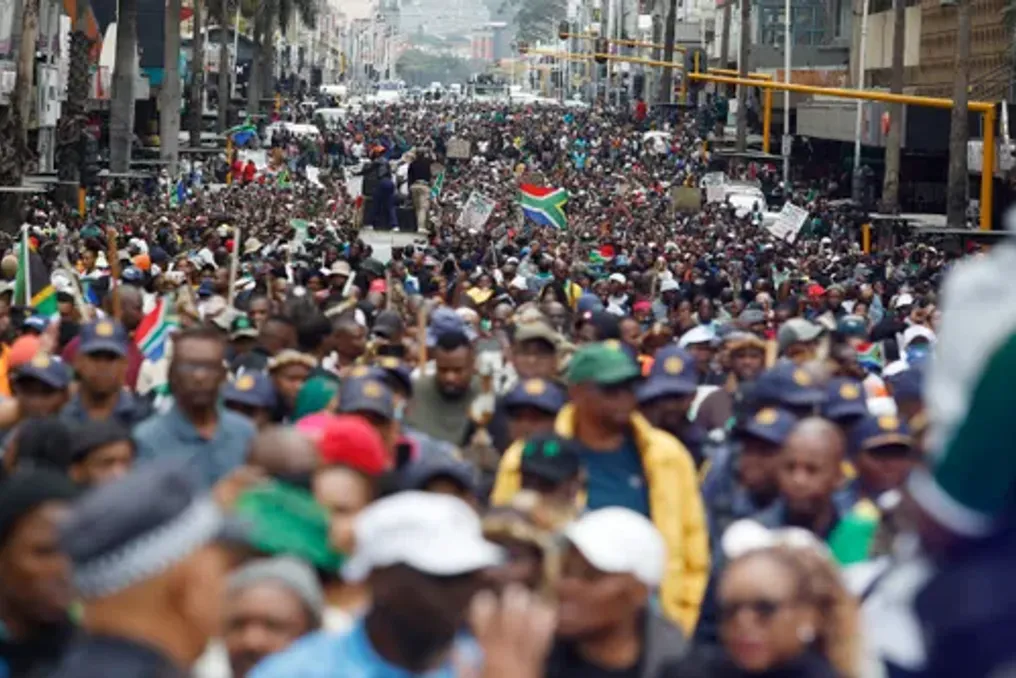
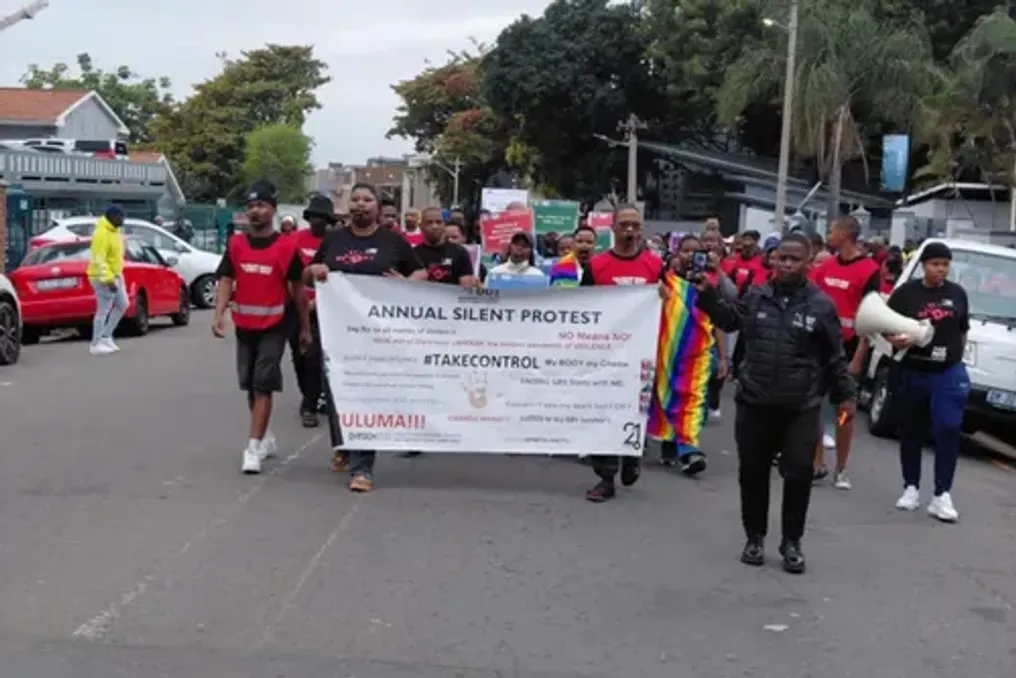
In recent days, ordinary citizens have been gathering—from Kempton Park to Cape Town—to pay tribute to the victims and demand action to stop the killings.
On Saturday morning in Kempton Park, several hundred runners responded to calls from various local running clubs, covering 13 kilometers as part of their protest.
47-year-old Khlompho Matji, a runner and data analyst for an accounting firm living in the same area as the victim, stated: 'We should not look back. We must be constantly protected. We want our streets back.' He added that he had not run all the previous week due to fear.
The discovery of the women's bodies, some of whom were partially undressed and beaten, has intensified concerns about the possibility of a serial killer or group of killers operating in the area. Investigators currently refuse to confirm any of these theories but have established that some women were killed elsewhere than where their bodies were found.
According to United Nations data, one in three women in South Africa experiences physical or sexual violence during her lifetime. The country's government has labeled the level of gender-based violence a national catastrophe.
Busisive Pakati, a 53-year-old software engineer who is also an experienced runner, stated: 'This must stop because they are taking away our freedom, they are taking away our confidence now.'
Mkhuleko Tshabalala, a 50-year-old financial consultant from Kempton Park, also joined the gathering. He recounted seeing the victim here before as a running companion, and they walked together to where she passed, which was very emotional.
The location where the body was found was marked with several extinguished candles and a bouquet of flowers, situated along an inconspicuous driveway squeezed between a highway and a concrete wall behind a hotel. On the opposite side of the highway, the red-white-blue tail of a British Airways plane could be seen, serving as a reminder of the proximity of O.R. Tambo International Airport in Johannesburg.
The area borders a green residential neighborhood, ideal for running, but is only accessible from central Kempton via main roads lined with car dealerships and empty lots.
More than 1400 km away, in the tourist center of Cape Town, over a thousand students held their own vigil on the university campus on Friday. One poster held by a student read: 'I want to live, not just survive.'
Kithso Mojapelo, leader of the student movement at the University of Cape Town, noted: 'Every day there is a murder, and there is always the thought that it could be my mother, my sister, one of my cousins, one of my classmates, my teachers, my peers. And the silence continues from the country... the list of government failures continues. Enough.'
Moselakgomo will be buried on Sunday in the small town of Phakwe, in the Mpumalanga province in the northeast.