The Yashobhoomi Convention Centre in New Delhi hosted the conclusion of SEMICON India 2026 on September 19, 2026. The closing session featured 15 significant announcements covering both domestic processor development challenges and partnerships in sovereign computing and upskilling programs, according to a press release from the Ministry of Electronics and Information Technology (MeitY).
Throughout the day, special attention was given to Indian startups and student groups working on chip development using indigenous platforms. A new industry report was also presented, forecasting substantial growth in the country's semiconductor market.
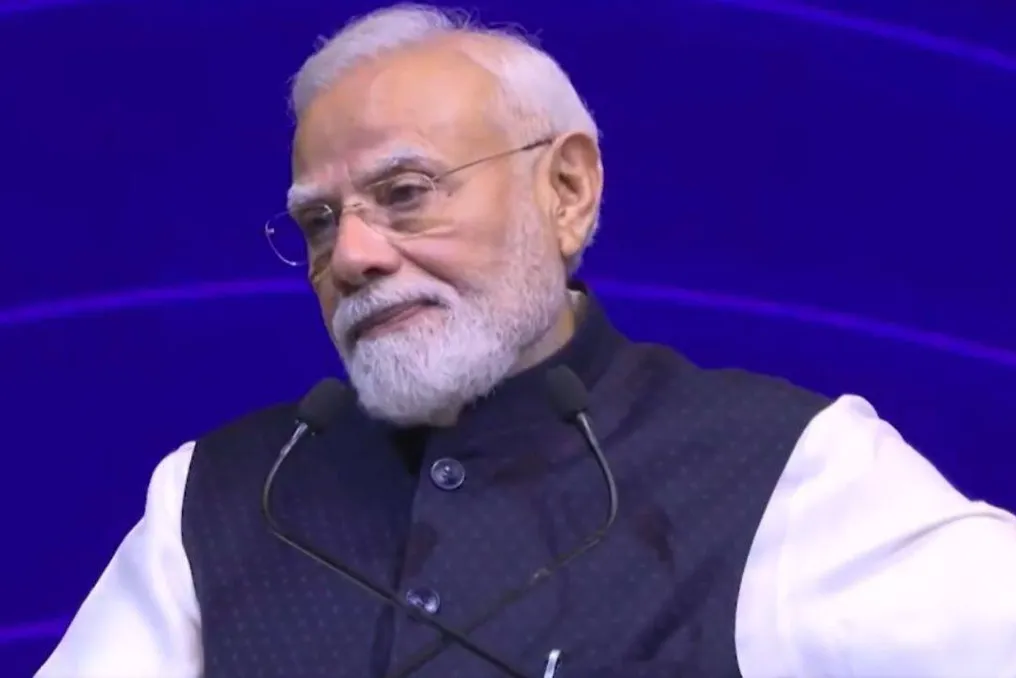
The fifth edition of SEMICON India 2026 ran from September 17 to 19 and was jointly organized by the Indian Semiconductor Mission (ISM) and SEMI under the theme 'From Silicon to Systems: Building an Ecosystem.' Prime Minister Narendra Modi inaugurated the conference on the first day.
The event has become one of the largest semiconductor gatherings in the country, bringing together government bodies, global chip manufacturers, academic institutions, and startups within the broader Semicon India program aimed at developing capabilities in design, manufacturing, and packaging.
A highlight of the entrepreneurial activity during the closing session was the Digital India RISC-V Grand Challenge (DIR-V Grand Challenge), held by Maker Village as part of MeitY's 'Chips in Startup' Program. The competition attracted 1236 teams, involving 5045 participants, and three winning teams shared a total prize pool of 60 lakh rupees.
The team Meevisai Technologies, representing SASTRA University, won first place for an autonomous water surface cleaning robot built on the indigenous SHAKTI processor developed by IIT Madras. This robot is designed for cleaning ponds and temple water bodies. Second place was awarded to Digiscope LLP for the VEGA Chikitsa project—a digital stethoscope capable of real-time heart and lung sound capture and noise screening using machine learning, which utilizes the VEGA processor from CDAC. Third place went to Zetawave Technologies from IISc Bengaluru for a forest environment monitoring system that also operates on the VEGA platform.
Startup engagement continued through other activities. Under the Startup Mitra program, eleven startups presented their projects to over twenty venture capitalists, with Elphins Technologies taking first place, Meukron Technologies second, and Multi Nano Sense Technologies and CraftifAI sharing third place. A parallel SEMICON India hackathon gathered 3808 registered teams from 881 colleges and 1053 ideas, resulting in 10 teams participating in the grand final; the winners were teams from VIT Vellore and IIT Madras.
Additional data for the day was provided by EY and the India Semiconductor and Electronics Association, who released a report titled 'Semicon India 2.0: From Capacity Building to Ecosystem Leadership.' According to this report, India's semiconductor market could grow from nearly $64 billion in 2026 to $200 billion by 2035. The report also outlines a plan to transition domestic demand and design talent toward leadership in manufacturing, advanced packaging, and innovation.
Beyond the startup sector, C-DAC presented PARAM Vidya—a 'plug-and-play' AI laboratory complex for universities and SMEs—and PARAM Shavak-QS—a compact quantum simulation platform during the session. Partnerships were also announced between C-DAC and NLC India, as well as between C-DAC and Bharat Electronics Limited, to establish infrastructure for sovereign data centers and computing.
RISC-V is an open-source processor architecture without licensing fees, allowing any company or research group to develop chips based on it without paying royalties to proprietary chip design firms. For India, which has historically relied on foreign architectures in processor development, this is highly significant as it lowers the barrier for local developers to create their own chips from scratch.
Therefore, platforms like SHAKTI, developed at IIT Madras, and VEGA, developed by CDAC, hold significance beyond the monetary prizes at events like the DIR-V Grand Challenge. Every winning product created on these processors serves as a small testament to the capability of Indian teams to design and implement functional hardware on indigenous semiconductors, rather than merely assembling them around imported chips.
Collectively, the announcements from the closing session, supplemented by 41 memorandums of understanding and initiatives presented over the first two days, indicate that MeitY positions this event as a bridge between political intent and practical execution. With India setting ambitious semiconductor horizons for 2035 in the EY-ISEA report, the next test will be the ability of winners such as Meevisai and Digiscope, along with the announced upskilling partnerships, to scale from hackathon prototypes and Memorandums of Understanding to finished products and a skilled workforce in the coming years.