PhotoSparks, a weekly section of YourStory launched in 2014, features photographs that celebrate the spirit of creativity and innovation. Over its existence, in more than 1015 publications, various events have been presented, including an art festival, a comic gallery, a world music festival, a telecommunications exhibition, a grain fair, a climate change exhibition, a wildlife conference, a startup festival, Diwali rangoli, and a jazz festival.
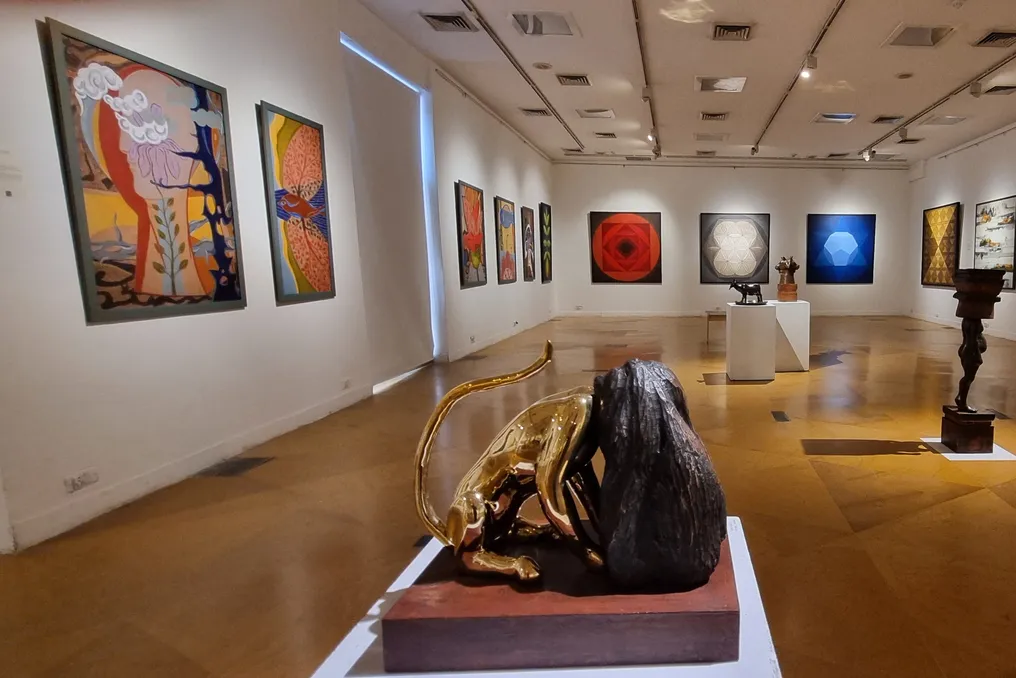
Recently, an art exhibition titled 'One | Many' was held at the India Habitat Centre (IHC). This exhibition was curated by artist Pabitra Pal and featured works by twelve authors. Such exhibitions demonstrate how a skilled curator connects artworks, artists, ideas, and the audience. Careful and strategic selection, interpretation, and presentation of works can create a profound visiting experience.
The curator establishes a connection between artworks and history, culture, social issues, artistic movements, and the artist's creative practice. This allows viewers to discover deeper meanings in diverse works. Furthermore, thoughtful placement, sequence, lighting, captions, and spatial design influence how visitors move through the exhibition and interact with the displayed works. Such arrangement stimulates dialogue and creates opportunities for learning and reflection.
Pabitra Pal and his artistic community have organized and participated in numerous exhibitions over many years. Pal proudly told YourStory that their latest exhibition, 'One | Many,' was their twenty-eighth group exhibition. When he moved from Calcutta to New Delhi in 2010, he joined an artistic collective called The Mirror Group, founded in 2002 by Dev Dutta, Susanta Chatterjee, and other artists.
The contemporary group whose works are featured here includes Dev Dutta, Debangshu Bisas, Susanta Chatterjee, Titas Das, and Soumen Basu. Pal emphasized that they have known each other for over 25 years, and their friendship has developed parallel to their creative practices. He added that they regularly invite other artists to exchange ideas and celebrate their ongoing journey, considering the group a space for friendship, discussion, exchange, and artistic growth.
Thus, curators shape artistic and cultural value by highlighting emerging artists and challenging established traditions. However, this is easier said than done. Exhibition curators face challenges in balancing artistic quality, diversity, theme, and overall narrative while avoiding exhibition overload. Other tasks include managing limited resources, gallery sizes, transportation, insurance, installation, and meeting deadlines.
From the audience's perspective, the exhibition must be accessible to different levels of knowledge while maintaining artistic depth and complexity. Curators must be mindful of avoiding tokenism when dealing with cultural sensitivity. Therefore, curators need to start by defining a central question or theme and planning what the exhibition should prompt visitors to think, feel, or discover. In addition to the quality and relevance of individual works, it is necessary to ensure coherence among the exhibits.
The exhibition space must support the art, not compete with or hinder it. Diverse interpretive materials will be needed, which may include testing and experimenting with audiences from different segments of society. Observing visitor reactions and analyzing their feedback helps gain insight for future exhibitions. Thus, a great exhibition is more than just a collection of artworks; it is a carefully constructed dialogue between art, artist, space, and audience.
Pal's personal creative journey began at the age of 12. He recalls growing up near Calcutta, West Bengal, where rural and urban life mingled, forming a strong connection between him, nature, and daily life. Later, he moved to Santiniketan to study at Kala Bhavana at Visva Bharati University. He explains that the environment of artists, teachers, and scholars allowed him to exchange ideas, observe various artistic practices, and develop his own perspective.
His practice evolved through drawing, printmaking, painting, and three-dimensional works. He regularly experiments with different materials and techniques but views the medium primarily as a tool for expressing an idea. His works combine memory, nature, everyday experience, and dreams. He adds that traveling and living in different parts of India over many years also influenced his artistic thinking, and his interactions and discussions with other artists helped him continue his research and develop his practice.
Pal has participated in over 35 exhibitions in India and abroad and received several awards. He explains that he works as an art teacher and teaches visual arts according to the IB curriculum. Teaching, research, observation, and creating art continue to influence each other in his journey. He concludes that for him, creating art is a continuous process of observation, experimentation, questioning, and discovery. Each piece develops within this process, where material, image, memory, and idea gradually merge.
