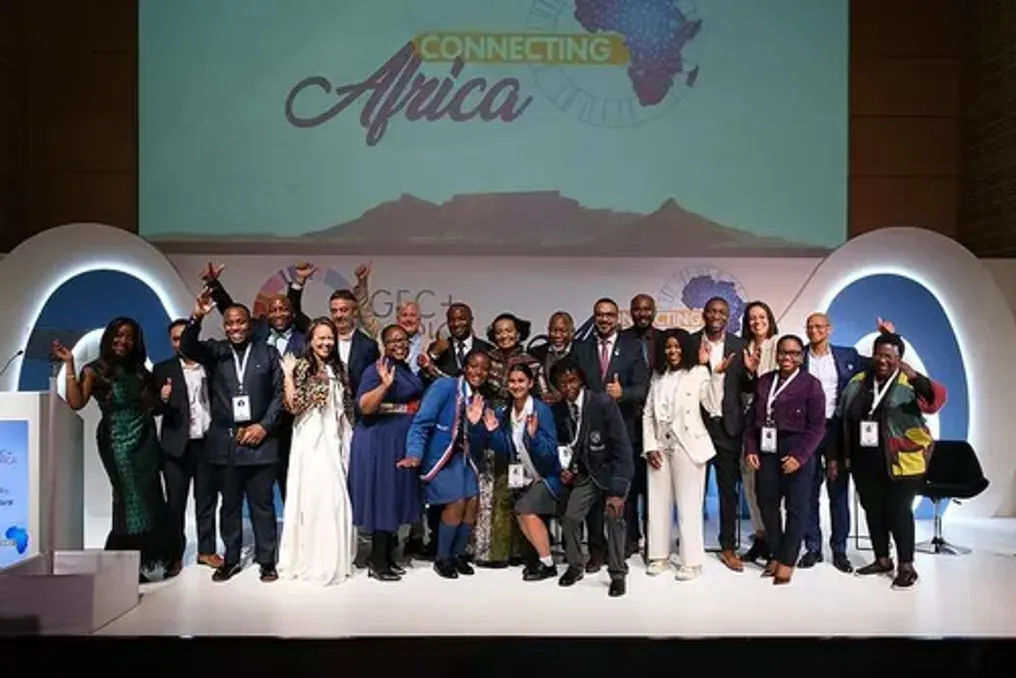
The Global Entrepreneurship Congress of Africa (GEC+Africa) 2026 kicked off at the Cape Town International Convention Centre on Wednesday, September 16. This year's theme was 'Connecting Africa,' reflecting the importance of strengthening ties between entrepreneurs, markets, capital, policymakers, corporations, and ecosystem support organizations to unlock the continent's economic potential.
The event, which is Africa's largest entrepreneurship forum, was organized by Global Entrepreneurship Network (GEN) Africa and 22 On Sloane. It gathered startups, micro-, small, and medium-sized enterprises (MSMEs), entrepreneurs, investors, government representatives, corporations, and ecosystem organizations from across Africa and beyond. The congress ran for two days, from September 16 to 17.
At the opening of GEC+Africa 2026, former South African President Kgalele Molante delivered the keynote address. He emphasized the significance of entrepreneurship and universal economic participation in shaping Africa's future. Molante stressed that small businesses and startup founders are key drivers of long-term growth and job creation on the continent. His speech also highlighted the importance of using new ideas and inclusive development models to empower youth and future generations.
Molante currently heads the Kgalele Molante Foundation, which promotes dialogue, youth development, education, and social cohesion across Africa.
Edna Satcha-Montse, Director of Transformation and Sustainable Development at African Bank, told delegates that entrepreneurs are transforming communities daily. She noted that Africa's problem is not a lack of ideas or ambition, but a lack of systems capable of supporting those striving to build the future. According to her, entrepreneurs today are creating tomorrow's economy, but institutions often lag behind.
Satcha-Montse pointed out that entrepreneurs use digital platforms to interact with customers, mobile technology for transactions, and innovation to solve long-standing problems. Although they create opportunities in cities, towns, and growing economic hubs, many face obstacles unrelated to talent or effort.
She specifically highlighted limited access to finance, slow regulatory processes, and uneven market access, which prevent many promising companies from moving from survival to scaling. Satcha-Montse stressed that the task is to create financial systems, markets, and public institutions that can keep pace with these people so that entrepreneurship becomes the most powerful engine of Africa's growth.
On the final day of the conference, James Vos, a member of the Cape Town City Majority Committee for Economic Growth, stated that the congress's theme is directly related to the essence of economic growth. In his view, businesses often do not need new programs or strategies from the government; they simply need the government to function more effectively. He welcomed the increased national focus on reducing bureaucracy and simplifying business operations.
Vos explained that this is not a matter of competition between different government sectors. The goal of all parties is to attract more investment, ensure the success of more enterprises, and, most importantly, create more jobs. He added that innovations in public administration should not be complicated but should boil down to finding practical solutions to everyday problems.
He reported that Cape Town focuses its support where the city has competitive advantages and investment potential, including technology, BPO, green economy, manufacturing, tourism, fashion and textiles, maritime production, and creative economy. He noted, however, that the government works with industry specialists because it does not have all the answers.
Minister of Small Business Development Stella Ndabeni presented a strategic shift in government policy during her keynote speech on the last day, aimed at assessing real economic results rather than just administrative indicators. She stated that Africa's greatest asset is its people, as the continent has the youngest and fastest-growing population on the planet.
Ndabeni emphasized that with proper management of technology, they can open doors to finance and global markets for millions of Africans who were previously on the brink of survival. She believes that Africa is on the threshold of an entrepreneurial revolution, but this will only happen if African governments take active steps.
The Minister called for investment in entrepreneurship and innovation, the creation of smart and favorable regulatory frameworks, and collaboration with other ecosystem participants, including the private sector, universities, and other entrepreneurship support organizations. She also called for a shift from tracking simple operational metrics to assessing actual business survival and market expansion.