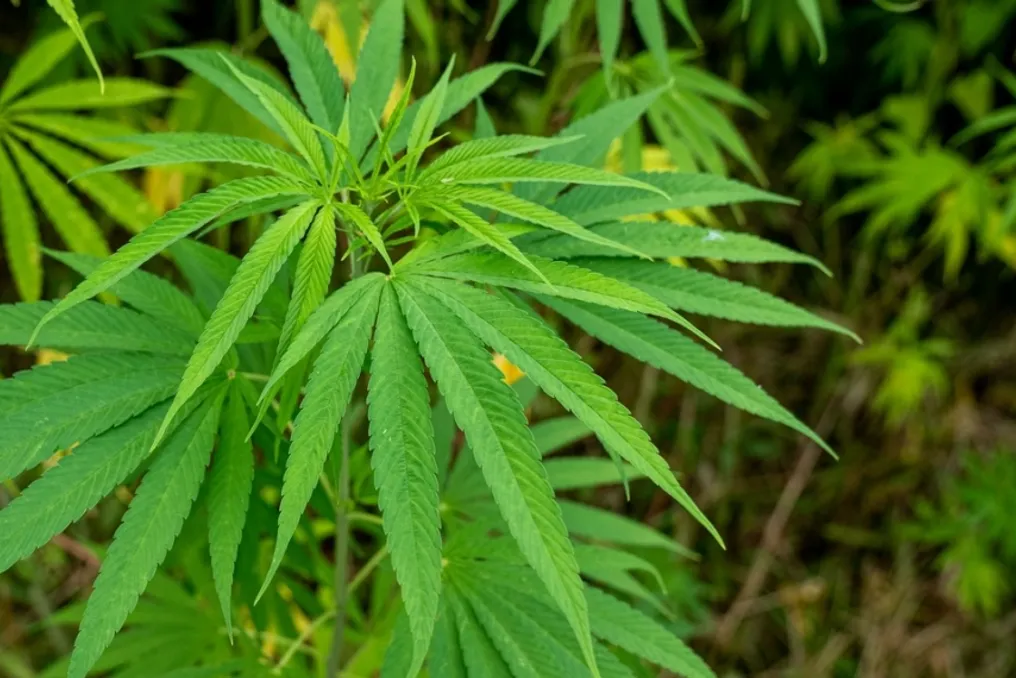
In South Africa, growing hemp (a variety of Cannabis sativa with low levels of the psychoactive compound THC) for personal use has been permitted for several years following legislative changes. Interest is growing in its potential for medicine and industry, such as for producing clothing, insulation, and paper, which many see as an opportunity for small farmers.
However, hemp requires water, and South Africa's water resources are limited. Large-scale cultivation of hemp could lead to reduced water availability in already arid regions.
A team of researchers from the University of KwaZulu-Natal and Rhodes University, including recent master's graduate Gary Denton, used drones and ground sensors to map hemp water consumption in the Midlands of KwaZulu-Natal. The results provide the first measurable evidence of hemp's impact on South Africa's water resources.
Understanding how much water the crop consumes is critically important in the context of water scarcity in South Africa. The National Water Act grants authority to regulate crops if they significantly reduce the amount of water reaching rivers and reservoirs, and this act has already been applied in the commercial forestry sector. Without reliable information on water consumption, policymakers cannot assess hemp's impact on water reserves or make informed management decisions.
The study established a baseline level of hemp water consumption. This information will help South African regulators assess the impact of this crop on water resources.
As hemp grows, the plants draw water from the soil and release water vapor through their leaves (transpiration). To measure water consumption, a tower equipped with sensors was installed in the middle of the field to continuously record the water vapor released by the hemp and wind speed. This allowed for the calculation of the crop's daily water consumption without disturbing the plant condition.
While other studies have assessed hemp water consumption using satellite imagery or measuring water movement within plants, this study is the first to apply this high-precision method to hemp.
Drones then flew over the field, equipped with thermal and infrared cameras. Healthy plants with sufficient moisture have cooler leaves because they release more water vapor. Plants experiencing water stress have warmer leaves due to less vapor release. By measuring leaf temperature using thermal and infrared cameras on the drone, it was possible to estimate how much water the crop consumes.
Subsequently, a computer model called QWaterModel was used to convert the drone images into maps displaying water usage. The study was conducted on a commercial farm near Pietermaritzburg, where plant tops were removed to stimulate flowering, and males were removed to prevent female pollination. Pollination reduces the quantity and quality of medicinal buds but does not affect hemp's water consumption.
Researchers found that the hemp harvest used the equivalent of 377 mm of water during its four-month vegetative period. On average, the area occupied by each plant consumed about 28 liters of water per day, although this figure also accounted for water used by neighboring weeds and evaporation losses from the soil.
Considering that a young plane tree (eucalyptus), known for high water consumption, uses 30–50 liters per day, hemp is comparable to other large, thirsty plants.
The research team analyzed not only one dataset. They also tracked:
- temperature, wind, and sunlight
- rainfall: 452 mm of precipitation fell during the season
- soil moisture: the amount of water retained in the root zone
- irrigation: additional water added via a drip irrigation system.
These measurements helped understand the factors influencing the crop's water consumption and will allow for comparison of results from sites with different weather conditions in future studies.
The study reached several key conclusions important for future crop management:
- Different areas of the field consumed different amounts of water because land shape affects soil depth, its water retention capacity, and how well the plants grow. Drone maps can help farmers identify zones of water stress and irrigate these areas more efficiently.
- A significant portion of the water was consumed by weeds growing between the rows, rather than by the hemp plants themselves.
- The QWaterModel proved useful for visualizing water consumption areas, but it overestimated the total water consumption compared to measurements. This is likely due to water loss from bare soil and weeds.
This study is the first to measure the water consumption of a crop that may become widespread. Understanding the volume of water consumed by hemp in KwaZulu-Natal allows for forecasting its consumption in other parts of South Africa, which is necessary for developing improved water management plans.
The creation and expansion of hemp plantations in water-scarce areas are only possible based on reliable scientific knowledge. The authors consider their study a vital first step and strongly urge hemp producers and decision-makers to deepen their understanding of how hemp cultivation directly affects water reserves. The importance of minimizing weed growth between hemp rows is also emphasized.
The work utilized advanced drone technology, specialized cameras, and expensive ground sensors. Acquiring such equipment would be difficult for small or organic farmers. Nevertheless, it provides insight into the future of precision agriculture—an approach to farming based on technology, using GPS, sensors, and data to provide crops with the necessary amount of resources in different parts of the field.
As this technology becomes cheaper and models improve, drone precision agriculture could become the standard for farming in a changing climate. The project was funded by the Water Research Commission.