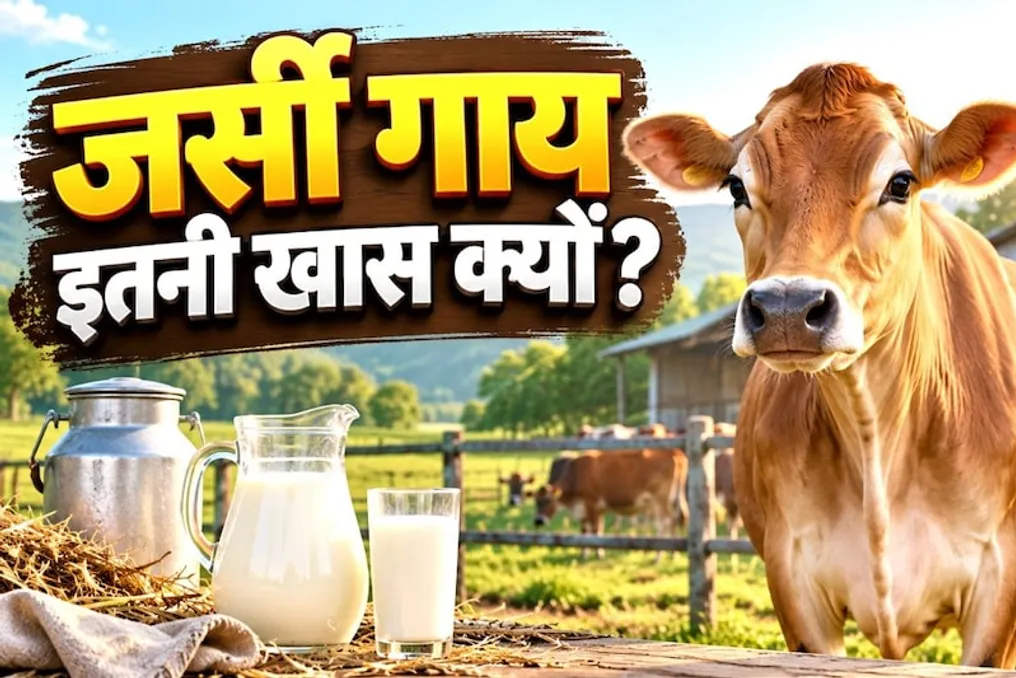
In India, there is a traditional practice of keeping cattle, and many villagers are involved in the dairy business by raising cows. The country hosts numerous cattle breeds: some are local, while others are imported. Among the latter, the Jersey cow has gained particular recognition in the dairy industry due to its ability to produce a large amount of milk. However, questions remain regarding its appearance, identification methods, and the specific characteristics of this popular breed.
The origins of the Jersey cow are linked to the island of Jersey, located in the English Channel between the United Kingdom and France, where the breed evolved. Later, Jersey cows were exported to many countries around the world, including India. In India, Jersey cows were integrated into the dairy sector, with attempts made to adapt them to local conditions. Crossbreeding programs between Jerseys and local breeds were also conducted to increase milk production volume.
Jersey cows can be identified quite accurately by their coat color and body structure. Their color typically ranges from light brown, golden, reddish-brown to dark brown, sometimes showing white markings on the body. Compared to some other large imported breeds, they have a more compact size and a smaller head. Horns may be small. A key distinguishing feature is the well-developed and large udder, as this is the crucial element related to milk production.
The main reason for the popularity of Jersey cows among farmers is their high productivity and milk quality. Nevertheless, the volume of milk each cow produces depends on numerous factors, including its breed, diet, level of care, age, health status, and housing conditions. A well-cared-for Jersey cow can produce about 10–15 liters of milk daily, and some superior individuals may exceed this figure. Therefore, it is considered a beneficial breed for dairy farming. Furthermore, Jersey milk has a good fat content, making it suitable for producing butter, ghee, and other dairy products.
Due to their relatively small size, Jersey cows can be kept in less space compared to other large imported breeds under certain conditions. Farmers also find them easy to care for. However, this does not mean that Jersey cows can be maintained on meager feed or without proper attention. Achieving a high level of milk productivity requires a balanced diet, clean water, adherence to sanitary standards, and veterinary consultation.
There are connections between India and Bhutan in the fields of agriculture and animal husbandry. As part of this cooperation, India transferred Jersey cows to Bhutan. Bhutan had a need for highly productive breeds to develop its dairy sector, so Jersey breeds were recognized as beneficial. India has also long focused on increasing milk production using various cattle breeds, and the Jersey cow is an example of this general trend.
India has many local breeds, such as Gir, Sahiwal, and Rathi, each possessing unique characteristics and well-adapted to the local climate. The Jersey, however, is an imported breed valued worldwide specifically for its high milk yield. When choosing a cow, it is important to consider not only the milk volume but also factors such as climate, feed availability, disease protection, quality of care, and local conditions. It is for these reasons that the Jersey cow has become widely known in the dairy industry not only in India but also in many other countries around the world.