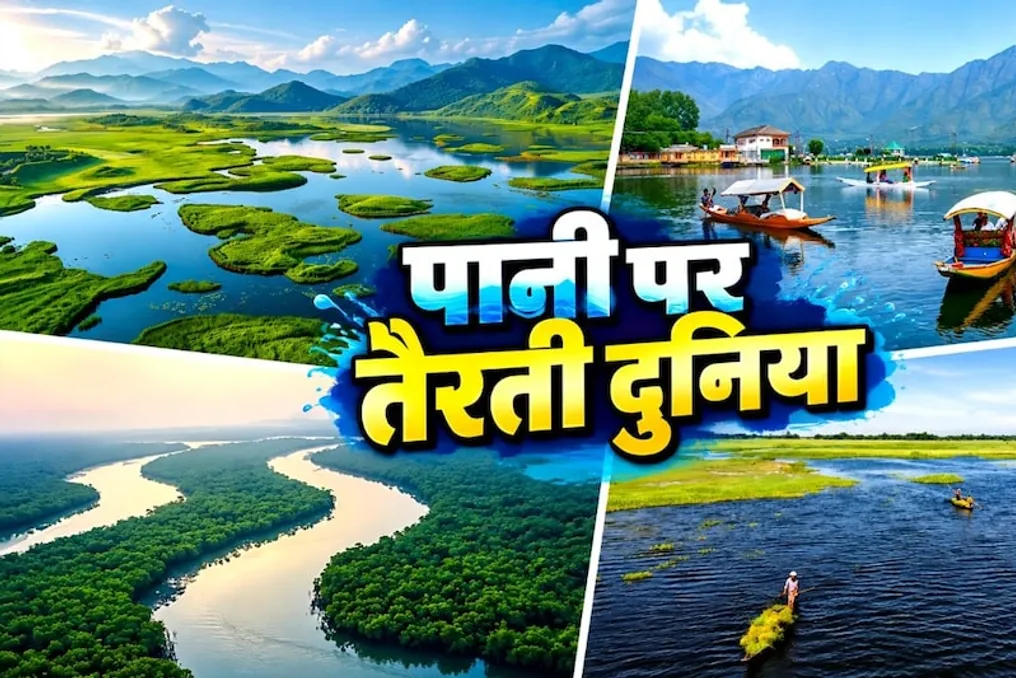
India is known for its diverse landscape, which includes mountains, deserts, seas, and dense forests. However, the country also has special places where water is not just a picturesque element but an integral part of people's lives—from housing to methods of labor and transportation. These locations are distinguished by a unique way of life and beauty, setting them apart from other tourist destinations.
Let's look at four such unique places in India where life unfolds amidst the water.
Loktak Lake in Manipur is considered one of the most unusual lakes in India. It is famous for its phumdis—large formations made of vegetation, soil, and organic matter that float on the water, creating the impression that the land is floating above the water.
Local residents here depend on fishing and other activities related to the lake. Small huts and boats can be seen in some parts of the lake.
When mentioning Dal Lake in Kashmir, shikara boats and houseboats immediately come to mind. Nevertheless, this lake serves not only as a place for tourist recreation; it is also connected to the daily life and work of many local residents.
Floating gardens are found on Dal Lake, where vegetables are grown. These vegetables are transported to the market using boats. A special sight is the floating vegetable market that appears on the lake early in the morning.
Majuli in Assam is an island formed in the Brahmaputra River. The lives of the people here are heavily dependent on the fluctuations in the river level. Seasonal floods, bank erosion, and changes in river courses are part of their life during the rainy season.
Agriculture, fishing, and boat travel play an important role. Majuli is also known for its Vaishnavite culture, where various sessions demonstrating mask-making and music traditions are held.
The Sundarbans in West Bengal is among the world's largest mangrove deltas. Here, villages are situated among rivers, small streams, and tidal waterways, meaning the distance between land and water is often minimal.
In several areas, the boat is the primary means of transportation. Local residents engage in fishing, crab gathering, honey collection, and agriculture. However, life amidst the water here comes with difficulties such as cyclones, floods, erosion, and increasing salinity, which negatively affect housing and livelihoods.