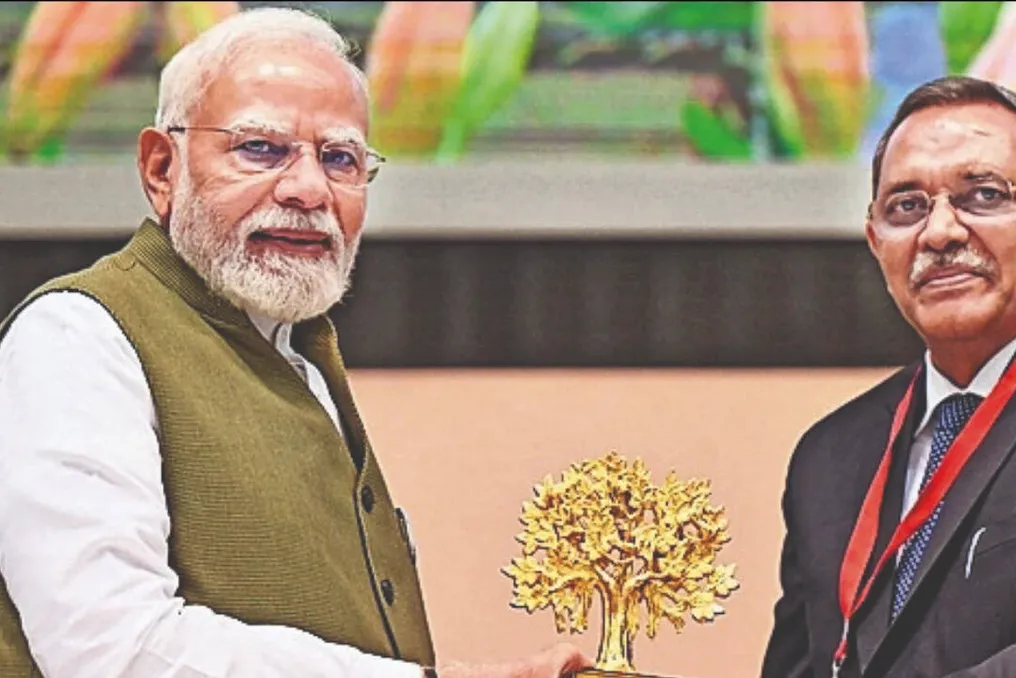
Modi opposed the Western narrative on carbon emissions, emphasizing the contribution of developed countries
Read more
The times of India
timesofindia.indiatimes.com

Modi opposed the Western narrative on carbon emissions, emphasizing the contribution of developed countries

Narendra Modi criticized the narrative on Saturday that places the responsibility for carbon emissions on developing countries while Western nations are absolved of their role as historical polluters. He affirmed his country's commitment to climate action and noted that India has the best track record among G20 nations.

During the international symposium 'Future of Environmental and Climate Dynamics,' organized by NGT, Modi stated: 'Carbon emissions per capita in developed countries are six times higher than in India... India firmly presents this fact on global platforms... We are setting new benchmarks for environmental protection, involving the entire world.'

These remarks came amid the world's preparation for the global climate conference scheduled for November in Turkey. Despite India being the third-largest emitter, Modi stressed that its per capita emissions stand at 2.2 tons per person annually, which is less than half the global average (4.7 tons per person per year), and six times lower than the per capita emissions in the USA (14.2 tons) and Russia (14 tons).

India has consistently raised these issues in all multilateral forums, emphasizing fairness and the need for major polluters—who developed through burning fossil fuels over the last two centuries, leading to global warming—to reduce emissions. Nevertheless, India has never shied away from its responsibilities and has fulfilled its commitments to climate action under the Paris Agreement.
Similar stories

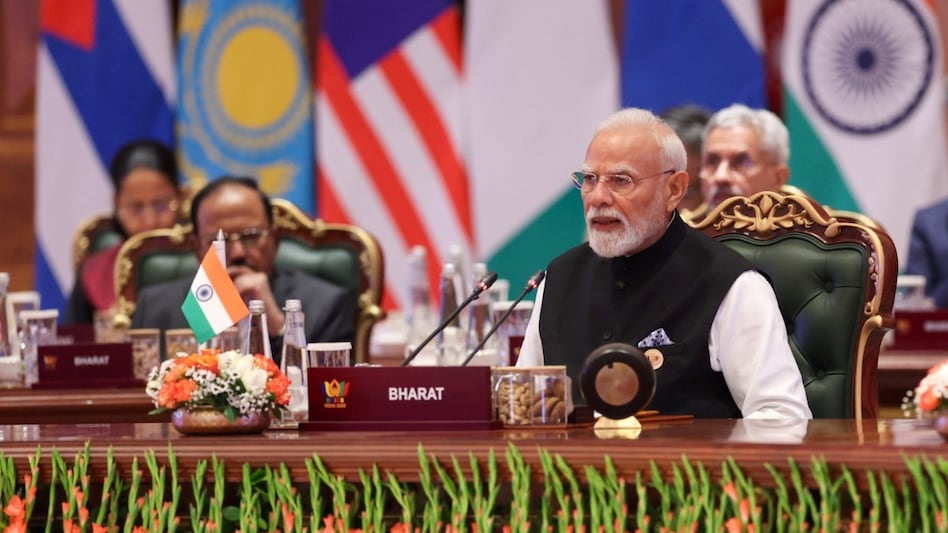
Prime Minister Modi addressed the BRICS summit, raising the issue of global policy's impact on the Global South
Read more
www.aajtak.in

Prime Minister Modi addressed the BRICS summit, raising the issue of global policy's impact on the Global South

During the eighteenth BRICS summit held in Bharat Mandap, the Prime Minister of India presented several important proposals to BRICS nations. He also called for the development of a roadmap for BRICS leading up to the next summit. Expressing concern over global tensions, he noted that the 'Global South' is currently facing the greatest difficulties, yet it lacks significant influence on the decision-making process.

Prime Minister Modi compared global power to a pyramid, where a few countries at the top hold the power and make decisions. While most countries are at the bottom, they are subject to these decisions and suffer from crises without participating in their making. He emphasized the need to change this situation.

Modi proposed that BRICS prepare its roadmap for the next summit, regardless of who chairs it. He presented ten proposals concerning global governance. The Prime Minister stated that BRICS countries should focus on representation, accountability, and rule-making when preparing the roadmap.

By 'representation,' he meant the reform of the UN Security Council, which cannot be postponed, and the necessity of tying things to clear deadlines and results. He insisted on focusing on global governance in line with current policy, demanding the participation of all countries in voting, rule-making, and other aspects. Modi also noted that the Global South countries are capable of solving problems. Addressing the BRICS nations, he added that countries contributing significantly to world trade must be included in the process of making global decisions.

Furthermore, PM Modi urged BRICS countries to increase trade. He stressed the critical importance of preparing for equal participation worldwide. Areas such as artificial intelligence, biotechnology, and technology must be promoted, and the shift must occur from being a 'rule-setter' to a 'rule-maker.' All countries must operate based on equal participation.

This statement by PM Modi is considered particularly significant against the backdrop of global geopolitical tensions, as other countries suffer from conflicts in certain states. Moreover, the world is experiencing a deepening energy crisis, and inflation is constantly rising.

Popular