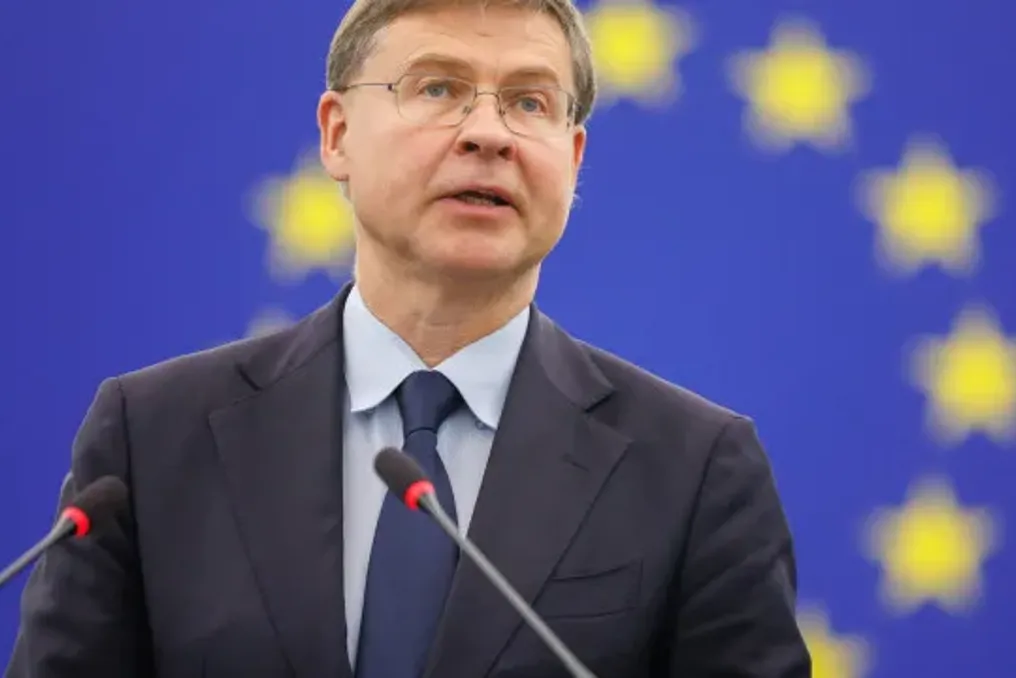
The European Commission has stated its readiness to support discussions and analyze various options for using frozen Russian assets to reach decisions. European Commissioner for the Economy Valdis Dombrovskis emphasized that the European Commission has been very clear on this issue.
During a press conference following an informal meeting of EU finance ministers held in Dublin under the chairmanship of Ireland, he acknowledged that although the topic was not discussed at this meeting, 'many EU member states, as well as a significant number of Members of the European Parliament, have resumed this discussion.'
This statement comes against the backdrop of the EU's inability to agree on the use of frozen Russian assets to finance Ukraine's needs in 2026 and 2027. Previously, the EU provided a loan of 90 billion euros, which was financed by debt taken up by the Union in capital markets.
Meanwhile, additional revenues generated from frozen Russian assets are being used to cover the European share of loans provided to Ukraine under the G7 initiative, helping to repay these loans.
Last December, the European Commission proposed using not only the interest but also the cash balances associated with frozen Russian assets in European financial institutions. The initial idea was to use these balances as a basis for financing a loan for Ukraine's reconstruction, with Kyiv only having to repay it when Russia paid corresponding compensation, while the frozen assets remained untouched.
This proposal could attract around 210 billion euros, corresponding to the total amount frozen in the EU. However, the decision was not made due to insufficient agreement among member states, particularly concerning the legal and financial concerns of Belgium, where most of the frozen Russian assets are held through Euroclear.
Belgium warned about the risks of potential lawsuits or countermeasures from Russia, as well as the need to define guarantees that would protect the institution and the Belgian state from these threats.
Recently, this topic was raised again by the Netherlands, Poland, Spain, and Sweden. In a letter sent to the European Commission in August, these countries advocated for resuming debates on the use of frozen Russian assets and demanded the study of new legal and financial options for their freezing in support of Ukraine, taking into account the risks to member states.
The task now falls to the executive body of the community to work on this issue. Possible options include adapting the reconstruction loan model using balances related to frozen assets to finance Ukraine, or finding other ways to freeze these resources, including generating additional income such as the interest these assets generate.
Russia launched a full-scale invasion of Ukraine in February 2022.