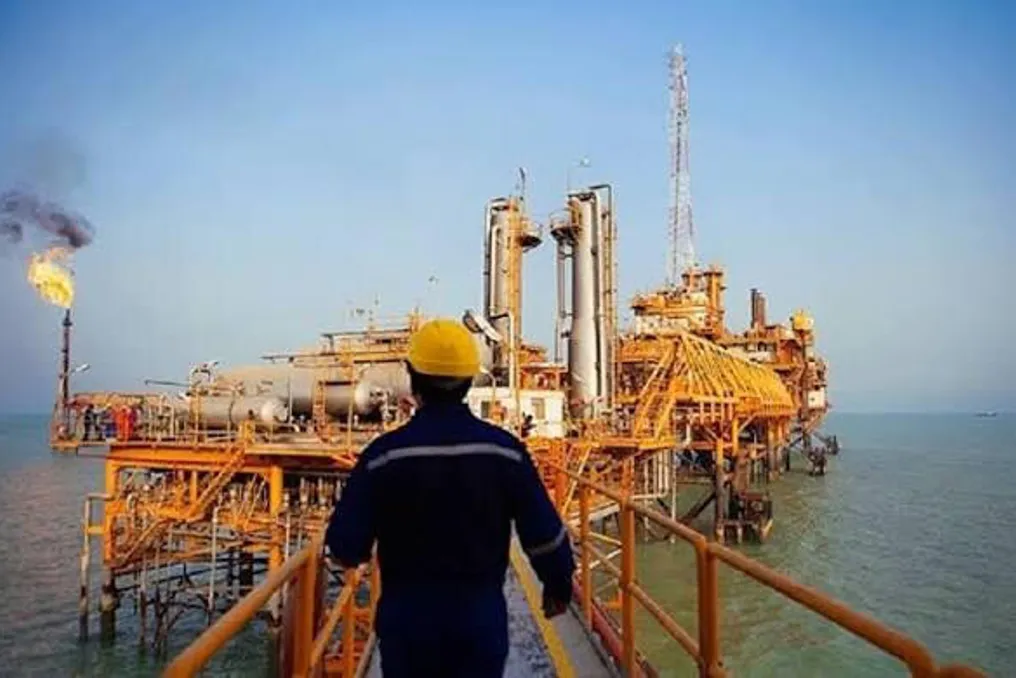
The Director of Engineering and Development of the National Iranian Oil Company announced the ratification and commencement of five contracts for the development of oil and gas fields totaling $13.6 billion under the 14th government. He noted that the implementation of these agreements will increase daily oil production by more than 600,000 barrels and gas by 30 million cubic meters.
According to a report by Shana, Reza Akebati also reported the signing of new contracts in the 14th government. In addition to starting work on the five contracts, approximately $9.3 billion worth of contracts were signed in the field development sector, which are currently in the process of obtaining necessary permits and ratification.
Referring to the memorandums of understanding signed for field development, he specified that about 40 such memorandums were concluded under the 14th government, covering 39 oil and gas fields.
The Director of Engineering and Development of the National Iranian Oil Company added that if these memorandums are converted into full-fledged contracts, the potential investment value could exceed $37 billion.
Akebati named the Lavan, Hartang, and Safid Zahour gas fields among the sites being considered for development. Furthermore, negotiations are underway with domestic and foreign investors regarding the development of the Yadavaran field, and it is hoped that these talks will soon yield results.
Regarding measures to simplify the process of attracting investment in the oil and gas industry, he stated that the National Iranian Oil Company, together with the government and the Planning and Budget Organization, received approval from the Council of Ministers. This approval has created favorable conditions for attracting investments from relevant sectors into the development of gas fields, based on the regulation for increasing gas production and distributing associated gas between energy-intensive industrial and petrochemical enterprises.
The Director of Engineering and Development of the National Iranian Oil Company commented on the time lag between contract signing, its ratification, and the start of executive work. He explained that going through all stages of ratification and transitioning a contract to the execution phase requires time. Therefore, the National Iranian Oil Company included the decision to conclude preliminary and initial contracts in its agenda.
Akebati emphasized that utilizing the opportunities provided by initial and preliminary contracts during the waiting period for main ratification allows for the initiation of initial activities and preparation for field development, thereby accelerating the transition of projects into the development and execution phase.
Addressing the country's significant potential in the oil and gas sector, he stated that Iran possesses the third-largest proven oil reserves and the second-largest proven gas reserves in the world, ranking first globally in total oil and gas reserves.
In conclusion, the Director of Engineering and Development of the National Iranian Oil Company noted that transforming potential reserves into real and sustainable production capacity is one of the key tasks of the field development sector in the oil and gas industry, and important steps have been taken under the 14th government to develop fields and increase production capacity.