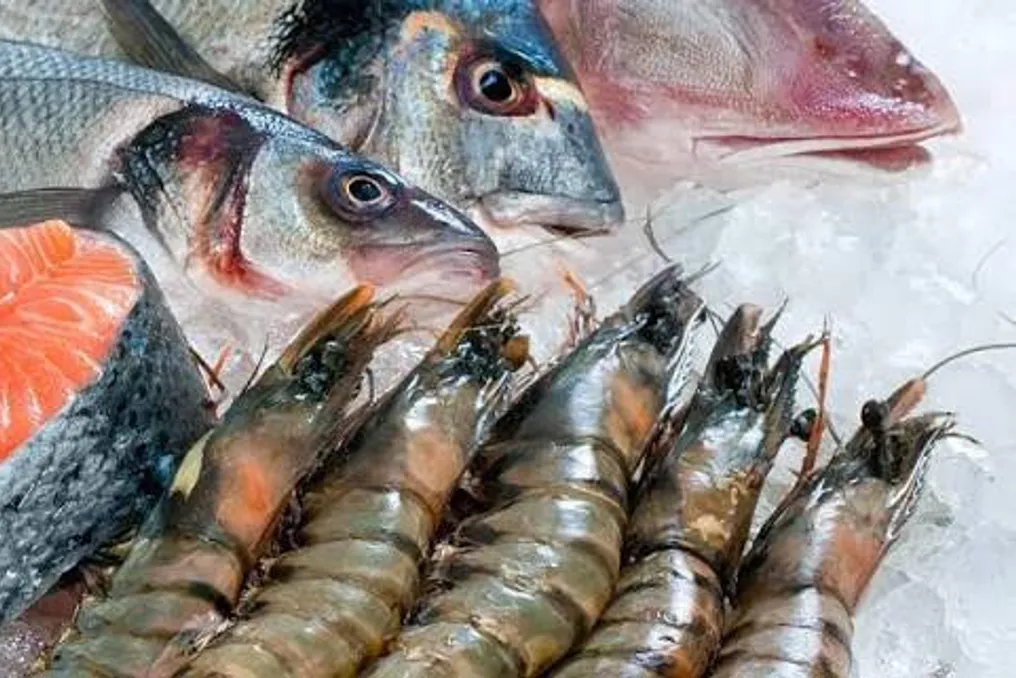
At the International Exhibition of Fishing and Aquaculture in St. Petersburg, the Iranian pavilion hosted high-ranking Russian officials, during whose visit Iran's water product export capacities were presented.
Presentation of Iran's Fish Product Export Opportunities
According to Mehr News Agency, during the ninth International Exhibition of Fishing, Aquaculture, and Related Technologies in St. Petersburg, Deputy Prime Minister of Russia Dmitry Patrushev and Governor of St. Petersburg Alexander Beglov visited the Iranian pavilion. They were officially welcomed by Vahid Salehi, Deputy Minister and Head of the country's Veterinary Organization, as well as representatives of the Iranian delegation.
During the visit, Salehi demonstrated the potential of the Islamic Republic of Iran in the field of water resource production, processing, and export, emphasizing the country's extensive opportunities for developing specialized and commercial cooperation with Russia.
Highlighting Readiness for Cooperation Expansion
Speaking about Iran's position in aquaculture and the diversity of its fish products, the head of the Veterinary Organization outlined production and export capabilities, as well as the potential of Iranian companies. He stated: 'Thanks to diverse opportunities in the water sector, production and processing infrastructure, and the active participation of the private sector, Iran is ready to expand its cooperation with Russia in this area.'
Salehi emphasized the critical importance of adhering to health and quality requirements when trading aquatic products. He noted: 'Compliance with the health and quality principles and standards of destination countries, especially members of the Eurasian Economic and Customs Union, is a fundamental condition for the development of Iran's aquatic product exports.'
He added that the export of Iranian aquatic products is carried out taking into account special sanitary requirements and controls, quarantine norms of the country's Veterinary Organization, as well as standards agreed upon with importing countries; strict adherence to these requirements plays a key role in maintaining product health, strengthening mutual trust, and ensuring sustainable trade development.
The head of the Veterinary Organization also stressed the need to simplify technical interaction, accelerate document exchange, and strengthen communication between relevant agencies of the two countries. He noted: 'Developing expert cooperation and creating regular channels for information exchange can strengthen the process of exporting Iranian aquatic products to the Russian market and other member states of the Eurasian Economic Union.'
Iran's fishing industry is a vital part of the economy and food security of the country, providing direct employment for approximately 285,000–300,000 people and indirect employment for another million people.
Strategically utilizing access to the Caspian Sea in the north, as well as the Persian Gulf and the Gulf of Oman in the south, the sector is divided into two categories: commercial fishing and aquaculture, with the latter being the dominant force driving growth.
Production focuses on valuable species, including rainbow trout, common carp, and particularly Pacific shrimp. As a crucial pillar of the non-oil economy, fish exports exceeded $700 million in 2025, with key markets being China, Iraq, and the UAE. In the future, Iran aims to increase the total volume of fish production to 1.8 million tons by 2030, striving to raise annual exports to $1 billion.
Fish farming, which is an integral part of the non-oil economy, primarily produces rainbow trout, common carp, and shrimp. Production has geographical specificity: cold-water trout farms are located in provinces along the Alborz and Zagros mountains, while shrimp farming is concentrated in the southern coastal provinces of Bushehr, Hormozgan, and Sistan and Baluchestan. In 2025, the sector showed significant growth, with only shrimp production reaching 50,000 tons. This powerful aquaculture sector is a key driver of exports, job creation, and regional economic development.