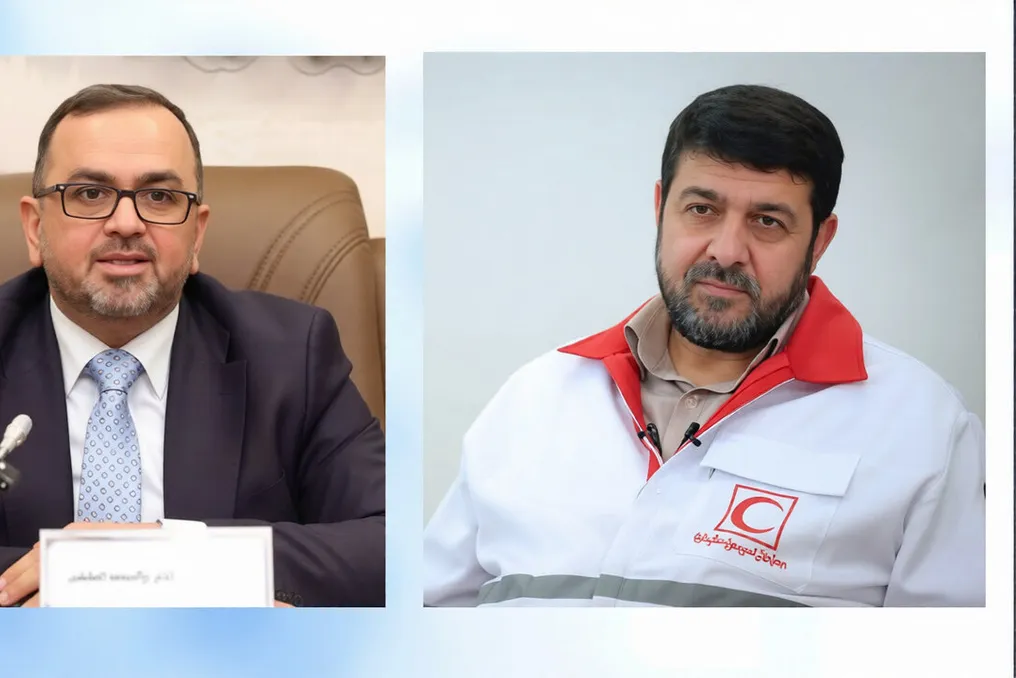
The Iranian Red Crescent Society (IRCS) and the Iraqi Ministry of Health have reached an agreement to strengthen bilateral cooperation in the field of healthcare. The main focus will be on medical education, treatment, pharmaceuticals, and medical equipment.
At a meeting in Baghdad on Thursday, IRCS head Pirhossein Kolivand and Iraqi Minister of Health Abdul Hussein Aziz Al-Moussawi participated, as reported by the IRCS website.
During the negotiations, the possibility of conducting joint specialized and subspecialized courses, exchanging clinical experience, improving the qualifications of Iraqi medical personnel, and developing partnerships in the production of pharmaceuticals and medical instruments was discussed.
The Iranian representative emphasized the high potential of IRCS in the healthcare sector, including its extensive network of medical centers, polyclinics, specialized capabilities in medicine and nursing, as well as a large number of volunteers. He noted IRCS's readiness to use its experience and knowledge to develop cooperation between the two parties.
Furthermore, he announced IRCS's readiness to train Iraqi doctors, nurses, and specialists, send Iranian experts, distinguished professors, and medical teams to Iraq, and assist in establishing medical and nursing schools, especially in Najaf.
For his part, Al-Moussawi highly praised Iran's assistance, stating: 'I am deeply grateful for your support. We strive to direct all our efforts towards creating and further developing this cooperation.'
In June, Kolivand proposed to the UN headquarters coordinator and Director of the Regional Office for West and Central Africa to establish a humanitarian training center in West Asia, stating his readiness to take the lead in this matter.
This proposal was made by the head of IRCS at a meeting with UN Coordinator Christine Waigand and Director of the Regional Office for West and Central Africa Charles Bernimolin at the UN Office for the Coordination of Humanitarian Affairs (OCHA).
Kolivand stated that thanks to 110,000 trained specialists and six million young volunteers, the Iranian Red Crescent Society possesses significant capabilities in providing aid, educational, and humanitarian services. According to IRNA, IRCS actively provides rescue and assistance services to people affected by accidents and natural disasters.
He added that IRCS is the only national organization in the world that uses volunteers on vehicles to provide rescue services in hard-to-reach areas, and has also achieved success in air rescue and the use of drones in rescue missions.
Currently, IRCS is cooperating with 19 countries worldwide in the production of artificial and smart organs. The society has also developed capabilities in the production of medical and pharmaceutical products.
The representative noted that the measures taken by IRCS during the recent war between the US and Israel against Iran attracted the attention of the international community and humanitarian institutions, which contributed to expanding cooperation.
He continued that IRCS is ready to develop a partnership with the UN and its affiliated agencies in sharing aid experience, conducting joint educational courses, developing regional cooperation, enhancing human potential, and even establishing a regional UN coordination office in Iran.
In turn, Waigand highly praised IRCS's efforts and achievements while managing the recent war and floods in the country. She noted that IRCS's accurate and timely reports and documents on the war played a key role in reflecting the real situation, formulating humanitarian needs, attracting the attention of the international community, and securing support and aid for affected people.
Bernimolin, for his part, stated that IRCS's activities and capabilities have been recognized by the international community for many years; IRCS is known as a professional, competent, and respected organization. He added that IRCS's accurate reports and documents significantly contributed to monitoring the humanitarian situation, assessing needs, and planning humanitarian response.
He concluded that future joint projects between the UN and IRCS will focus on promoting educational cooperation, experience exchange, and utilizing mutual capabilities. The official representative called for strengthening joint efforts to meet the needs of those affected and strengthen humanitarian action.