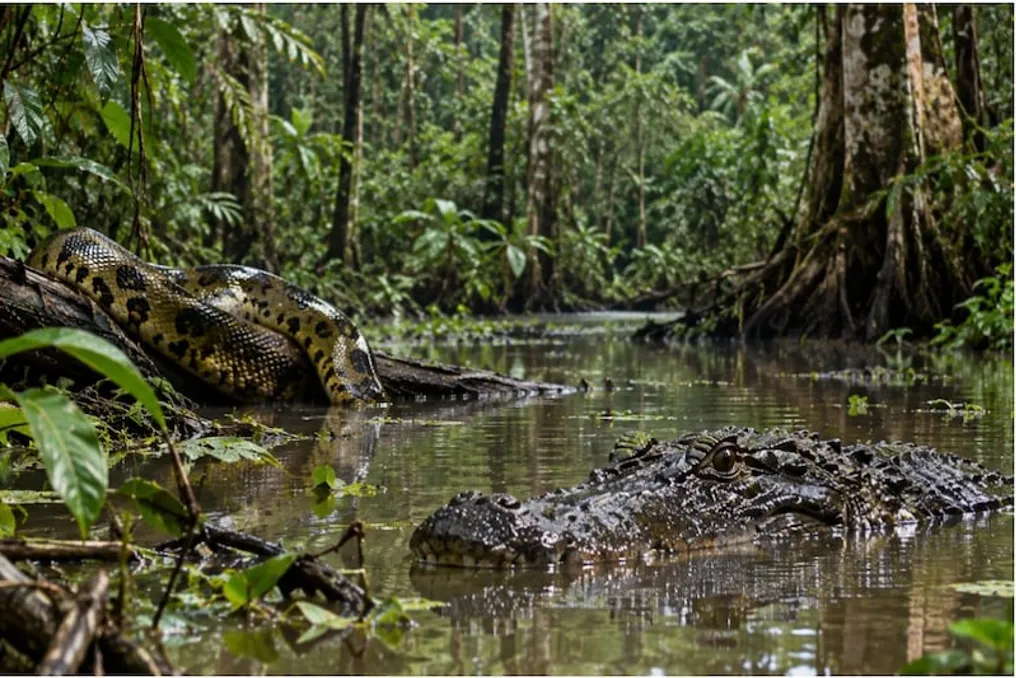
There are places on the planet where nature has imposed a ban on humans. One such place is the Amazon Basin in South America. The mud here possesses enormous depth, and if a person finds themselves alone there, they will be unable to get out by themselves. Furthermore, giant anacondas, black caimans (a type of crocodile), and poisonous creatures inhabit this area that can lead to a person's demise. Thus, the chances of survival here are extremely slim.
On one hand, this region possesses beauty, and on the other—deadly danger. If one's foot sinks into the soil of this place, getting out becomes practically impossible.
According to a report by Wildlife Magazine 'Discover Wildlife', the most serious threat to humans in the swampy areas of the Amazon is deep water and bottomless mud. After a person sinks, the bottom remains invisible. The report also indicates that approximately one million people visit the Amazon annually, and for them, the main natural threat is not so much the animals as these swamps and deep water.
The animals inhabiting this marshy area are also not harmless. The largest predator here is the black caiman—a type of crocodile that can reach a length of about 6 meters (20 feet) and weigh up to 300 kilograms. According to Wikipedia, between 2000 and 2016, 23 cases of human deaths from attacks by black caimans were registered in the Amazon Basin. Most of the deceased were fishermen and villagers who were bathing or swimming in rivers and streams.
Additionally, the world's heaviest snake, the green anaconda, is found here. According to the World Atlas website, the confirmed length of the green anaconda is about 5.2 meters (17 feet), and its weight reaches 227 kilograms. Although unconfirmed reports of larger snakes have been received over many years, the anaconda itself is not venomous; it immobilizes its prey by coiling around it with its body. Nevertheless, although confirmed cases of anaconda attacks on humans are extremely rare, its strength and size make it another formidable aspect of these swamps.
Therefore, if the opportunity ever arises to visit these swampy regions of the Amazon, every step taken on the ground should be done with extreme caution, as nature has determined that this place is not meant for humans.