A 52-year-old woman from the Philippines sought treatment at a local hospital with troubling symptoms. For four months, the patient reported headaches and intermittent visual hallucinations. Despite being able to speak, she had difficulty naming objects, repeating words, and following simple commands.
Initially, doctors were uncertain about a possible diagnosis. Since she described seeing animals and people that were not actually there, the on-duty team considered a mental disorder. However, the patient's cognitive issues prompted a broader investigation using a series of tests.
The first test, an electroencephalogram (EEG), showed abnormal brain activity, raising suspicion that the hallucinations might be related to seizures. Yet, it was the results of imaging studies that revealed the mystery's cause: cysts were found in the patient's brain.
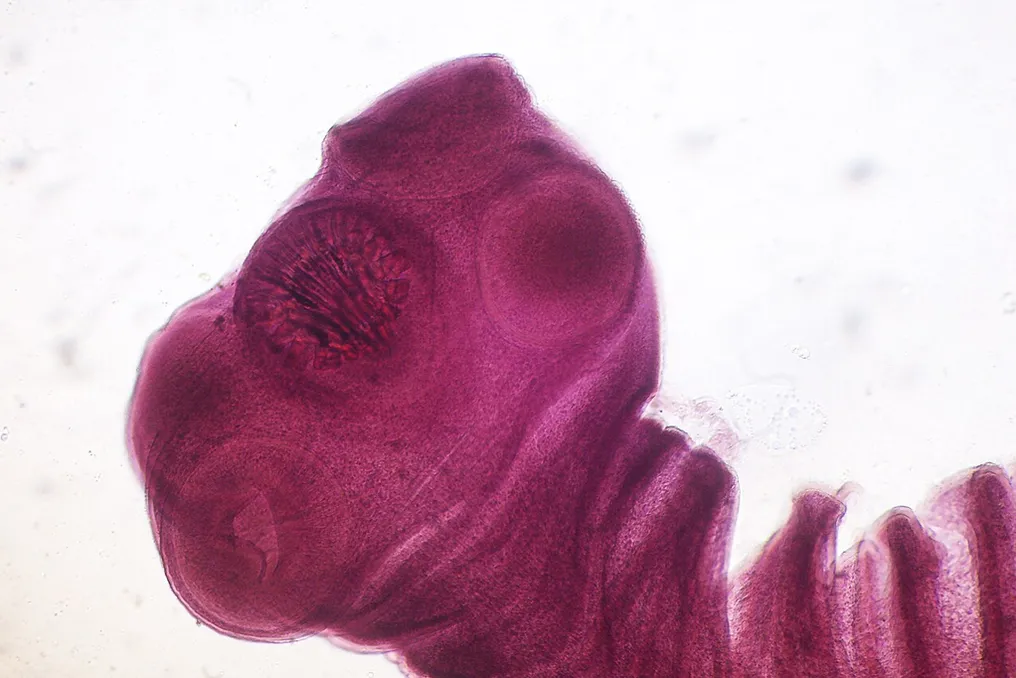
Many of these cysts contained a tiny glowing spot known as a scolex, which corresponds to the 'head' of a pork tapeworm (Taenia solium). The final diagnosis was neurocysticercosis—a serious central nervous system infection where pork tapeworm larvae settle in the brain.
The woman was unaware of the disease and did not understand how or where she became infected. Her case was published in the New England Journal of Medicine in July this year by physicians from Jose R. Reyes Memorial in Manila, Philippines.
Pork tapeworms usually manifest as an intestinal infection widely known as taeniasis. The parasite enters the body by consuming raw or undercooked infected meat. However, there is another way these creatures can enter the body: by swallowing their microscopic eggs. After ingestion, the tapeworm eggs hatch in the intestine, releasing larvae that can enter the bloodstream and migrate to other body tissues, including the brain. This form of the disease is called neurocysticercosis.
A common route of infection is fecal-oral transmission: an infected person suffering from intestinal tapeworm excretes microscopic eggs in feces, and due to poor hand hygiene when preparing food or touching surfaces, they can be swallowed by another person. In this case, transmission occurs through contaminated food or water.
For example, one year before becoming infected, the Filipino woman visited evacuation centers (built to house people during natural disasters). According to doctors, the sanitation and hygiene conditions when handling food at this location were unsatisfactory, suggesting a likely source of infection at the center.
Fortunately, the case had a positive outcome. The use of antiparasitic drugs, such as albendazole and praziquantel, allowed for the eradication of parasites in the patient's brain, and her symptoms disappeared within a month. New brain scans showed a reduction in cysts and the disappearance of the characteristic spots.
Neurocysticercosis can be fatal because dying parasites can cause cerebral edema. Combined with this, cysts can block the flow of cerebrospinal fluid around the brain, which can also trigger seizures.
Globally, 50 million people have been infected with pork or bovine tapeworms (Taenia saginata). The pork tapeworm is still considered an endemic disease in parts of Central and South America, as well as parts of Africa and Asia. Infection is usually linked to poor sanitary conditions, inadequate hygiene, open defecation, free-roaming pigs, and poverty. For all forms of the disease, the best prevention is thorough cooking of meat, maintaining proper personal hygiene, adequate basic sanitation, and controlling animal housing in controlled and hygienic conditions.