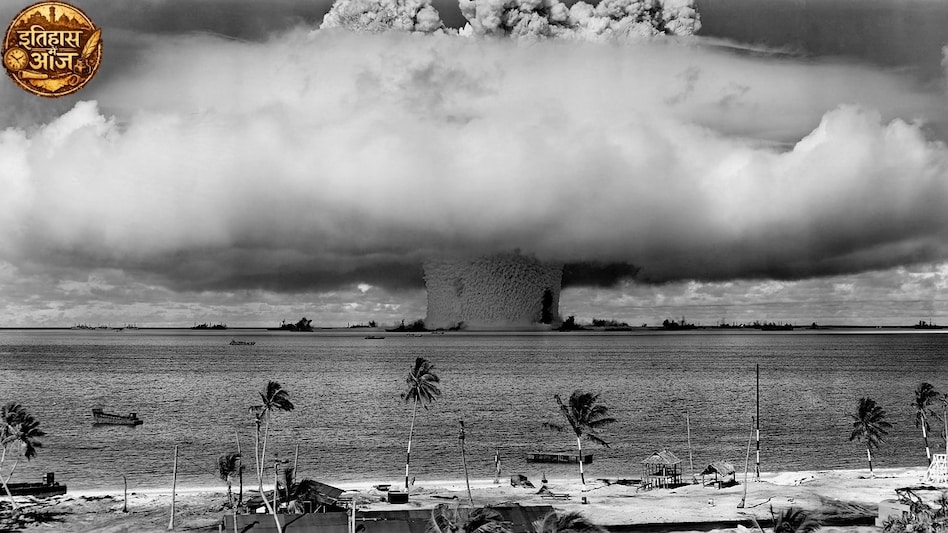
On September 19, 1957, an underground nuclear bomb test with a yield of 1.7 kilotons was conducted at the Nevada Test Site, located 65 miles north of Las Vegas, Nevada, USA. This test, named Rainier, was the first fully controlled underground test that resulted in no release of radioactive radiation.
The W-25 warhead, weighing 218 pounds, with a diameter of 25.7 inches and a length of 17.4 inches, was used for this test.
The history of nuclear weapons in the US began in December 1941 when the US government decided to create the first nuclear weapon. President Franklin Roosevelt approved a budget of $2 billion for the Manhattan Project.
The first nuclear weapons test took place on July 16, 1945, at the Trinity site near Alamogordo, New Mexico. Just a few weeks later, on August 6, 1945, during the war with Japan, President Harry Truman authorized the dropping of the atomic bomb known as 'Little Boy' on Hiroshima. Three days later, on August 9, the atomic bomb 'Fat Man' was dropped on Nagasaki. Estimates suggest these two strikes caused the deaths of two hundred thousand people, after which Japan surrendered to the Allies on August 15, 1945.
The 1957 test took place during the Cold War and the nuclear arms race between the US and the Soviet Union. In 1963, the US signed the Partial Test Ban Treaty, which prohibited nuclear tests in the atmosphere, underwater, and in space.
A total of 928 tests were conducted at the Nevada Test Site between 1951 and 1992, including the last US underground nuclear test.