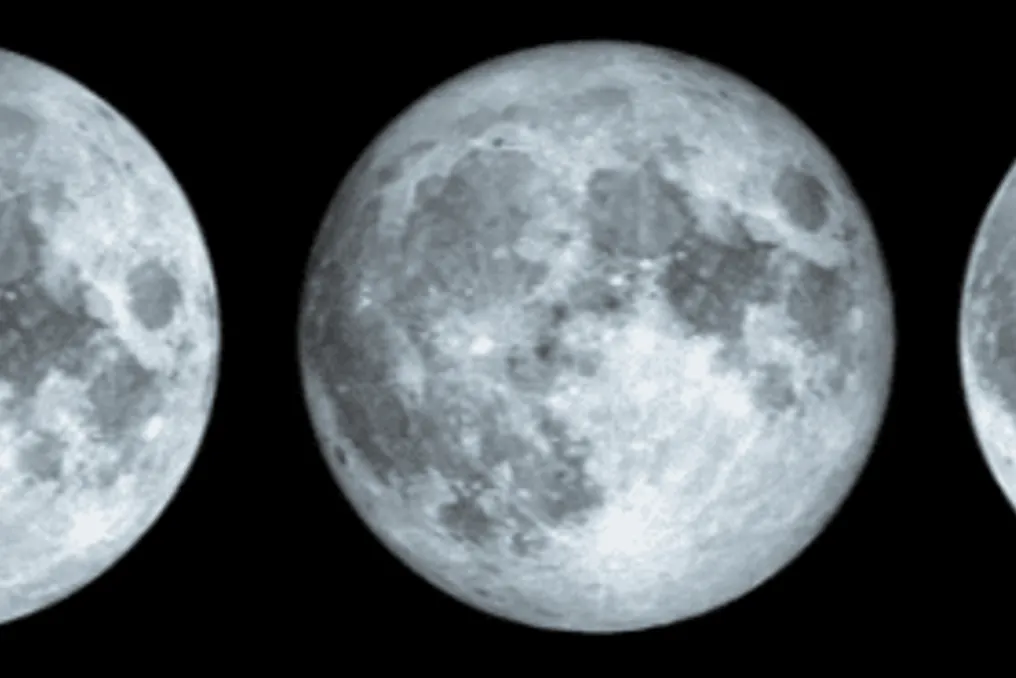
Moon reaches apogee this Saturday (19), being farthest from Earth
Read more
Olhar Digital
olhardigital.com.br

Moon reaches apogee this Saturday (19), being farthest from Earth

This Saturday, the 19th, exactly at midnight Brasília time, the Moon reached the farthest point from our planet in its orbital trajectory, a phenomenon known as apogee by astronomers.

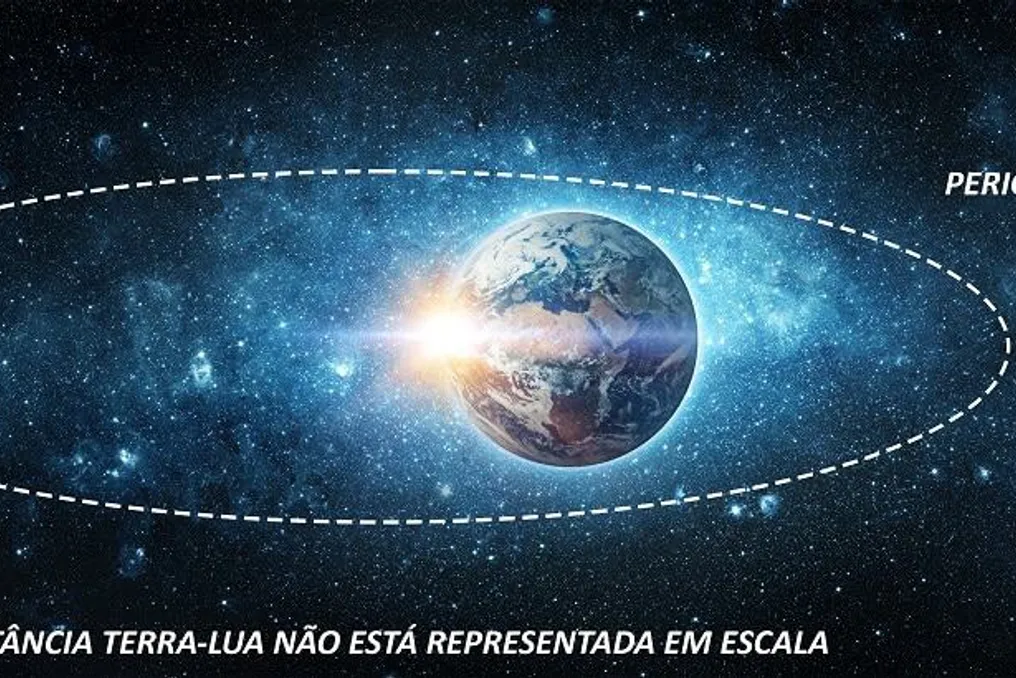
The variation in the Moon's distance occurs because its orbit is not perfectly circular, but slightly oval, following an elliptical path. As it travels this ellipse monthly, the Moon's distance oscillates by up to 14%, varying between 356,500 km at perigee (the moment of closest approach) and 406,700 km at apogee.

Marcelo Zurita, president of the Paraíba Astronomy Association (APA), commented that these values are only averages, as in reality they undergo large changes due to the gravitational forces exerted by the Sun and other bodies in the Solar System.

In addition to distance, the angular size of the celestial body and its brightness also change, although this alteration is difficult to perceive in practice, given that the lunar phases are constantly transforming. At this specific moment, the Moon is in the waxing phase, being the second of the current cycle, which will begin a new cycle on October 10th.

According to the InTheSky.org platform, the time required for the Moon to complete the cycle between perigee, apogee, and return to perigee is 27.55 days, a period known as the anomalistic month. This interval is slightly longer than the satellite's natural orbital period, which is 27.322 days.

It is important to note that the new moon signals the beginning of the month in lunar calendars, such as the Muslim calendar, and in lunisolar calendars, including the Jewish, Hindu, and Buddhist calendars. A complete lunar cycle, or lunation, has an average duration of 29.5 days, during which the Moon displays its four main phases: new, waxing, full, and waning, with each phase lasting about seven days.

Additionally, there are so-called 'interphases,' such as the quarter waxing and gibbous waxing (located between the new and full phases), and the gibbous waning and quarter waning (located between the full and waning phases).

Similar stories

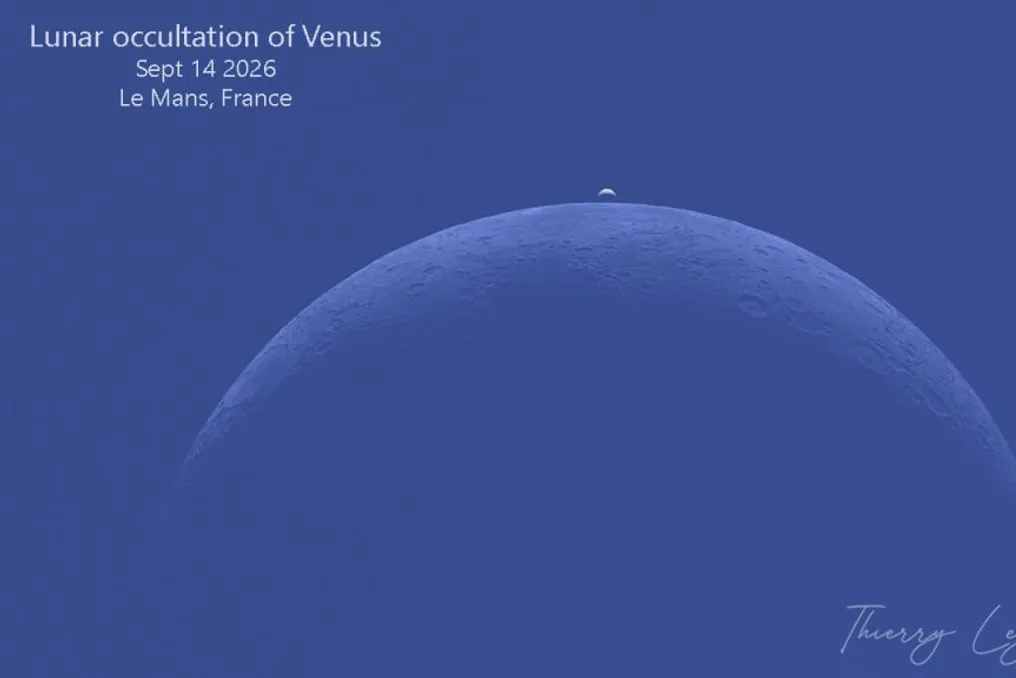
Venus images show crescent shape during lunar occultation
Read more
olhardigital.com.br

Venus images show crescent shape during lunar occultation

On Monday, the 14th, astronomical events involving Venus occurred in different parts of the Earth. In certain regions, a lunar occultation of Venus was recorded, while in others, the two celestial bodies appeared close together in the sky, generating notable images.

The records of this phenomenon not only evidenced the proximity between the stars but also revealed that Venus exhibited a shape resembling a crescent moon. However, this appearance hides a crucial characteristic about the planet's current stage: it is in a waning phase.

French astrophotographer Thierry Legault captured this moment in Le Mans, France, recording Venus emerging behind the Moon. He described the scene to Spaceweather.com as being of 'two crescents side by side.'

The resemblance to the crescent moon is not merely visual; Venus actually adopts this shape, but the illuminated area of the planet is decreasing. Currently, 28% of the Venusian disk is facing us and bathed in sunlight. It is predicted that in one week, this percentage will drop to about 22%, and on September 30th, it will be only 15%, indicating that it is waning.

It is important to distinguish the terminology: the classification as 'crescent' refers to the geometric configuration of the disk, which manifests as a luminous arc in the firmament. The term 'waning,' on the other hand, describes the proportion of the surface that remains illuminated. Thus, although the arc maintains its curvature, it becomes progressively narrower over the days.

This visual change is also linked to the distance between Venus and Earth. When the planet approaches, its illuminated portion decreases, while its apparent size in the sky increases. This combination explains the intense brightness it maintains, even with only a small section of its sunlit face visible.

Marcelo Zurita, astronomer and president of the Paraíba Astronomy Association (APA), member of the Brazilian Astronomical Society (SAB), and technical director of the Brazilian Meteor Observation Network (BRAMON), commented that not all planets exhibit a phase cycle as evident as the Moon's. Only the inner planets—Mercury and Venus—show variations comparable to the lunar ones, although observing them in the new and full phases is challenging due to their angular proximity to the Sun during conjunctions. Outer planets, located beyond Earth's orbit, only display full and gibbous phases.

While the Moon maintains a constant proximity to us throughout its cycle by orbiting the Earth, Venus orbits the Sun, which causes significant variations in its distance from our planet.

Details about Venus observation

When Venus approaches Earth, we perceive a smaller slice of its illuminated side. In contrast, the planet appears larger to the terrestrial observer because of this proximity. This dynamic allows a Venus in an arc shape to remain extremely bright.

Zurita clarifies that the duration of each annual phase depends on the relative arrangement of the celestial bodies. He states that for the inner planets to Earth (Mercury and Venus), the new and full phases are invisible due to solar conjunction. However, when viewed shortly after sunset, they are leaving the superior conjunction (full phase) and moving towards the inferior conjunction (new phase), thus being in a waning phase. Conversely, when observed in the early morning hours, it means they are leaving the inferior conjunction to go to the superior, characterizing the waxing phase.

According to the Time And Date platform, the inferior solar conjunction, scheduled for October 24th, will place Venus less than 41 million kilometers from Earth. At this time, its illuminated face will be practically imperceptible, as we will be facing its night side, configuring something geometrically similar to a New Moon.

In the superior solar conjunction, the planet will be positioned on the opposite side of the Sun. At this stage, almost the entire face facing Earth will be illuminated, resulting in an appearance similar to a 'full Venus,' despite being at its farthest point from us.

For naked-eye observation, Venus will always appear as an intensely bright point of light. To visualize its illuminated curve and track the change of phases, the use of optical instruments is essential. Appropriate binoculars already allow noticing the phase, but a small telescope offers much superior clarity for observing the partially illuminated disk.
Moon Phase on September 15, 2026: Information about the Lunar Cycle
Read more
olhardigital.com.br

Moon Phase on September 15, 2026: Information about the Lunar Cycle

On September 15, 2026, the Moon was in the new phase, showing 23% visibility. The complete calendar of lunar phases for September 2026 was released by the National Institute of Meteorology (Inmet).

The lunar phases in September 2026 began on the 4th with the Waning Moon at 04:52, Brasília time. On September 11, the New Moon occurred at 00:27. Subsequently, the Waxing Moon appeared on the 18th at 17:44, culminating in the Full Moon on the 26th at 13:50.

A lunar cycle, also known as a lunation, is the time interval between two new moons and has an average duration of 29.5 days. During this period, the Moon passes through the four main phases—new, waxing, full, and waning—with each phase lasting approximately seven days. Additionally, there are intermediate phases, such as the first quarter and gibbous waxing (between new and full), and gibbous waning and last quarter (between full and waning).

During the New Moon phase, the satellite is positioned between the Earth and the Sun. This results in only the side illuminated by the Sun facing away from us, while the dark side faces us, making the Moon invisible in the night sky. This phase signals the beginning of a new lunar cycle, associated with renewal and new opportunities.

After the New Moon, the Waxing phase begins. Slowly, a thin band of light appears in the sky and progressively increases each night. Initially, only a faint arc is visible, but as the days advance, the illuminated area grows until it reaches half of the Moon, a stage called First Quarter. This period symbolizes development, growth, and the formation of new paths.

During the Full Moon phase, the Earth is located between the Sun and the Moon. This configuration allows the entire lunar face facing the Earth to receive complete illumination, making it fully visible and bright in the sky. It is the moment of maximum luminous intensity, occurring when the Moon rises on the horizon simultaneously with sunset. The Full Moon is linked to fullness, the peak of processes, and energy at its highest point.

After the Full Moon, the lunar luminosity begins to gradually decline. Each night, the illuminated portion decreases. When half of the Moon is visible, the Last Quarter occurs, which is the opposite of the First Quarter. The Moon continues to lose brightness until it returns to the New Moon, thus restarting the cycle. The Waning phase represents reflection, conclusion, and preparation for subsequent beginnings.

Popular