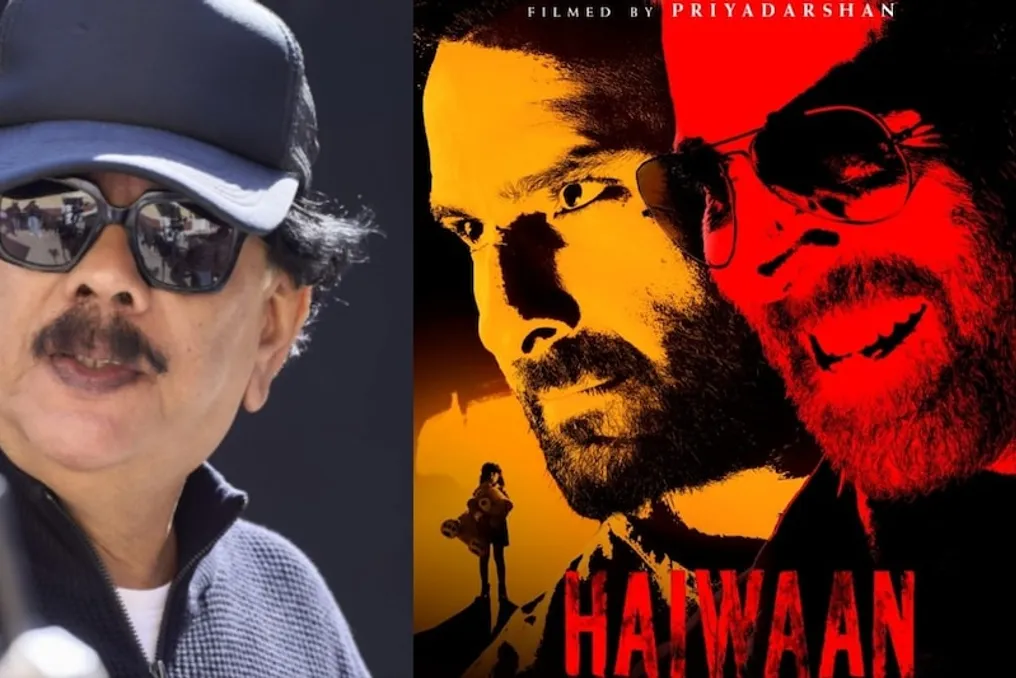
Despite having directed around 98 films, Priyadarshan himself does not consider himself completely perfect. He has spent over four decades in the film industry. He notes that even when one of his films is successful, he is not sure if he can achieve the same success in the next project.
Discussing his film 'Havan', he revealed his thoughts. Priyadarshan asserts that this mindset helps him constantly make changes to his films, which explains why his works are not monotonous, and he strives to create various genres.
Priyadarshan spoke about serious difficulties in his life. He emphasized that viewers change along with time. He noted that the audience that watched films 40 years ago is different from today's, so constant change is necessary.
He added that the viewer who came to him 40 years ago is radically different from the modern viewer, and therefore adaptation to changes over time is required.
Priyadarshan has a special approach to presenting old films in a new format. He says that when creating a remake, he does not simply copy the original but strives to present its plot in a completely new way, which is a distinguishing feature of his work.
In Priyadarshan's opinion, evolution in filmmaking is necessary. He cites examples of talented cinematographers who lost their jobs because they could not change with the times, emphasizing the importance of understanding current public opinion.
He openly discussed his method of working with remakes. Priyadarshan states that when making a remake, he takes only the plot, while reviewing other elements for potential changes. He gives examples of the films 'Virasat' and 'Gardish', where he made significant changes to the original storyline.
Priyadarshan believes that simply changing the language is not enough when it comes to creating films for the Indian audience in Hindi. Substantial changes must be made to the narrative and its presentation. He believes that many Hindi remakes do not resonate with audiences because they retain the imprint of South Indian cinema.
He emphasizes that he does not do this in his films; he changes the details, and these changes are what work in his works.
Priyadarshan also mentioned that technological changes complicate the recreation of old stories in their original form. He says that if he were to re-shoot some of his old films, he would have to make numerous adjustments because mobile phones did not exist back then. Therefore, the films must align with modern realities, even if the plot remains the same.
He explained why he does not create monotonous films. He argues that the same story can be told, but not in the same way; it needs to be presented differently. He succeeded in mastering this method, which is why he is present before the public today.
According to Priyadarshan, even if the plot remains unchanged, the way it is presented must change over time. This very drive for change motivates him to create diverse films.