How to use inexpensive cuts of meat from South African producers to prepare delicious family meals
Read more
IOL
iol.co.za

How to use inexpensive cuts of meat from South African producers to prepare delicious family meals

More affordable cuts of meat are especially useful for preparing stews, curries, brede, and potjies. Meat can account for a significant portion of food expenses, especially when buying food for the family. Popular steaks and ribs can quickly increase the cost of a meal, but cheaper cuts of meat can be just as satisfying if you know the right way to cook them.

The key to success is not to rush the process. Many economical cuts of meat come from muscles that work more intensely, so they contain more connective tissue. With enough time and moderate heat, this tissue breaks down, making the meat tender and adding richness to the juices during cooking. This makes these cuts ideal for stewed meat, curries, brede, potjies, and slow Sunday lunches.

Below are some cuts worth looking out for at your local butcher or supermarket.

Beef chuck

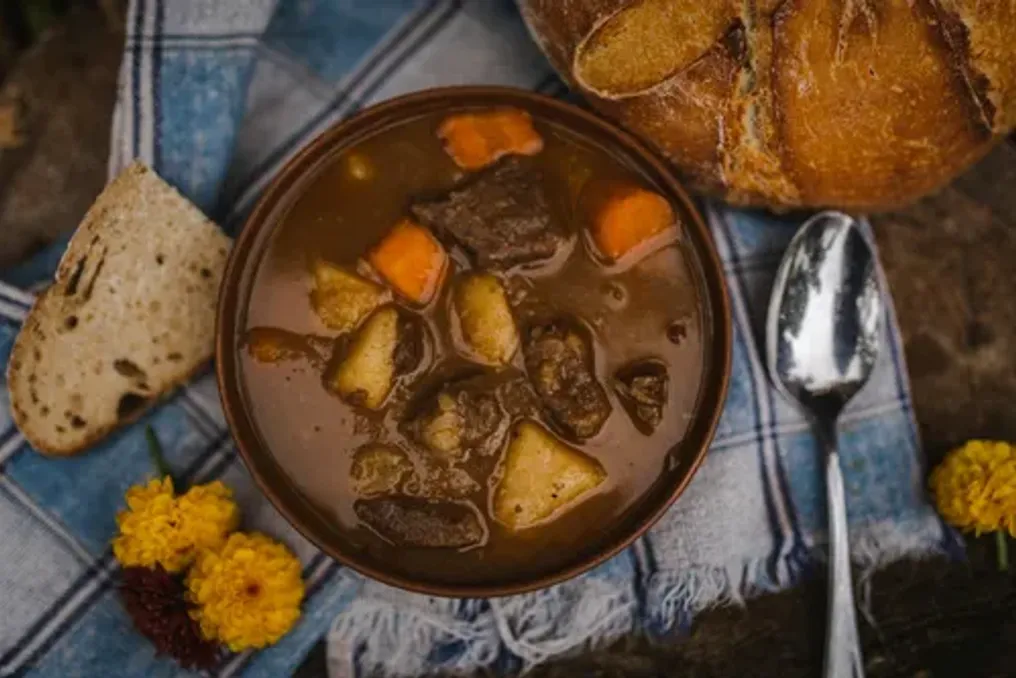
Beef chuck comes from the shoulder and is known for its rich flavor. It is also one of those cuts that benefits from slow cooking. It should be cut into pieces for stews, casseroles, and potjies, or used in curries. It can also be cooked slowly until it is tender enough to fall apart with a fork for sandwiches or rolls. Onions, carrots, and potatoes help stretch the portion, while beef broth, tomatoes, or a little red wine can be used to create a thick sauce for cooking.

Beef brisket

Beef brisket, perhaps best known from American barbecue, is also a useful cut for budget family meals. It requires time, not high heat. It can be slow-roasted in the oven, stewed in broth, or gently cooked over coals until it reaches the desired tenderness. Don't forget about leftovers: brisket can be used in sandwiches, pies, or pasta sauces, allowing one cut to serve multiple meals. Although brisket has become famous through American barbecue, it has long been loved for economical family cooking.

Beef shank

Beef shank is easily overlooked, but it adds a lot of flavor to slow-cooked dishes. The bone marrow running through this cut enriches the liquid during cooking, and the meat itself becomes tender after several hours of gentle cooking. Beef shank is served with mashed potatoes, pap, or crusty bread to make the most of the rich gravy.

Beef short ribs

Short ribs contain a lot of fat and connective tissue, making them ideal for stewing. They should be slow-cooked in broth, tomatoes, or even a thick onion sauce until the meat begins to pull away from the bone. They are perfect for Sunday lunches and pair equally well with rice, polenta, or roasted vegetables.

Pork shoulder

Pork shoulder offers an excellent value for money and can feed several people for less than pork chops. When slow-roasted, it becomes so tender that it can be pulled apart with two forks. It can simply be seasoned with garlic, paprika, cumin, and black pepper for pulled pork, or kept with a classic flavor of rosemary and thyme for a Sunday lunch. Leftovers can be turned into toast, rolls, or fried rice throughout the week.

Pork belly

Despite growing popularity, pork belly can still be an economical choice depending on where you buy it. Slow cooking followed by finishing at a higher temperature allows it to develop a crispy crust while remaining melt-in-your-mouth inside. It pairs wonderfully with roasted vegetables, noodles, or sticky Asian sauces.

Lamb neck

Lamb neck attracts much less attention than lamb chops or leg, yet many chefs consider it one of the tastiest cuts. It excels in slow-cooked curries, stews, and traditional brede, where the meat gradually softens, enriching the sauce with flavor. A little patience turns this humble cut into something worthy of a special family dinner.

How to maximize flavor from cheaper cuts

The biggest mistake when working with tougher cuts is trying to cook them too quickly. Low, gentle heat gives the connective tissue time to soften. Depending on the cut and recipe, you can use a slow cooker, pressure cooker, oven, or heavy pot on the stove. Before adding liquid, if the recipe allows, it is recommended to sear the meat. This will add an extra layer of flavor and give the finished dish more depth. The cooking liquid is also valuable, as these juices can form the base for a sauce or gravy. Therefore, they should not be discarded. Marinades can also help with some tougher cuts. Yogurt, buttermilk, vinegar, and citrus can add flavor and possibly help tenderize the meat before cooking. Lower temperatures and longer cooking times almost always yield the best results.

Dishes that maximize inexpensive cuts

Cheaper cuts are ideal for dishes where the meat shares attention with vegetables, legumes, or starches. You can prepare slow-cooked beef goulash with potatoes, rich lamb brede, beef shank served over creamy pap, pulled pork rolls with coleslaw, brisket pie, or a hearty potjie shared at the table. They are also great for soups, curries, pasta sauces, and pies, where long simmering transforms inexpensive ingredients into deeply satisfying meals.

Saving without sacrificing flavor

You do not have to buy the most expensive cut at the butcher shop to put a hearty dinner on the table. Cheap cuts of meat often only need the right cooking method, a few basic ingredients, and patience. For households watching their grocery bills, learning the proper way to cook these cuts can have a noticeable effect. Sometimes, it is the slow-cooked dish made from an unassuming cut that everyone remembers.
Similar stories

South African Households Face Cost of Living Crisis Due to Rising Essential Goods Expenses
Read more
iol.co.za

South African Households Face Cost of Living Crisis Due to Rising Essential Goods Expenses

Households in South Africa are experiencing severe difficulties managing monthly budgets as expenses for utilities, transport, and food consume an increasing share of their income, turning the cost of living crisis into a struggle for survival for families.

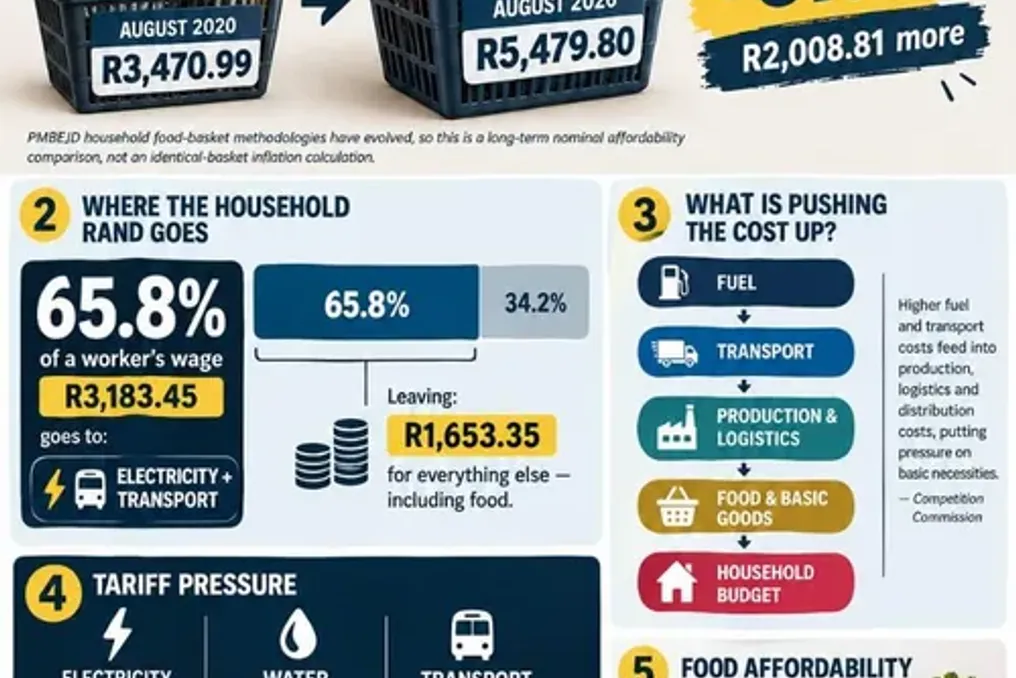
Recent data on household affordability demonstrates this problem, despite a seemingly lower overall inflation rate. In August, the average cost of a food basket was R5 479.80, according to the Pietermaritzburg Economic Justice and Dignity Group (PMBEJD). Although this amount was 0.9% lower than in July, it remained 1.8% higher than a year ago. Of 44 tracked products, 19 increased in price, while 25 decreased.

The group's director, Marvin Abraham, notes that families do not receive income but rather allocate money across fixed expenditure items: food, electricity, and transport. They first pay for the most essential things that cannot be avoided.

Abraham emphasizes: 'Households do not receive income and do not allocate fixed amounts for food. First, they pay for absolute necessities: rent or mortgage, electricity, transport.' He adds that the food budget only appears after these basic expenses are covered, and purchases are made with the remaining funds, which often leads to buying smaller quantities and less nutritious food.

The group's calculations show how little is left of 'what remains.' In August, R3 183.45 was spent on electricity and transport, accounting for 65.8% of a worker's salary, leaving R1 653.35 for food and other necessities. Thus, the affordability crisis is related not only to the price of bread, chicken, or maize meal, but also to the competition between several unavoidable expenses for the same income.

The Competition Commission's report for August 2026 also highlights the current pressure, warning that fuel price shocks have consequences far beyond petrol stations. The Commission points out that the first half of 2026 was characterized by a 'significant increase in fuel costs,' driven by geopolitical tensions and disruptions in global oil supply chains, exacerbated by exchange rate pressure.

The Commission notes that the rise in fuel and transport costs has spread not only to commuting but has also increased production, logistics, and distribution costs across the economy, putting upward pressure on essential goods. The Commission believes that the task is to balance the financial sustainability of vital services with the burden on households, especially when tariffs rise faster than inflation, and vulnerable populations do not receive effective support.

For workers, the problem boils down to whether income can keep pace with rising prices. Abigail Moyo, a representative of the United Association of South Africa (UASA) union, stated that households are already on the brink of collapse. She added that the rise in fuel prices will only intensify the financial pressure on ordinary South Africans whose budgets are already severely strained.

Moyo argued that the solution cannot be to expect workers to absorb the increased costs themselves. She noted that the adjustment of fuel prices is the reason why UASA and its members in the sugar sector went on strike to fight for wage increases and benefits that match inflation. She called on the government to review fuel pricing mechanisms, including fuel and excise taxes, and employers to recognize inflation-linked salary indexing as necessary for workers' survival amid the rising cost of living.

Pensioners feel particular pressure. At SASSA offices in Wentworth, Durban, pensioners are demanding an increase in the old-age grant to R5 000 per month, arguing that the current amount does not cover basic living needs. The maximum old-age grant is R2 400 per month, and for recipients over 75 years old, it increases to R2 420. Pensioner Quinton Eri describes the situation as extremely difficult: 'We barely make ends meet on R2400. Our water bill keeps going up. We go to Sasa, and then sometimes we sit here for two or three days because they don't work. Life has become a huge struggle. You can't even afford to buy the food you eat. The food we buy is not enough. So we worry about where the next meal will come from.'

He also noted that even buying meat has become a luxury, as people are forced to eat chicken because they cannot afford mutton or beef. Social activist Jean Chodry stated that pensioners are forced to cope with the responsibilities of supporting other family members. He insisted that pensions should be doubled at least, as besides themselves, they care for grandchildren, have utility bills, rent, and groceries.

A petition launched by Jay C Alex titled 'Support South African Pensioners to Restore Dignity and Respect' has gathered over 33,000 confirmed signatures calling for increased support for pensioners struggling with food, medicine, and electricity shortages.

The consequences extend to children. The group calculated that the basic nutritious basket for a family of seven cost R6 597.25 in August, and the average cost of providing one child with a basic nutritious diet was R961.96, while the child grant is R580. Abraham warned that when households are forced to sacrifice nutrition, the consequences go far beyond the monthly grocery bill. He described it as an intergenerational poverty trap that starts right at the table of young children under five. For him, relief cannot come solely from lowering food prices; a significant impact on the quantity of food purchased will come from reducing electricity and transport costs.

Popular