
Huawei Cloud Announces Commercial Launch Dates for Ascend 950 Lingqu Cluster for China and Global Market
Read more
Pandaily
pandaily.com

Huawei Cloud Announces Commercial Launch Dates for Ascend 950 Lingqu Cluster for China and Global Market

Huawei Cloud CEO Zhou Yu Feng announced at the Huawei Connect 2026 event plans for the commercial launch of a cloud service based on the Ascend 950 Lingqu cluster. The launch in China is scheduled for September 30, and access for the global market will open on November 30.

These dates define the timeline for Ascend 950 compute SKUs and do not merely describe the SuperPoD architecture. Customers will be able to reserve a cluster connected via UnifiedBus consisting of 1024 cards as a managed cloud offering according to the published schedule.

Huawei stated that the Ascend 950 system utilizes its UnifiedBus interconnect, marketed as Lingqu, to assemble a cluster of 1024 accelerators. This cluster is capable of providing up to 1 EFLOPS of computation in FP8 format and 2 EFLOPS in FP4 format, and also features 256 TB of unified memory available globally.

The design is engineered to support end-to-end training of large models without the need for additional cluster partitioning or adaptation, maintaining thousand-card job execution within a single memory address space.

The commercial window for cloud services fits into a broader Ascend development roadmap presented at the same event. Chairman Wang Tao noted that over 1000 Ascend supernodes have already been deployed, and Ascend 950 supernodes have entered a phase of scalable commercial use.

Furthermore, the Ascend 960DT is planned for release in the first quarter of 2027, and the Ascend 960PR in the third quarter, with a stated release pace of approximately one major Ascend generation annually, including long-term stages 970 and 980.

For potential buyers, the key information is the specific calendar with the launch first in China and then globally, as well as the cluster specification: 1024 cards, EFLOPS class throughput (FP8/FP4), and 256 TB of unified memory via UnifiedBus. Huawei Cloud positions Ascend 950 Lingqu as a ready-to-use AI cluster service, rather than a theoretical architecture, offering internal availability at the end of September and international availability two months later for teams needing supernode-scale training without building the infrastructure themselves.

Similar stories

Huawei Unveils Ascend 960 SuperPoD with Near-Packaged Optics at Connect 2026 Conference
Read more
pandaily.com

Huawei Unveils Ascend 960 SuperPoD with Near-Packaged Optics at Connect 2026 Conference

At the Huawei Connect 2026 event, held in Shanghai on September 17th, Chairman David Wang introduced the Ascend 960 SuperPoD as the next-generation supernode for artificial intelligence. The development focus is placed on interconnect scalability rather than single-chip performance.

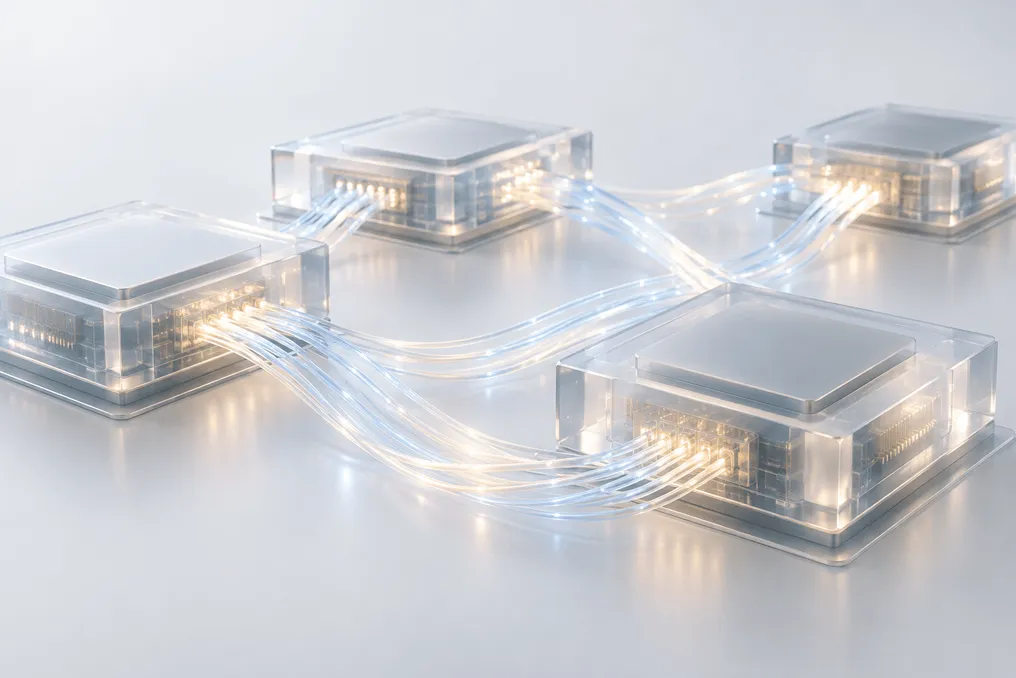
According to the system description, the Ascend 960 SuperPoD is the first model to utilize Near-Packaged Optics (NPO). This technology integrates Huawei's Lingqu UnifiedBus factory with the Hi-ONE optical engine, enabling optical connections to be placed closer to the chip package.

According to First Finance and related reports, one Ascend 960 SuperPoD can connect approximately 4096 cards with a round-trip latency approaching 2 microseconds. Huawei asserts that these metrics allow for large-scale training and inference of models up to 10 trillion parameters.

Furthermore, broader delivery information was disclosed: Ascend SuperPoD systems have already been shipped to over 1000 customers from more than 370 companies, indicating the architecture's transition from demonstration stands to commercial use.

The chip roadmap has been adjusted. Huawei announced that the Ascend 960DT is planned for release in the first quarter of 2027, and the Ascend 960PR in the third quarter. The liquid Atlas 960 SuperPoD is also scheduled for release in the third quarter of 2027, three quarters earlier than the initial public forecast, which pointed to the end of 2027 for the Ascend 960. Wang also stated that Huawei has developed 11 UnifiedBus-based chips for large systems and confirmed the long-term goal of creating a million-card SuperCluster.

The main emphasis is on system engineering: this includes NPO optics, UnifiedBus, cooling systems, and cluster software, which allow multiple Ascend cards to function as a single machine. Reuters reports confirm the dual 2027 launch dates and the figures of over 1000 supernodes and more than 370 customers, but did not name the buyers. This news differs from Huawei's 'Intelligent World 2035' report published recently, as it presents specific information about the SuperPoD interconnect and the revised Atlas 960 schedule for operators who are already evaluating Ascend clusters.

Huawei Unveils Intelligent World 2035 Concept Focused on Agent-Centric Infrastructure
Read more
pandaily.com

Huawei Unveils Intelligent World 2035 Concept Focused on Agent-Centric Infrastructure

On September 16, 2026, Huawei released the document Intelligent World 2035: Turning Vision into Action, which was presented alongside the Global Digitalization and Intelligence Index (GDII) for 2026. This document outlines a decade-long infrastructure roadmap centered on agents rather than merely launching consumer devices.

Chairman David Wang emphasized that agentic artificial intelligence is a variable transforming operational activities and industry dynamics. He insisted on the need for concrete industry infrastructure actions, not just trend presentations.

According to projections, by 2035, agents could account for over 90% of AI token traffic. Furthermore, global annual token consumption is expected to increase by approximately 100,000 times as systems continuously perceive information, reason, invoke tools, and interact in real time. Huawei also stated a long-term goal of achieving around 900 billion application agents.

The report also highlights the computational power and security load that will arise with the dominance of agents in the token flow, including a clear priority on autonomous agent security. Reuters covered this aspect when reporting on the release.

The document includes a list of ten technological directions that serve as a practical checklist for the industry. These directions include: achieving Artificial General Intelligence (AGI), which takes physical form through language, embodied, and scientific intelligence; scaling clusters by 100 times and reducing agent task costs by 1000 times using SuperPoD-type systems for improved token inference efficiency; developing new storage and memory systems with causal accuracy and reliable traceability; experience-oriented intelligent connectivity with AI integration into communications; applying Tau's Scaling Law for chip design, favoring joint optimization of latency and energy over pure geometric scaling; creating an evolutionary Agent Operating System (Agent OS) based on (Coordination × Execution × Memory × Connectivity); ubiquitous intelligent device functionality; self-learning intelligent driving with a focus on safety; improving energy efficiency and cooling of AI-based data centers; and establishing security and privacy control mechanisms for autonomous agents.

This package of documents, released ahead of the Huawei Connect 2026 conference, presents a thesis on global infrastructure and strategy covering token production, delivery, consumption, and limitations, which differs from the announcements of the open-source Ascend CANN or 3D AIDC architecture. Independent operators will need to adapt the SuperPoD economy, Agent OS interfaces, and agent security proposals to their own plans before considering these ten directions as a procurement list.

Popular