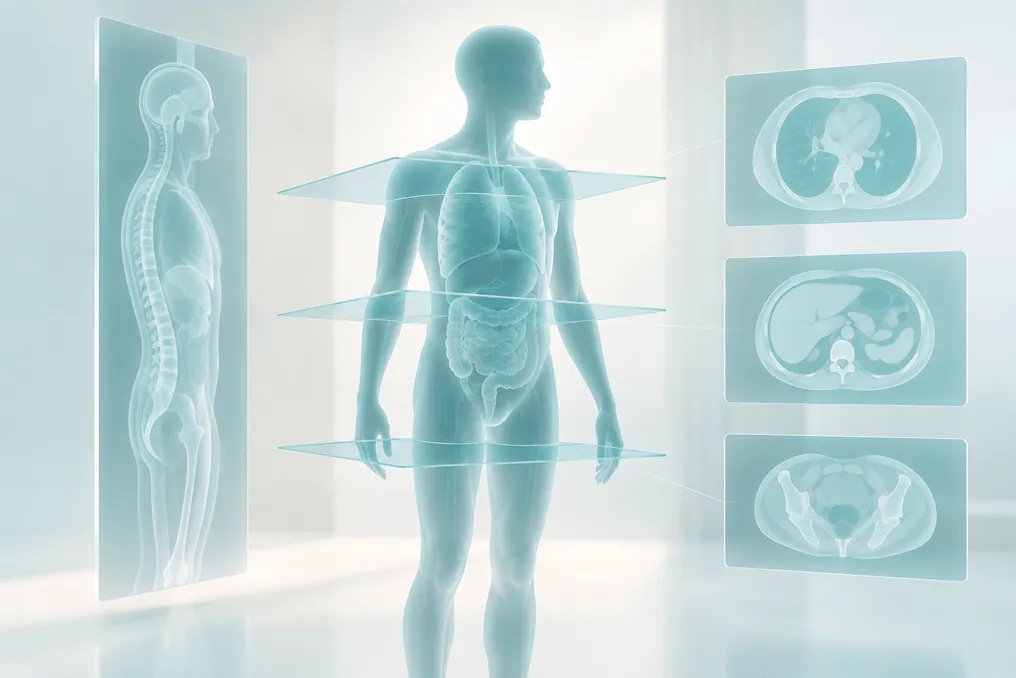
Alibaba DAMO Academy, in collaboration with the Medical School of the First Affiliated Hospital of Zhejiang University and other clinical partners, has made the DAMO RADAR model publicly available. This model is designed to analyze contrast-enhanced abdominal CT scans, and its results were published in the journal Science.
The system is capable of detecting over 146 different pathological signs across 18 organs in a single pass. When evaluated on a test dataset, the model's accuracy reached the level of an experienced radiologist, representing a departure from the medical AI approach based on a single disease and a single model, which often faces difficulties in real clinical practice.
DAMO reported that traditional vision and language training experiences challenges when working with sparse CT volumes. Therefore, the team applied an organ-level fine-tuning method: three-dimensional scans are broken down into anatomical units so that images and text reports correspond to each other at the organ level. Subsequently, adaptive contrastive modeling corrects the training signal.
This approach aims to create a scalable, multi-purpose, and more interpretable diagnostic system that does not require additional manual labeling for every new pathology as the list of detected signs expands.
During the analysis of nearly 40,000 real studies, DAMO RADAR demonstrated an Area Under the Curve (AUC) of 0.913 across all 146 assessed features. In a study involving 26 radiologists from various hospitals, the model's average accuracy exceeded that of 23 physicians. According to the published data, the use of AI prompts increased physician sensitivity by approximately 10%, and reading time decreased by more than 30%, while junior specialists approached the level of senior colleagues.
Even in cases of acute abdomen outside the initial training focus, where data distribution differed, the AUC remained around 0.904. The model's code and weights are available on GitHub in the Alibaba DAMO Academy organization, and the scientific paper in Science details the methods and trials. Partner hospitals characterize the model as a navigational tool for one of the most complex tasks in radiology—multi-organ abdominal CT, while DAMO views RADAR as a step from specialized detectors to general fundamental medical imaging models that can be applied beyond abdominal CT as clinical validation expands.