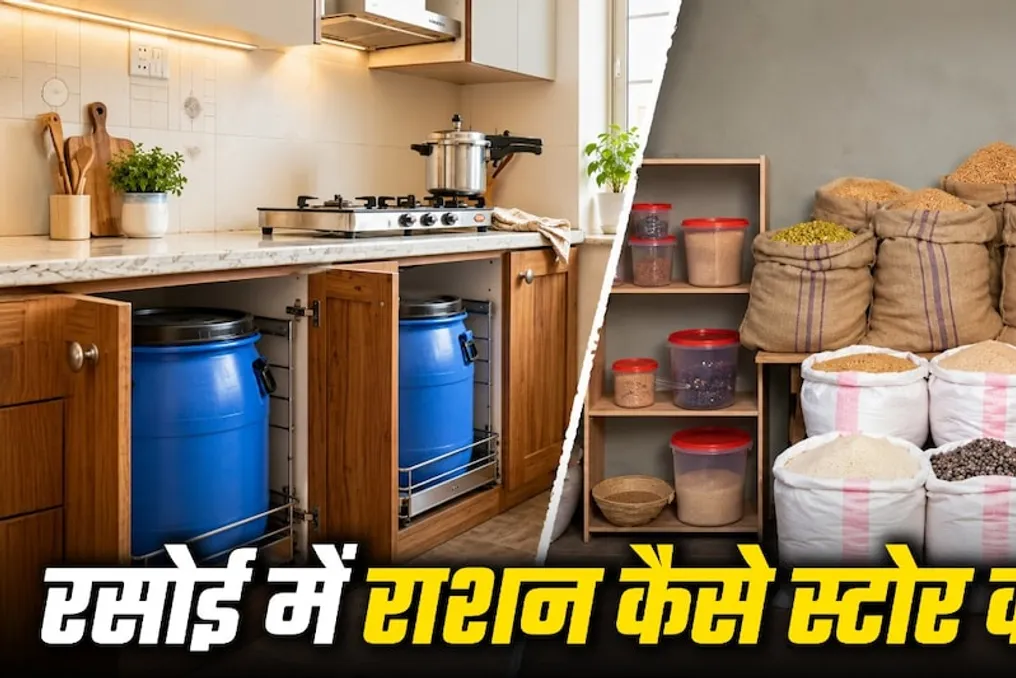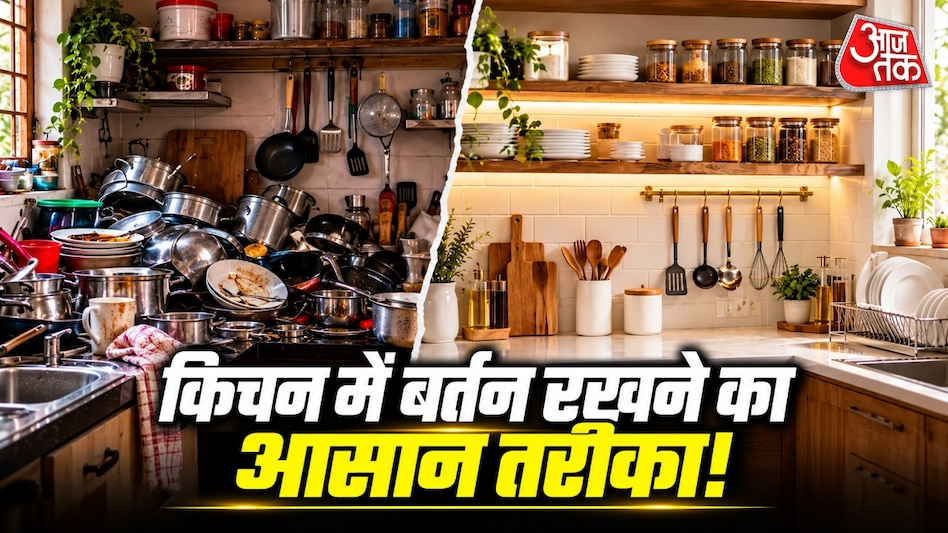
In large cities where space is limited, living spaces are becoming smaller compared to the past. To fit more rooms into a limited area, kitchens, bathrooms, and other areas are often designed in a compact format. Although a small kitchen can look aesthetically pleasing, proper item placement in it presents a serious problem.
There is not enough space for daily use of cookware such as pots, multi-cookers, casseroles, and frying pans, as well as for items like spices and rolling pins. Often, dishes are stacked on top of each other, which leads to wasted time when looking for the needed item. Furthermore, the lack of free counter space to place hot dishes after cooking exacerbates this problem.
If your kitchen is also small and you constantly experience a lack of space for storing dishes, there are several simple methods that can make the kitchen more organized.
Storing Pots and Pans Using Hooks
Although pots and pans are sometimes stacked on top of each other, it can be difficult to remove them when necessary. Instead, sturdy hooks can be installed on an empty wall of the kitchen or inside a cabinet. Frying pans and pots with handles can be hung on these hooks. This will free up space both on the countertop and in the cabinets, and allow you to easily find the necessary cookware at the right time.
How to Store a Frying Pan Correctly
A frying pan takes up a lot of space, so it is better not to stack it under other dishes. Instead, a vertical divider or a special holder should be installed inside the cabinet. In it, frying pans, cutting boards, and other items can be placed vertically. This prevents clutter among other items when removing dishes.
Nesting Dishes Method
In a small kitchen, it is very difficult to allocate a separate place for every item. In such cases, it is recommended to use the nesting method: large pots and multi-cookers are placed at the bottom, and small dishes are placed on top. Dishes that can fit inside another should be stored nested within each other, for example, a small pot inside a large one. Plates can also be stacked inside each other depending on their size. This allows many dishes to be stored in one place.
Creating a Dedicated Spot for Rolling Pins and Spices
Placing rolling pins and spices on the countertop reduces the working surface. They can be stored in a vertical holder or a thin organizer in an empty cabinet compartment. If there is no space in the cabinet, such a holder can be installed on the edge of the countertop or on the wall so that the rolling pin and spices are easy to reach and return to their place.
Freeing Up Counter Space for Hot Dishes
In a small kitchen, the biggest difficulty arises when there is no space left on the countertop to place a hot multi-cooker or pot during cooking. To solve this problem, a pull-out shelf that attaches above the sink or a heat-resistant mat for hot dishes can be used.
Keeping Frequently Used Cookware Visible
It is much more convenient to keep the cookware used daily visible. Frying pans, pots, multi-cookers, and fryers should be placed in easily accessible locations. Large pots or serving dishes that are used once or twice a month can be put away on the upper shelves of the cabinets. This eliminates the need to constantly search for items while cooking. Small bowls should also be stored in one place for convenience.
Utilizing Empty Space
In a small kitchen, storage space is not only cabinets and drawers. Storage can be organized inside the cabinet door, under the sink, and in empty wall areas. However, before installing any storage element, you must ensure that it does not affect gas equipment, the extractor hood, the sink, or the passages in the kitchen. For cutlery, a small holder can be purchased to help store knives, spoons, and tongs.