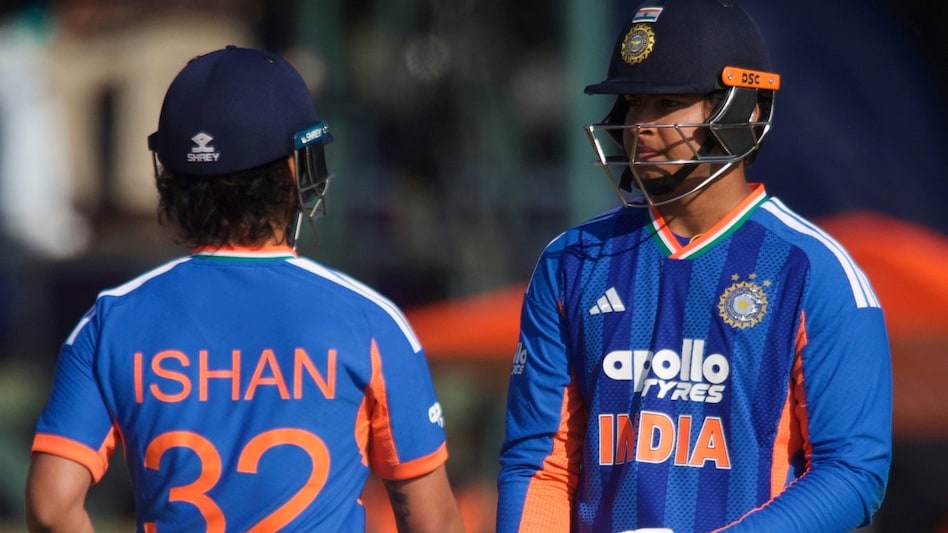
Indian team faces jersey size issues before Asian Games, requiring BCCI intervention
Read more
Aaj Tak
www.aajtak.in

Indian team faces jersey size issues before Asian Games, requiring BCCI intervention

Before traveling to the Asian Games in Japan, the Indian men's cricket team encountered an unusual situation related to their uniforms. Some players were unable to receive a complete set of equipment in the correct size. Nevertheless, most problems have been resolved, and the remaining gear is expected to arrive at the team soon.

The Indian team, led by Shreyas Iyer, will depart from New Delhi for Japan early Sunday morning. According to information received by PTI, there have been ongoing negotiations between the BCCI and the equipment supplier JSW Inspire, which works with the Indian Olympic Association (IOA), regarding the players' kits.

An IOA source reported that there was an issue with the sizing of the cricketers' equipment. Most issues have been settled, although some players' gear has not yet been delivered and will be provided to the team shortly. The Indian athletes will need to wear two different types of uniforms in Japan: their regular kit for the single match against Japan on September 22, and subsequently, when the Asian Games cricket events begin on September 28, players will wear the official Asian Games uniform.

In addition to uniforms, the BCCI also arranged accommodation for the Indian team. Given the delay in providing housing to other Indian players in Nagoya, the board decided to independently organize a hotel for the men's cricket team. According to one source, the rooms provided by the organizers were not spacious enough even for storing the players' sports bags. Although there are not many large hotels in Nagoya, the BCCI arranged accommodation for the team immediately before their departure to Japan.

Meanwhile, the women's cricket team did not face accommodation difficulties and is staying in housing provided by the IOA.

Discussions within the framework of the Asian Games concern more than just living conditions. Questions are arising regarding the sporting facilities available on site and especially the condition of the pitch. This time, a separate sports village was not created for the Asian Games players. Organizers utilized cruise liners, containers, and hotels to house the athletes. Some Indian players were forced to wait for hours to check into their accommodation.

Similar stories

Shreyas Iyer hinted at the possible inclusion of Vaivava Suryavanshi in the squad for the third T20 match
Read more
www.aajtak.in

Shreyas Iyer hinted at the possible inclusion of Vaivava Suryavanshi in the squad for the third T20 match

India has taken a 2-0 lead in the three-match T20 series against Afghanistan. The third and final match is scheduled for September 17 (Thursday) at Arun Jaitley Stadium in New Delhi. Following the securing of victory in the series, the probability of changes in the Indian team's squad increases.

15-year-old Vaivava Suryavanshi was not in India's starting lineup in the first two T20 matches. In the first match, Sanju Samson and Abhishek Sharma batted at the top order, and the Indian team retained the same starting six in the second match.

After the game, Shreyas Iyer stated that the team aims to give all players an opportunity to adapt to the field and conditions, as well as gain experience from practice matches. Therefore, there is a possibility of giving a chance to players who have been outside the squad so far, and some changes in the team combination may also occur.

Thus, the path is open for 'Baby Boss' to get a chance to play in the third T20 match. Previously, Vaivava demonstrated excellent performance in the T20 series against Zimbabwe, winning the 'Player of the Series' title with 151 runs. Despite this, he had to remain on the bench in the first two matches against Afghanistan.

Now all attention is focused on the match on September 17. If the team management decides to make changes, Vaivava may get his first chance to play an international T20 match in India.

Currently, Vaivava has scored 193 runs in 6 matches for India, with an average strike rate of 189.21, including two half-centuries. In these six games, Vaivava hit 16 fours and 14 sixes.

Former player Krishnamachari Shrikant criticizes decision not to include Vaibhav Suryavanshi in the Indian squad
Read more
www.aajtak.in

Former player Krishnamachari Shrikant criticizes decision not to include Vaibhav Suryavanshi in the Indian squad

The Indian team defeated Afghanistan in the first match of the three-match T20 series, winning by seven wickets. After a confident start, the Indian squad aims to win the second game to gain an advantage in the series.

Young 15-year-old batsman Vaibhav Suryavanshi, who impressed with his powerful batting during the visit to Zimbabwe, did not get a chance to play in the first match against Afghanistan. Before the game, there were active discussions among fans regarding Vaibhav Suryavanshi's participation.

Despite India's comfortable seven-wicket victory, the decision not to include Vaibhav in the starting lineup sparked controversy. Former Indian selector and experienced player Krishnamachari Shrikant sharply criticized this decision by the team management.

Speaking on his YouTube channel, Shrikant noted that it was completely unclear why the player, who was the best in the previous match of the series, was suddenly excluded. He joked that when Vaibhav Suryavanshi didn't play yesterday, they started watching movies instead of the match on TV. His wife also expressed dissatisfaction, questioning why the star from the previous match was absent from the team today. He added that if such an ordinary viewer asks this question, one should consider what the player himself is going through.

Shrikant believes that constantly including and excluding a young athlete undermines his confidence. He stated that the team is treating Vaibhav incorrectly. Now, when he steps onto the field for the next match, he will have the fear of being excluded again if he does not score runs.

Shrikant emphasized that this young batsman, who has proven his worth in domestic cricket, India-A, IPL, and international T20, should be given consistent opportunities. Furthermore, he expressed regret over the treatment of Sanju Samson. He noted that Samson is sometimes included in the team and sometimes suddenly excluded, which does not contribute to the stability of any player.

It turned out that Vaibhav Suryavanshi participated in the final match of the Theleef Trophy, a red-ball tournament, just two days before the series against Afghanistan. Because of this, he had fewer opportunities to train with white balls (T20). In the first match, Sanju Samson played in place of him in the opening batting alongside Abhishek Sharma. Although Samson was dismissed after scoring 10 runs, the Indian team achieved the target of 157 runs in just 13.4 overs.

After losing the BCCI contract and distancing himself from the Indian team, Ishan Kishan's captaincy changed his career path
Read more
www.aajtak.in

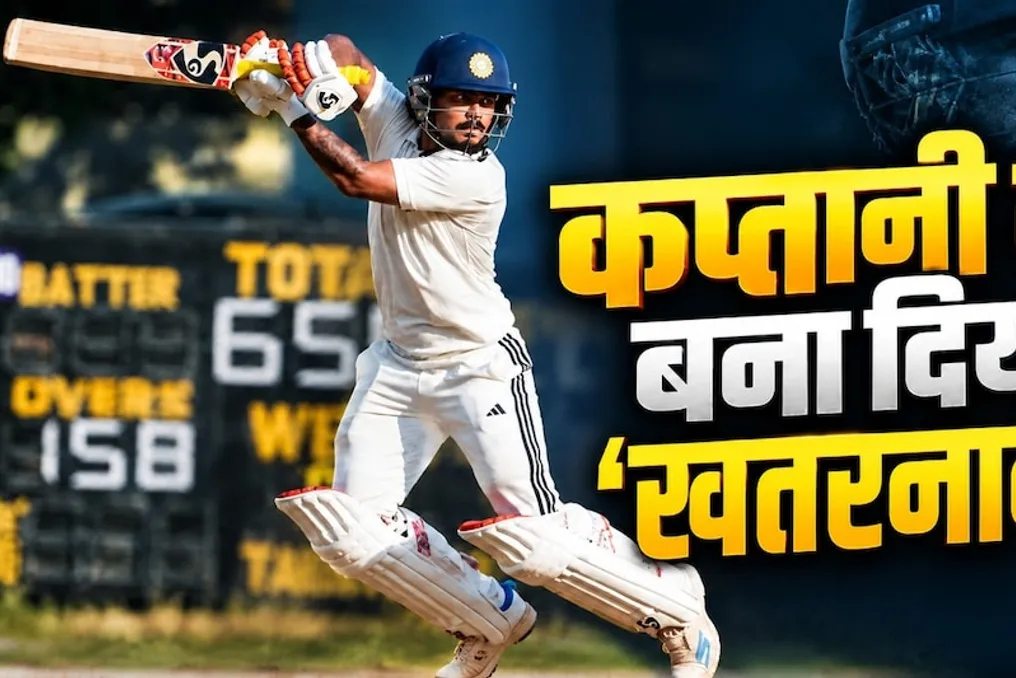
After losing the BCCI contract and distancing himself from the Indian team, Ishan Kishan's captaincy changed his career path

Ishan Kishan, who once had the potential to feature in the Indian national team across all formats, suddenly found himself away from the squad. This player, considered the future big batsman and wicketkeeper of Indian cricket, went through a difficult period that cast doubt on his career. He lost his central BCCI contract, stepped away from the Indian team, and for almost two years, his path in international cricket was closed. However, it was during this tough time that Ishan began rebuilding himself.

This process of transformation did not start with successful strokes, but with accepting the role of captain in Jharkhand. Now 28-year-old Ishan Kishan played a historic innings of 270 runs in the Duleep Cup final in Chennai, and this is not just a big innings. It is the story of a player who emerged from the most difficult period of his life, changing both his playing style and his mindset.

By mid-2023, Ishan's career was heading in a completely different direction. After his Test debut during the tour of South Africa, he established himself among India's multi-format players. But after only a few months, circumstances changed. During the tour of South Africa, he left the test training camp. Following this, he did not play as expected by the BCCI regarding domestic cricket. This affected his career: he fell out of the Indian team's plans and lost his central contract.

The player, who seemed part of the future of Indian cricket just a few months ago, suddenly found himself far from the national team. It was here that Ishan began searching for a way back.

Upon returning to domestic cricket, he took on the role of captain of Jharkhand. This became a turning point in his career. According to Ishan, captaincy taught him about responsibility. Now he needed to think not only about his own game but also monitor the condition of every player on the field, understand their needs, and see how the entire team could improve its game.

After the 270-run innings in the Duleep Cup, Ishan noted that captaincy significantly changed him as a person, as a cricketer, and as a leader. He even stated that captaincy distanced him from his 'wild child' days.

Ishan admitted that previously, as a young player, his thinking was different. Back then, senior players on the team scored runs, and others tried to help them. But now, being part of the established players of the team, he feels that the main responsibility for increasing the team's score rests on him. In other words, his mindset has changed. For Ishan, it is no longer just about how many runs he scores; he also started considering what value his innings brings to the team.

Captaincy also taught him that developing the other players on the team is the captain's duty. According to Ishan, players often come to practice, play, and leave. But after becoming captain, his focus shifted to where his teammates could improve and how he could help them do so. His thought was clear: if every player on the team gets better, achieving the team's goals becomes easier.

Under the captain's guidance, Ishan's performance in domestic cricket consistently grew. In the Ranji Trophy 2025-26, he scored a hundred. Then the Jharkhand team won the Syed Mushtaq Ali Trophy title, where Ishan played a key role, scoring 517 runs. During this period, he also scored two centuries. It was this performance that opened the doors for him into the Indian national team. First, he returned to the T20 International squad, and then, thanks to consistent performances in the IPL, secured a place in the ODI squad as well.

The player, who almost disappeared from Indian cricket about two years ago, has gradually returned to the national team lineup.

The 270-run innings in the Duleep Cup final was the best example of these changes. Ishan's natural playing style is aggressive; he is known for attacking bowlers. However, in Chennai, he demonstrated not only aggression but also situational awareness. The team chose to chase a big score, winning the toss. Under such conditions, Ishan controlled his shot selection and remained on the field for a long time. He admitted that he could have played an aggressive shot in many instances, but the priority was fulfilling the team's objective.

This distinguishes his old and new playing styles. Previously, Ishan's game was more about 'how big a score can I make'; now, the question 'what value will my innings bring to the team' has been added to this.

What the distance from the Indian team taught him was solidified by captaincy. Ishan's return is special because it is not just a return to form. He lost his spot in the Indian team during a period when his career was rapidly rising, and he lost his BCCI contract. He returned to domestic cricket...

Popular