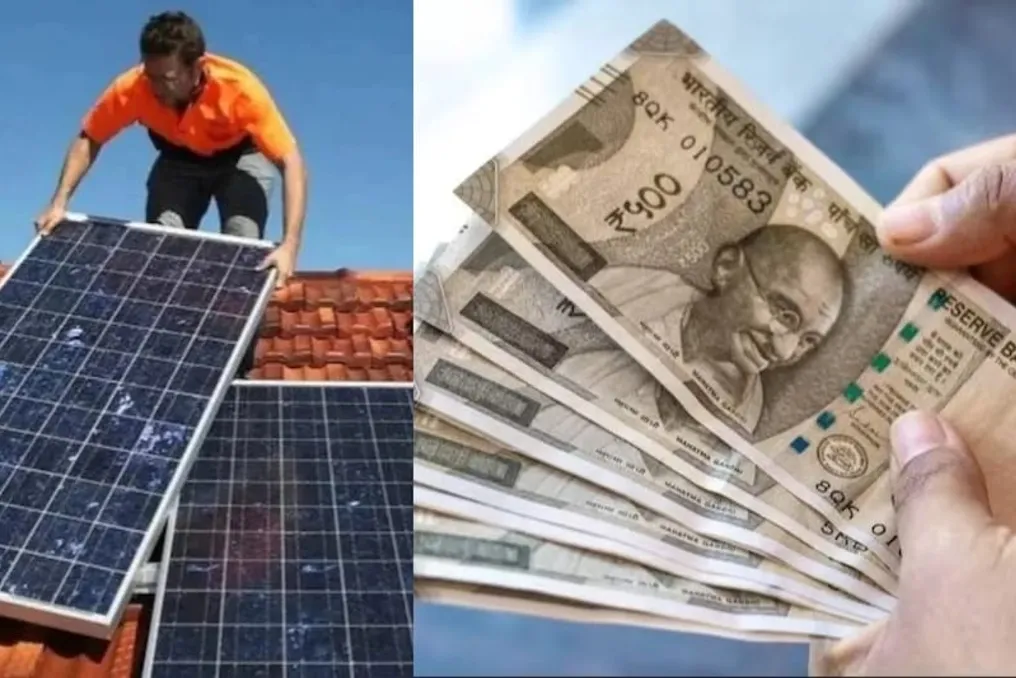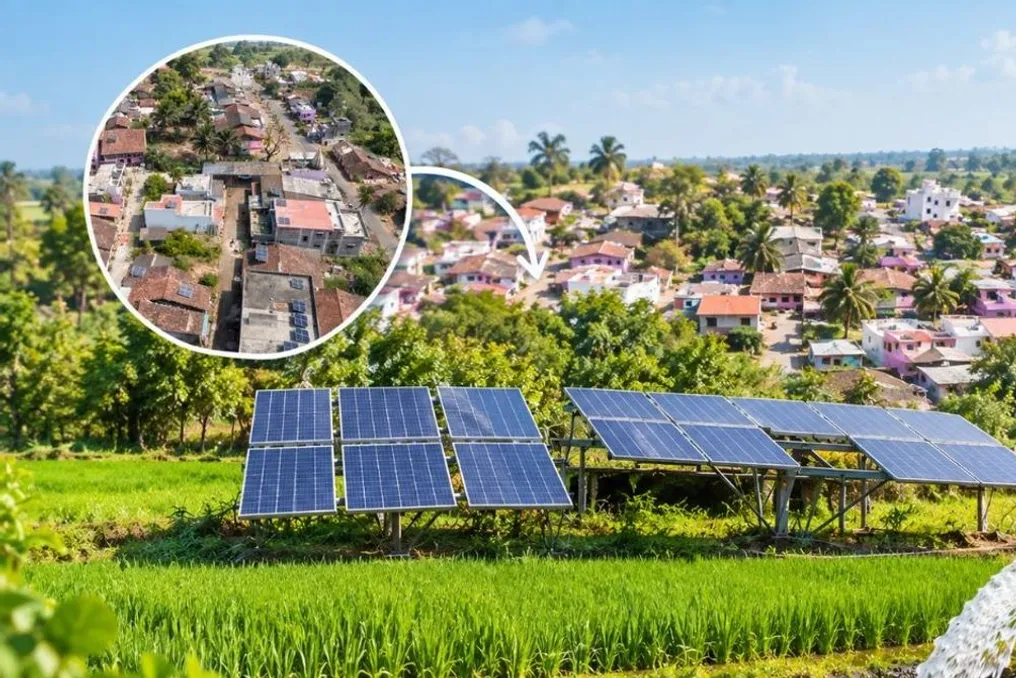
In the village of Davva, located in the Gondia district of Maharashtra state, fields begin to come alive even before the sun fully illuminates the area. A farmer can switch on a pump using solar energy, eliminating the need for diesel fuel or waiting for electricity restoration.
For a long time, irrigation in such villages depended on unpredictable factors such as the state of the power grid, the cost of diesel fuel, or the timing of energy supply. Yogeshwari Ch Chaudhari, the Gram Panchayat head of Davva, notes that previously farmers had to incur costs and endure hardships due to unstable power supply.
Solar energy has begun to change this situation. Thanks to lower pump prices and government subsidies, the systems have become accessible, allowing farmers across the country to transition to daytime irrigation powered entirely by sunlight, easing the burden of future expenses.
However, the story of Davva demonstrates not only a triumph of technology but also the complexities arising from implementing good policy at the national level.
Scale of Transition: 7.47 Lakh Solar Pumps
Nowhere is this transition happening faster than in Maharashtra. The state has become India's leader in solar pump adoption, installing over 7.47 lakh (747,000) agricultural pumps, with a goal to reach 10.45 lakh (1.045 million). This makes it the fastest-developing state in the country, second only to China globally.
In December 2025, Maharashtra set a Guinness World Record by installing 45,911 solar pumps in just 30 days. Across India, the central government scheme PM-KUSUM (Pradhan Mantri Kisan Urja Suraksha evam Utthaan Mahabhiyan) subsidizes the installation of solar pumps nationwide. Its goal is 34,800 MW of solar capacity by March 2026, supported by approximately ₹34,422 crore in central financial aid.
Furthermore, Maharashtra has its own program, Magel Tyala Saur Krushi Pump Yojana (MTSKPY), aimed at ensuring reliable access to solar irrigation for the state's farmers. These programs have made modernization, once an expensive dream, achievable for ordinary small landowners.
Where is Solar Irrigation Spreading?
Across India, states are using different approaches to achieve the same goal. Kerala, with a 74% adoption rate, ranks first in the State Energy Efficiency Index for 2024. This index showed that 13 states are actively promoting integrated cold storage and solar-powered agricultural pumps in their farming sectors.
The old Saur Sujala scheme in Chhattisgarh requires farmers to contribute only about 5% of the cost and is considered a model that helped shape the design of the PM-KUSUM scheme itself. In Assam, where small tea growers long relied on expensive diesel, solar pumps reach cost parity with diesel by the third year of use, which is a slow but significant result for small-profit farmers.
How Much Does a Solar Pump Cost a Farmer?
A solar pump functions differently from traditional diesel or grid-connected electric pumps. A diesel pump is noisy, expensive to operate, and depends on fuel that must be purchased, transported, and stored. An electric pump connected to the grid is cheaper to run but is entirely dependent on power supply, which in many rural areas of India comes unpredictably—often at night, when farmers have to get up in the dark, fearing snakes, fatigue, and water loss.
The solar pump bypasses both problems. Panels installed near the field convert sunlight directly into the electricity needed to run the pump, without purchasing fuel or depending on the grid. It operates when the sun shines, which is convenient because this is when farmers are already in the fields monitoring the water and can stop the supply when it is no longer needed.
The cost of the pump varies depending on location, power, and subsidy size. For Neraj Parmar, a 37-year-old history graduate from Piproda village in Indore, Madhya Pradesh, the appeal is simple: 'I don't have to wait for electricity; I can start the pump whenever I want.'
In Pipalkheda, Sehore district, Madhya Pradesh, 32-year-old Narhar Dangi cultivates five acres of soy and wheat. Out of 60 farmers in his area, 30 have already switched to solar energy. For Dangi, the changes are measured not only in money but also in freed-up time and reduced anxiety. He notes: 'Irrigating my farm has become much easier thanks to solar pumps. I don't have to wait for nights when we get electricity. I can run my pumps using my mobile phone because they are connected via GPS.'
Further north, in Jaspur, Udham Singh Nagar district, Uttarakhand, 26-year-old Sachin Kumar, a soil science graduate, grows sugarcane on four acres, harvesting about 400 quintals per acre. He paid ₹86,000 for his 7.5 horsepower pump; subsidies in Uttarakhand are lower than in states like Madhya Pradesh, Rajasthan, or Maharashtra, so the initial cost was a noticeable hit to his pocket.
However, the benefit was immediate. Kumar says: 'During summer months, such as April, May, and June, when the crop needs irrigation, we often face power outages. This is where solar pumps help us. We save a lot on electricity and diesel bills.'
Kumar calculated that his daily diesel fuel expenses, which were almost ₹2,000, dropped almost to zero after the transition, and irrigation now occurs during predictable daytime hours rather than when the grid allows.
Subsidies Change the Math
Subsidies ranging from 60% to 90% under PM-KUSUM have further lowered the entry barrier. New 'irrigation-as-a-service' models—payment agreements based on usage without the need for upfront capital—are beginning to open this technology to farmers who could never afford the initial investment.
In Maharashtra, farmers with land less than five acres received up to a 95% subsidy on a 3 HP solar pump. Those with larger plots could install 5 HP pumps with a fixed, heavily subsidized contribution of around ₹30,000. This difference allowed for the release of capital, which, according to farmers, is now directed towards seeds, other resources, or household needs, instead of being tied up in the initial cost of irrigation infrastructure.
The drop in the price of the pumps themselves has amplified this effect. Kishan Singh, a 67-year-old award-winning farmer in Deoli village, Sirohi district, Rajasthan, paid about ₹72,000 for his solar pump when he first applied several years ago. Farmers installing similar systems in his region today pay closer to ₹41,000.
Combined with the near-total elimination of recurring diesel and electricity costs, this transition is beginning to change how farmers in Madhya Pradesh, Rajasthan, and Uttarakhand allocate money and plan growing seasons. Irrigation, once a recurring financial burden renewed every season, is becoming more of a one-time investment.
How Much Can Farmers Save?
The financial viability of solar pumps is one of their main attractive features. Solar pumps provide zero electricity bills and can save farmers between ₹40,000 and ₹70,000 annually compared to using a diesel pump.
Only in Uttar Pradesh have installed solar pumps eliminated the consumption of 877.50 lakh liters of diesel fuel annually—fuel that would otherwise be burned, purchased, and transported across the state's farmlands.
The pumps also change farmers' approach to water and time. A study in Uttar Pradesh showed that when farmers gained access to affordable solar irrigation, water consumption more than doubled, and the number of active users per pump increased by 60%. This increase contributed to higher cropping intensity, adding additional crops per year, and more stable income.
A Machine Powered by Daylight
For farmers, the appeal is not just financial. Since irrigation happens during the day when farmers are present for monitoring, less water is wasted compared to unsupervised nighttime watering. Dangi adds: 'We are free from frequent power cuts,' and, in a small but real sense, farmers like him reduce the load on the overloaded power grid rather than increasing it.
Ashok Gaikwad, an agricultural officer (Krishi Adhikari) in Kalyan, Thane district, Maharashtra, sees this pattern repeating across the state. He asserts: 'By eliminating diesel and electricity costs, solar pumps provide farmers with reliable daytime irrigation at zero cost, allowing them to reinvest savings into crop diversification and modern methods while reducing dependence on unstable fuel supplies and cutting carbon emissions to align agriculture with climate goals.'
But Does Solar Irrigation Save Water?
Nevertheless, the story told by solar pumps is not entirely triumphant, and the earth itself has an opinion on this matter. A study conducted by the International Institute of Water Resources Management in Gujarat under the 'Solar Energy for Agricultural Sustainability' initiative used data from over 220 farmers over two growing seasons. Researchers asked a critical question: can solar irrigation truly reduce groundwater use, or does it merely facilitate extraction?
They found that the answer depends entirely on what lies beneath the field. In the Anand district, where the aquifer is alluvial, farmers with grid-connected solar pumps used significantly less water for irrigation—up to 608 millimeters less than their neighbors without solar systems. The reason lay not so much in the technology itself, but in the structure of incentives surrounding it. Since these farmers could sell surplus electricity back to the grid, they had a direct financial incentive to use water more sparingly and allow the panels to generate income.
However, in the Botad district, where the aquifer is in solid rock, the picture was completely different. The introduction of solar technology had no measurable impact on irrigation water use. There, researchers concluded that the mere presence of groundwater—rather than the cost or convenience of energy—is an existing limiting factor. Without the ability to earn income for supplying energy in exchange for restraint, and with abundant, cheap solar energy available to run the pump, some farmers may simply extract more water than before, exacerbating pressure on an already fragile resource.
The lesson learned from this contrast is that policymakers scaling up schemes like PM-KUSUM and similar ones are only beginning to grasp: a uniform national template cannot yield the same results everywhere. Researchers argue that incentives and feed-in tariffs must be adapted to local hydrogeological conditions if the goal is to protect groundwater while simultaneously increasing farmers' incomes.
An Unfinished Business of a Good Idea
Despite the widely noted benefits of the scheme, farmers still face persistent obstacles. Surveyed farmers reported long delays between application submission and approval, as well as a lack of clear and timely information regarding subsidies.
[ ]