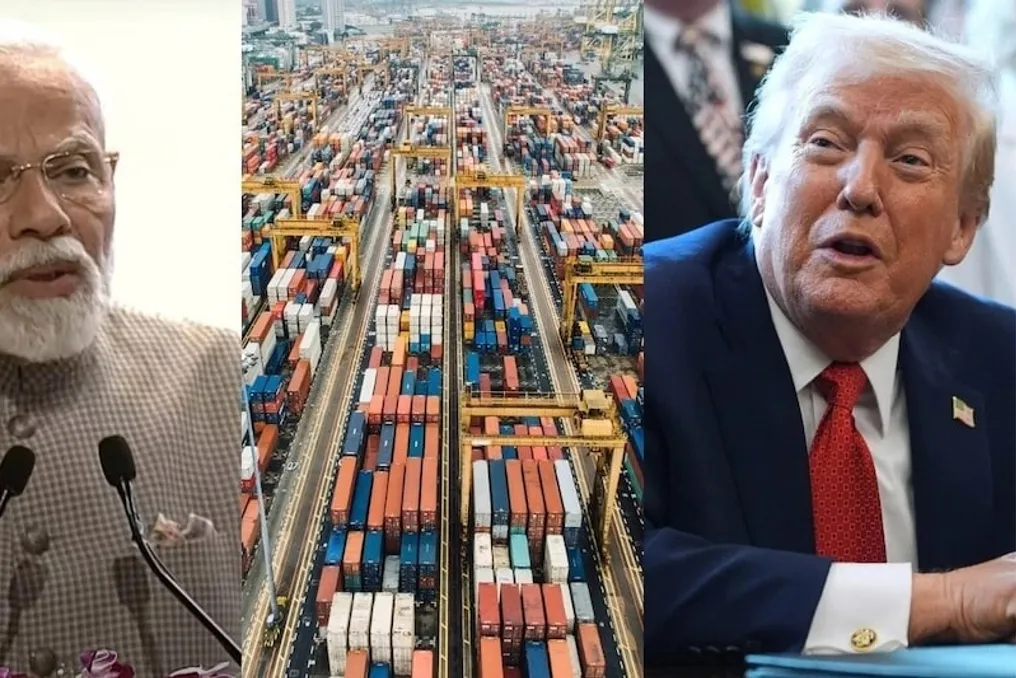
US law signing restricting imports threatens India with 100% tariff due to Russian fuel imports
Read more
Aaj Tak
www.aajtak.in

US law signing restricting imports threatens India with 100% tariff due to Russian fuel imports

A threat of imposing a 100% tariff against India has emerged. US President Donald Trump signed a law that restricts Russia and Iran. This law grants Trump the authority to apply tariffs of up to 100% to countries that purchase significant volumes of energy resources from Russia.

India is among the countries under close scrutiny because it is a major importer of Russian crude oil, alongside China.

If Trump applies the 100% tariff according to this legislation, it could seriously impact the economy, given that India and the US are major trading partners, and the volume of Indian exports to the US is quite substantial.

The law, titled the 'Lindsey O Graham Sanctioning Russia and Iran Act of 2026,' targets five countries that purchase more crude oil from Russia. These include China, India, Slovakia, Hungary, and Azerbaijan. The bill was approved by the US Senate with 86 votes and 11 abstentions in August. After receiving approval, it was announced that President Trump signed the document.

Furthermore, this law expands previously existing sanctions against Iran. Trump now has the authority to impose tariffs of up to 100% on countries acquiring Russian oil and gas fuel. The American Trade Representative will assess the listed countries every 180 days. Nevertheless, India has stated that its national interests will not be compromised by this American move.

Following the start of the conflict between Russia and Ukraine, India has continuously increased its import of Russian oil, obtaining it at preferential prices. Currently, India purchases over 40% of its oil needs from Russia. According to reports, in August 2026, India purchased about 20.8 million barrels per day of crude oil from Russia, while this figure was even higher in July—28.2 million barrels per day.

If India starts purchasing fuel from other countries instead of discounted Russian oil due to the threat of a 100% tariff, it will lead to a sharp increase in India's import bill. Rising fuel prices will also increase the risk of inflation in the country, which will hit consumers particularly hard through rising prices for gasoline and diesel fuel.

Currently, an 18% US tariff applies to India, but if India continues to purchase Russian oil under the new law, it faces a 100% tariff. This will directly affect India's export figures. The introduction of high tariffs will make Indian products more expensive in the American market, potentially causing American buyers to switch to cheaper alternatives from Bangladesh, Vietnam, or other countries, dealing a serious blow to Indian exports.

To understand the impact of the 100% US tariff, it is necessary to examine data on goods exported from India to America. Significant volumes of goods exported to the US include textiles, jewelry, engineering goods, leather goods, marine products, and chemicals. There is a risk of reduced orders for these items due to the imposition of tariffs.

According to data provided by the Ministry of Commerce, an PTI report showed that in August 2026, India's exports to the US reached $8.4 billion (exceeding 80 thousand crore rupees), demonstrating a growth of 21.83% compared to the same period last fiscal year. Meanwhile, imports into India from the US increased by 65.78%, reaching $5.97 billion.

Similar stories

Trump signs sanctions law against Russia, paving the way for new tariffs on oil buyers
Read more
business-standard.com

Trump signs sanctions law against Russia, paving the way for new tariffs on oil buyers

President Donald Trump signed a law imposing sanctions against Russia on Friday, which grants him the authority to impose tariffs on countries purchasing Russian petroleum products.

The new sanctions legislation was a long-awaited step for Ukrainian officials, who hoped to see a tangible sign of support from the United States in the fight against the Russian invasion. The war, now in its fifth year, is in a critical phase of escalation.

Five of the largest purchasers of Russian petroleum products, including China, India, and US allies such as Turkey, could face broad new tariffs. Opponents of the law argue that it could lead to tariffs on the entire European Union, whose members also purchase Russian energy.

This measure overcame strong resistance from business lobbying groups, including the US Chamber of Commerce and major retailers, who feared that Trump would use the legislation to expand tariffs.

The Kremlin called the Congress's adoption of the law a 'hostile' move on Thursday and warned that it could affect negotiations to end the war. Spokesperson Dmitry Peskov told the Interfax news agency that 'the introduction of additional sanctions by the US will undoubtedly complicate efforts to achieve a peaceful settlement in Ukraine.'

The legislative act caused a split in the Democratic Party, pitting the staunchest supporters of Ukraine against those more concerned about rising inflation due to tariffs ahead of the midterm elections in November, where the main focus will be on voter dissatisfaction with the US economy. Most Democrats in the House of Representatives, including party leadership, voted against the law, despite support from Democratic leaders in the Senate. Ultimately, 58 Democrats voted for the measure, while seven Republicans voted against it.

Ukrainian President Volodymyr Zelenskyy seeks to organize a meeting with Trump on the sidelines of the UN General Assembly next week in New York. This comes after a series of official contacts between the US and Moscow, which cast doubt on whether the US would pressure Vladimir Putin to end the war or continue efforts to restrict attacks on Ukrainian energy facilities, for which the US is blamed for the global rise in diesel fuel prices.

Denys Siennyk, the representative of Ukraine, thanked pro-Ukrainian lawmakers on Tuesday evening at the Independence Day celebration in Washington 'for every vote you cast in support of Ukraine, in support of freedom.'

It remains unclear whether the administration will actually use the new powers to increase pressure on Iran or Russia. The White House included broad exceptions in the law, granting the president significant discretion regarding the waiver of penalties.

The law allows the president to impose a universal tariff of 500 percent on goods from Russia imported into the US, as well as an additional tariff of 100 percent on the five largest energy importers and countries importing Russian crude oil or natural gas, or facilitating sanctions evasion. The new tariff mechanism is valid for five years.

Furthermore, the law extends the Iran Embargo Act of 1996 until 2031, preventing the possible expiration of the authority. This law imposes secondary economic sanctions on non-American companies dealing with Iran and was originally set to expire this year.

US Duma proposes including partner countries, including India, in sanctions bill against Russia with threat of 100% tariffs
Read more
www.aajtak.in

US Duma proposes including partner countries, including India, in sanctions bill against Russia with threat of 100% tariffs

Activity has intensified in the US regarding new restrictions imposed on Russia. American legislators have introduced several amendments to the sanctions bill against Russia. One of these amendments provides for the direct inclusion of the names of major Russian trading partners, including India, in the bill itself.

Furthermore, within another proposal, the complete exclusion of provisions regarding the introduction of tariffs from this bill is being discussed. This entire issue is currently under consideration by the lower house of the American parliament, known as the House of Representatives.

Popular