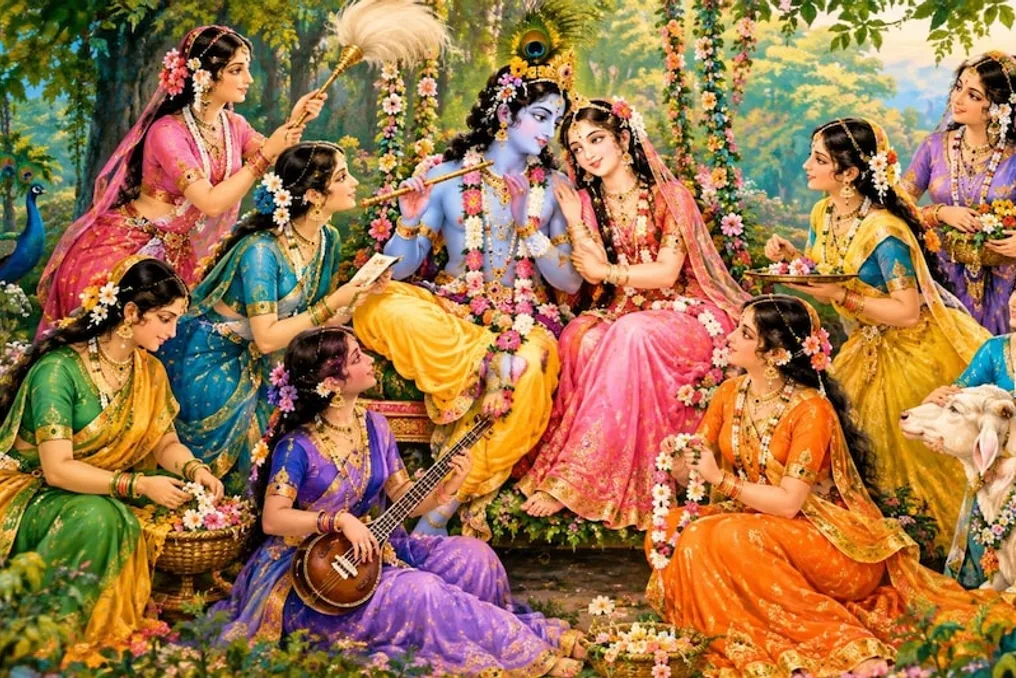
Radha Rani and Her Eight Friends: Secrets and Roles in Hindu Tradition
Read more
Aaj Tak
www.aajtak.in

Radha Rani and Her Eight Friends: Secrets and Roles in Hindu Tradition

The desire to receive the blessings of Radha Rani is the aspiration of every devotee. However, in many Bhakti traditions, it is believed that the path to Radha Rani is connected with the grace of her close friends. This is why the eight friends are given special significance in the stories of Radha and Krishna.

In honor of Radha Ashtami, we learn the names of these eight divine companions, their characteristics, and their forms of service. It will also be revealed who is considered the principal and most beloved friend of Radha Rani, and why the glory of the eight friends is so important in the plays of Radha and Krishna.

The Role of Radha and Krishna's Eight Friends in Bhakti Tradition

In the Bhakti tradition, the eight friends are revered as the closest and dearest companions of Radha Rani. They are seen as key servants who assist in the divine plays of Radha and Krishna. It is believed that their lives were dedicated to serving Radha Rani and enhancing the love between Radha and Krishna.

From the morning pastimes in Vrindavan to adorning, music, and various festivals—each friend performed her unique duties.

Who Are Radha Rani's Eight Friends?

The names of Radha Rani's eight friends are: Lalita Sakhi, Vishakha Sakhi, Chittra Sakhi, Champakalata Sakhi, Tungvidya Sakhi, Indulekha Sakhi, Rangdevi Sakhi, and Sudevi Sakhi.

Lalita Sakhi

Among the eight friends, Lalita Sakhi holds the most prominent position. In Bhakti traditions, she is called the chief and most beloved friend of Radha Rani. Her character is described as strong, fearless, and full of love. She acts as the main protector of Radha Rani's interests. According to belief, if Krishna committed any mischief, Lalita Sakhi could gently reprimand him. Lalita Sakhi plays a special role in matters concerning the adornment of Radha Rani and her service.

Vishakha Sakhi

Vishakha Sakhi is known as wise, perceptive, and an eloquent conversationalist. She is described as a friend who helped convey messages between Radha and Krishna, facilitating their meetings. She possesses a special talent in poetry, music, and conversation, playing an important role in the exchange of loving messages between Radha and Krishna.

Chittra Sakhi

Chittra Sakhi is recognized as an expert in art and beauty. Her outstanding competence lies in creating beautiful combinations of clothing, ornaments, and colors. She plays a significant role in services related to adorning Radha Rani and decorating Vrindavan.

Champakalata Sakhi

Champakalata Sakhi is characterized as a simple, gentle, and caring friend. Her activities involve bringing flowers, fruits from the forest, and other materials necessary for worship or service. Her main duties include creating flower garlands and assisting in the decoration of Vrindavan.

Tungvidya Sakhi

Tungvidya Sakhi is considered knowledgeable in various sciences. She is spoken of as a specialist in music, dance, sacred scriptures, and art. She has a special connection to musical and cultural services in the plays of Radha and Krishna.

Indulekha Sakhi

Indulekha Sakhi is known for her sharp intellect and cunning. She is considered skilled at acting at the appropriate time, understanding the circumstances. She plays an important role in organizing plans and various services related to the plays of Radha and Krishna.

Rangdevi Sakhi

Rangdevi Sakhi's character is described as cheerful and playful. She is closely associated with creating an atmosphere of joy during Rases and festivals. She plays an important role in preparing various celebrations and Rasa Lila.

Sudevi Sakhi

Sudevi Sakhi is considered the twin of Rangdevi. Her character is described as calm, modest, and caring. She shows a particular interest in serving cows and nature, and is also connected to the personal service of Radha Rani.

Who Is Radha Rani's Most Beloved Friend?

The question arises as to which of these eight friends is the most beloved by Radha Rani. In the Gaudiya Vaishnava tradition, Lalita Sakhi is considered the chief and most beloved friend of Radha Rani. Nevertheless, each of the eight friends possesses her own special place and service, so all of them are honored as close attendants of Radha Rani.

The Glory of the Eight Friends

In the Bhakti tradition, the eight friends are symbols of divine love and service to Radha and Krishna. Their stories manifest feelings of love, selflessness, cooperation, and selfless service. Devotees believe that to receive the grace of Radha Rani, the grace of her beloved friends is also important. This is why in the traditions of Vrindavan and Braj, the eight friends are especially remembered and honored.

These eight friends of Radha Rani are not just characters in religious narratives but also important symbols explaining the concepts of love, service, and self-sacrifice. Their devotion teaches us that besides love for God, the feeling of service and self-sacrifice is also of great importance.
Similar stories

Radha Ashtami 2026: Celebration Date, Auspicious Time, and Worship Ritual
Read more
www.aajtak.in

Radha Ashtami 2026: Celebration Date, Auspicious Time, and Worship Ritual

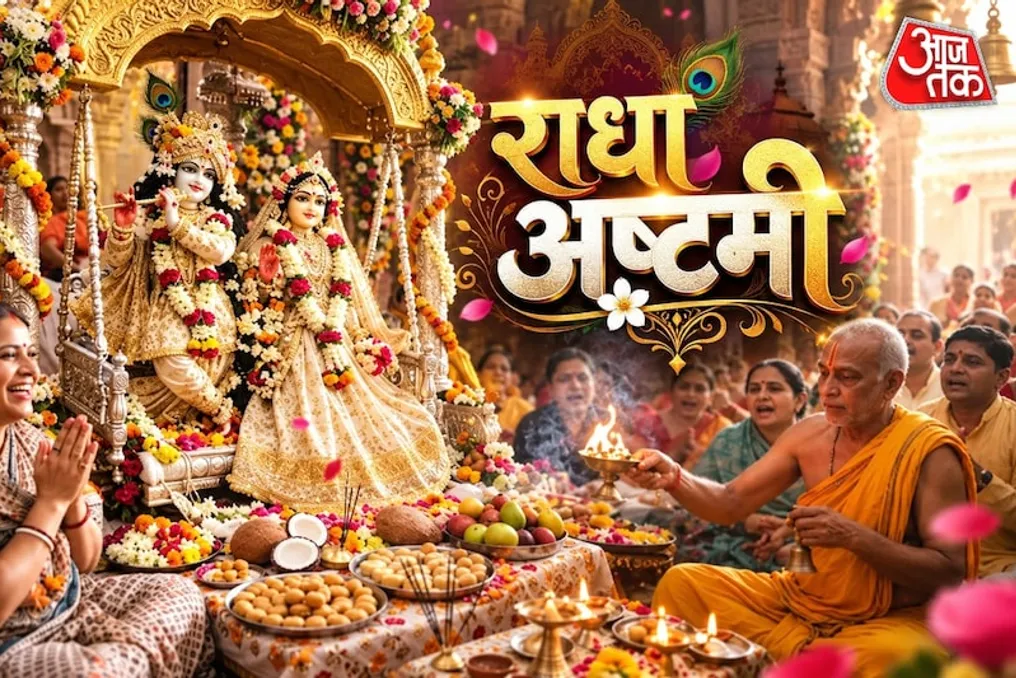
The festival of Radha Ashtami in 2026 is celebrated today, September 19, 2026. This day is dedicated to celebrating the appearance of Radha Rani. Radha Ashtami falls on Ashtami Tithi in the Bhadrapada month, during the Shukla lunar half. This festival is also known as Radhika Ashtami or Radha Jayanti, and on this day, worship is performed for Radha and Krishna. Special enthusiasm during this celebration is observed in Barsana, Mathura, and Vrindavan.

According to the Panchang, the Ashtami Tithi of Bhadrapada Shukla began on September 18 at 13:02. This date will conclude on September 19 at 15:28. Since the Ashtami Tithi is present on September 19 during sunrise, Radha Ashtami this year is celebrated on September 19, Saturday, based on the sunrise date.

For the worship of Radha Rani on Radha Ashtami, the midday time is particularly significant. According to the Panchang, the auspicious time for worship today, September 19, will be from 11:01 AM to 1:28 PM. Due to differences in sunrise and sunset times in various cities, there may be slight variations in the ritual timing.

On Radha Ashtami, one should take a morning shower and wear clean clothes. After that, the place for worship must be thoroughly cleaned. A red or yellow woven material should be spread on the platform. Then, images or statues of Radha Rani and Lord Krishna are installed. The worship begins with lighting a lamp. Radha Rani should be adorned with flowers, fruits, sweets, and other items for worship. If possible, the ritual of Abhisheka for Radha Rani with Panchamrita should be performed. After this, she is presented with beautiful clothes, ornaments, and flowers. During the worship, mantras of Radha Rani and Krishna should be recited. The ritual concludes with Aarti.

Tradition states that on Radha Ashtami, items for sixteen adornments should be offered to Radha Rani. According to religious beliefs, this helps preserve love and sweetness in married life. Incense can also be offered to Radha-Krishna during the worship. Along with this, roses, jasmine, or other fresh flowers should be placed. In religious views, these items are considered auspicious for worshipping Radha and Krishna.

A large number of devotees observe a fast on Radha Ashtami. The rules for breaking the fast vary depending on the region and traditions. According to the Panchang, the fast can be broken after 6:08 AM on September 20. Nevertheless, devotees observing a fast should break it according to the Panchang of their region and family traditions.

Radha Ashtami is celebrated as the birthday of Radha Rani. In the Vaishnava tradition, Radha Rani holds a special place as the greatest devotee of Krishna and His divine power. This is why the worship of Radha and Krishna on this day is considered especially significant. In Barsana, Vrindavan, and other areas of Braj, temples are decorated. Special worships, abhishekas, aartis, and singing of bhajans are conducted. Pilgrims arrive at the temples to see and worship Radha Rani.

Flowers, fruits, and sweets are offered to Radha Rani. In some local traditions of Braj, vegetarian dishes made from arbi are also included in the offerings to Radha Rani. Furthermore, the offerings include sweets made from milk, yogurt, khoya, and ghee. Greater importance is given to sincerity and devotion in the offering, rather than the quantity of dishes. On this day of Radha Ashtami, devotees pray to Radha Rani and Krishna, wishing for happiness, peace, and love.

Dhirendra Shastri comments on Durga Puja in Bengal: expresses dissatisfaction with the preparation of non-vegetarian food at pandals
Read more
www.aajtak.in

Dhirendra Shastri comments on Durga Puja in Bengal: expresses dissatisfaction with the preparation of non-vegetarian food at pandals

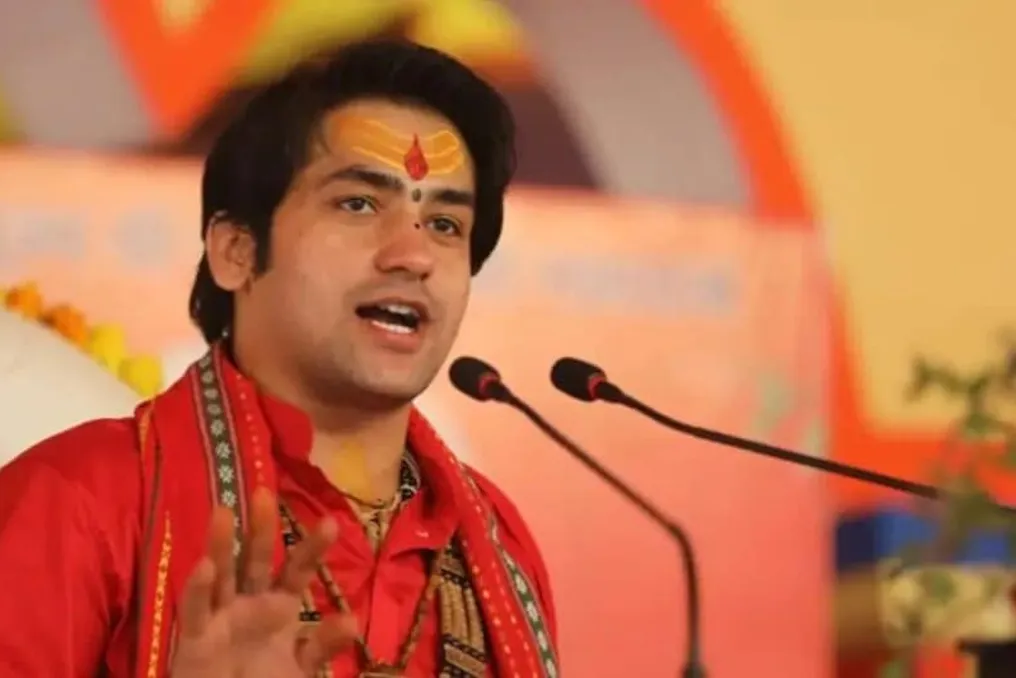
Dhirendra Shastri from Bagneshwar Dham made a statement regarding the celebration of Durga Puja in West Bengal. During a Hindu history program in Havare on Saturday, he stated that one thing in Bengal causes him strong aversion and hurts his feelings.

He expressed his disagreement with the preparation of non-vegetarian food at Durga Puja pandals. Dhirendra Shastri noted that during Navratri, when pandals are set up for Durga Puja, some places prepare non-vegetarian dishes and other types of food at or under the pandals, and he dislikes this.

In this regard, he called on the residents of Bengal to boycott such people during this Navratri. Shastri stated that he would not consider religious those who claim religiosity but prepare such food at Durga Puja pandals; he would call them not religious, but hypocritical.

Addressing the residents of Bengal, he urged Hindus to awaken during Navratri and condemn such people. His statement caused a wide resonance. He emphasized that Durga Puja is widely celebrated in West Bengal, and magnificent pandals are set up everywhere during this time. It was in the context of this religious event that he expressed his dissatisfaction with the preparation of non-vegetarian food at the pandals.

Popular