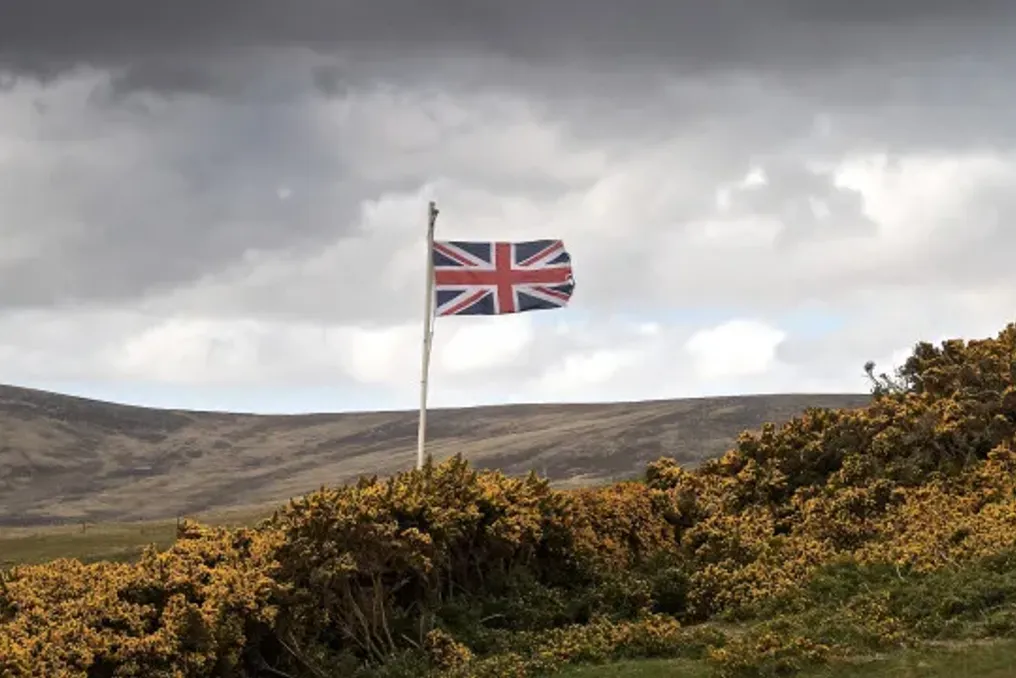
The Milei government announced new sanctions targeting companies involved in the prospecting and exploitation of natural resources in the islands at the beginning of September, in addition to recently presenting a bill focused on the Defense of National Sovereignty.
In an interview with the broadcaster A24, Quirno emphasized that the claim made by Javier Milei's government over the disputed islands is strictly diplomatic and carries no 'belligerent intention.'
When questioned about the stance adopted by the British government following the measures announced by Argentina, Quirno stated that the support coming from London signals the United Kingdom's refusal to participate in negotiations, as stipulated by United Nations guidelines.
The head of Argentine diplomacy recalled a United Nations resolution which, according to him, determines that 'while this dispute persists and is not resolved, both nations must not take unilateral action,' specifically criticizing the hydrocarbon exploration currently taking place in the islands under British administration.
The governor reinforced that Argentina has no hostile intentions and has always sought to resolve the sovereignty issue of the Malvinas, occupied by the United Kingdom since 1833, through peaceful and democratic means.
Regarding the oil companies, Quirno defended the executive's strategy, stating that the government 'valued its strategic assets, allowing them to be used in this conflict.'
Concerning the United States, the Argentine minister informed that Washington opted for a position of neutrality in the dispute, but considered positive the recent mention made by President Donald Trump regarding the Malvinas, as this increases the visibility of the Argentine cause.
Donald Trump had declared on August 31st that there was a possibility for the United States to reevaluate its position regarding the sovereignty of the Malvinas Islands.
Milei changed his stance, moving from an admirer of former British Prime Minister Margaret Thatcher, shortly after assuming the presidency of Argentina in December 2023, to developing a strong nationalist sentiment and becoming a strong defender of the country's sovereignty through legislative and judicial actions.
In 1982, the United Kingdom, under Thatcher's management, and Argentina were involved in a 74-day armed conflict. This confrontation began on April 2nd by the Argentine military dictatorship, led by Leopoldo Galtieri, with the aim of reclaiming the territory of the Malvinas (called Falklands by the British) and diverting attention from the internal economic crisis.
Thatcher mobilized a large air and naval contingent to maintain the archipelago, which was successful on June 14th, with the surrender of Argentine troops. The human cost included 649 Argentine soldiers killed, 255 British soldiers, and three local civilians.
The defeat resulted in the fall of the military junta in Argentina and contributed to the restoration of democracy, while simultaneously strengthening Margaret Thatcher's government in the United Kingdom.