Zimbabwe is taking measures in case of a recurrence of severe drought as weather forecasts indicate an intensification of the El Niño pattern in the coming months.
The country has suffered multiple times from El Niño-related droughts, which negatively impacted crop yields, water reserves, and livelihoods.
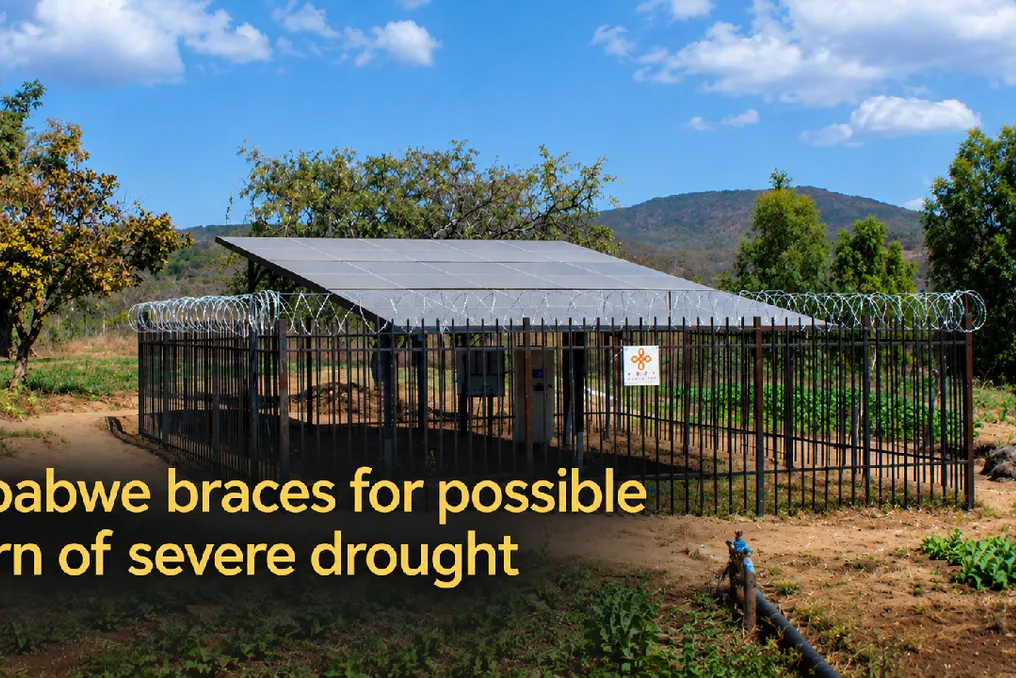
As rainfall becomes less predictable, some farmers are beginning to use solar-powered irrigation systems to reduce their dependence on hydroelectric power.
In Mbare, a bustling market in southern Harare, farmer Jacob Nenzu is purchasing a solar panel, a water pump, and pipes to create an irrigation system. He explains that he wants to draw water from the river near his plot because he can no longer rely on rain.
For smallholder farmers, solar irrigation offers an alternative power source for pumping water during periods of unreliable centralized electricity supply.
A significant portion of the solar energy equipment sold at the market is manufactured in China, where increased production has contributed to lower prices. Furthermore, government reductions and exemptions from duties and taxes on certain solar equipment have made this technology more accessible.
The cost of residential solar installations ranges from approximately 500 US dollars for small systems to around 10,000 US dollars for fully autonomous complexes.
Trader Russell Mutami notes that installing a solar system previously required huge investments, but prices have significantly dropped and quality has improved, and he expects further price decreases.
Thus, for Zimbabwean farmers, solar irrigation is becoming one way to adapt to increasingly unpredictable rainfall, helping to protect agricultural production and livelihoods.