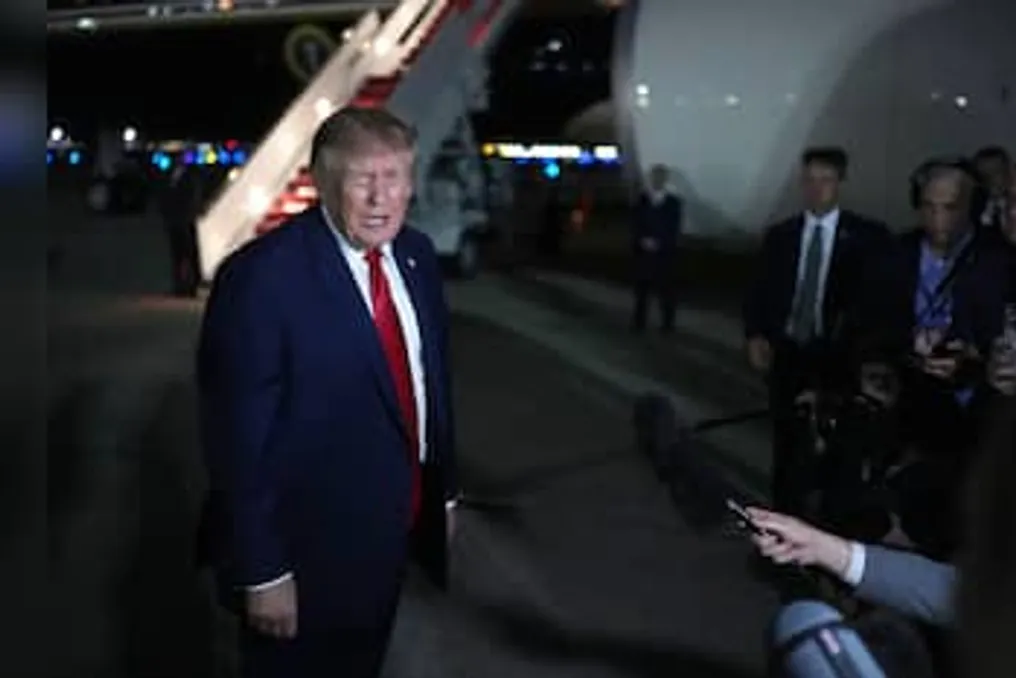
President Donald Trump signed a law imposing sanctions against Russia on Friday, which grants him the authority to impose tariffs on countries purchasing Russian petroleum products.
The new sanctions legislation was a long-awaited step for Ukrainian officials, who hoped to see a tangible sign of support from the United States in the fight against the Russian invasion. The war, now in its fifth year, is in a critical phase of escalation.
Five of the largest purchasers of Russian petroleum products, including China, India, and US allies such as Turkey, could face broad new tariffs. Opponents of the law argue that it could lead to tariffs on the entire European Union, whose members also purchase Russian energy.
This measure overcame strong resistance from business lobbying groups, including the US Chamber of Commerce and major retailers, who feared that Trump would use the legislation to expand tariffs.
The Kremlin called the Congress's adoption of the law a 'hostile' move on Thursday and warned that it could affect negotiations to end the war. Spokesperson Dmitry Peskov told the Interfax news agency that 'the introduction of additional sanctions by the US will undoubtedly complicate efforts to achieve a peaceful settlement in Ukraine.'
The legislative act caused a split in the Democratic Party, pitting the staunchest supporters of Ukraine against those more concerned about rising inflation due to tariffs ahead of the midterm elections in November, where the main focus will be on voter dissatisfaction with the US economy. Most Democrats in the House of Representatives, including party leadership, voted against the law, despite support from Democratic leaders in the Senate. Ultimately, 58 Democrats voted for the measure, while seven Republicans voted against it.
Ukrainian President Volodymyr Zelenskyy seeks to organize a meeting with Trump on the sidelines of the UN General Assembly next week in New York. This comes after a series of official contacts between the US and Moscow, which cast doubt on whether the US would pressure Vladimir Putin to end the war or continue efforts to restrict attacks on Ukrainian energy facilities, for which the US is blamed for the global rise in diesel fuel prices.
Denys Siennyk, the representative of Ukraine, thanked pro-Ukrainian lawmakers on Tuesday evening at the Independence Day celebration in Washington 'for every vote you cast in support of Ukraine, in support of freedom.'
It remains unclear whether the administration will actually use the new powers to increase pressure on Iran or Russia. The White House included broad exceptions in the law, granting the president significant discretion regarding the waiver of penalties.
The law allows the president to impose a universal tariff of 500 percent on goods from Russia imported into the US, as well as an additional tariff of 100 percent on the five largest energy importers and countries importing Russian crude oil or natural gas, or facilitating sanctions evasion. The new tariff mechanism is valid for five years.
Furthermore, the law extends the Iran Embargo Act of 1996 until 2031, preventing the possible expiration of the authority. This law imposes secondary economic sanctions on non-American companies dealing with Iran and was originally set to expire this year.