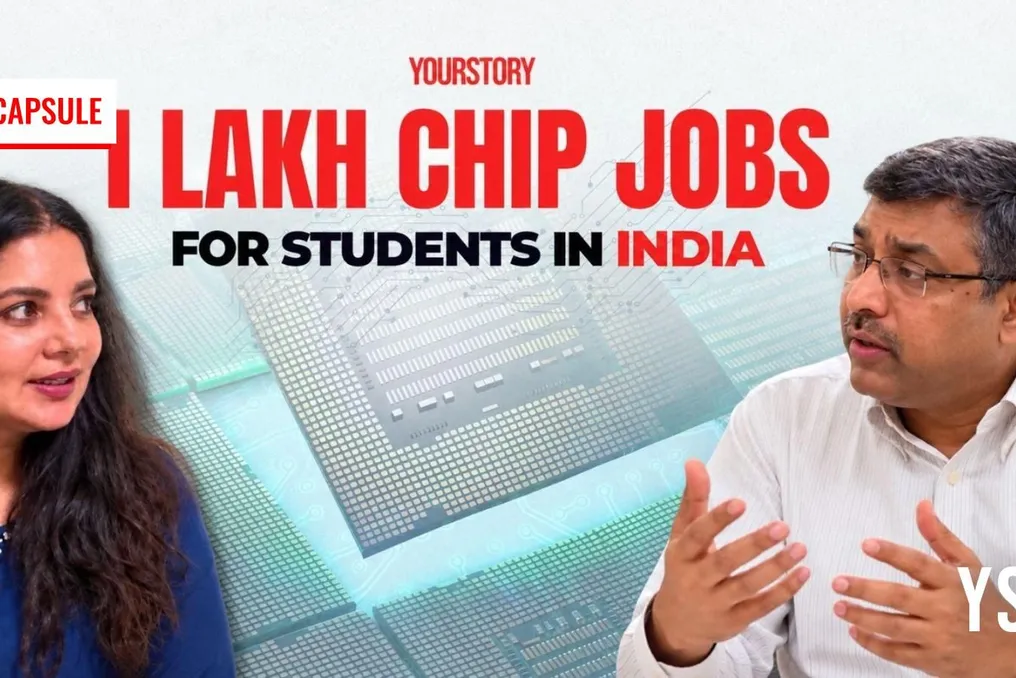
The semiconductor business economy demonstrates enormous potential; according to Sandeep Kumar, CEO of L&T Semiconductor Technologies, companies can expect gross profits of 50, 60, or 70 percent. Kumar emphasized at the Semicon 2026 conference that India will require hundreds of domestic semiconductor companies to create a globally competitive chip industry. In this regard, industry leaders are shifting the focus to forming a localized supply chain for materials, gases, and components, as semiconductor plants begin commercial production across the country.
Representatives from organizations such as Kaynes Semicon, Merck, INOX Air Products, and L&T Semiconductor Technologies, who spoke at public events during Semicon 2026, noted that this expansion phase represents an important opportunity to deepen India's domestic manufacturing ecosystem.
Parallel to technological development, significant events are occurring within India's corporate environment. Specifically, the situation at Tata Sons resembles a dramatic series focusing on corporate intrigue, regulatory pressure, and multi-generational competition. While Tata management is in a state of internal conflict, their long-time rival and minority shareholder, Shapoorji Pallonji (SP) Group, led by Shapoor Mistri, issued a statement supporting the public listing of Tata Sons at the behest of the Reserve Bank of India.
Shapoorji Pallonji Group's decision places Noel Tata in a difficult position, as the Tata Sons Board of Directors also voted by majority to approve the public listing. This makes Noel Tata the only individual opposing this decision. Furthermore, the Asiana Fund, an investment platform of the Dani Family Office, and the Taiwanese venture firm JC Capital launched a fund of 100 billion rupees focused on India's technology and advanced manufacturing ecosystem.
In the field of artificial intelligence, Anthropic, besides concerns about the risks of its models, secretly opened a biological laboratory to apply AI capabilities in drug research, according to Reuters.
At the Semicon India 2026 conference in New Delhi, MeitY Secretary C. Krishnanul noted the rapid progress of the Indian Semiconductor Mission (ISM), which has successfully transformed from a political concept into functioning semiconductor fabs over four years. Since three semiconductor plants are already operating commercially, including Micron's ATMP facility in Gujarat, and others are soon to launch, the mission has exhausted its initial Phase 1 budget and transitioned to ISM 2.0. This expanded phase, approved with an allocation of 1.27 lakh crore rupees, increases the scope beyond chip design and manufacturing to include equipment, chemicals, gases, raw materials, R&D, and large-scale talent development over 12 years.
In the context of startups, the following projects were highlighted: UGRO Capital raised 380 billion rupees; Flam received $40 million in a Series B round; DheyaTech raised 43 billion rupees.
Yaanendriya, a Bengaluru-based deep-tech startup, develops and manufactures high-precision inertial sensors, control software, and navigation systems for autonomous vehicles. After nearly two years of research, the company aims to reduce India's dependence on imported sensor technologies, especially in critical sectors such as defense, aerospace, automotive, robotics, and medical equipment.