It is projected that international visitors will spend an additional $116 billion in the Middle East by 2030 as the region strengthens its position as a global tourism hub and attracts more travelers.
According to the ATM Travel Trends Report 2026, prepared by Arabian Travel Market in collaboration with Tourism Economics, it is anticipated that the region will record 316 million international arrivals by 2030, with total tourist spending reaching $408 billion. This growth is driven by a projected 57 percent increase in visitor spending between 2025 and 2030.
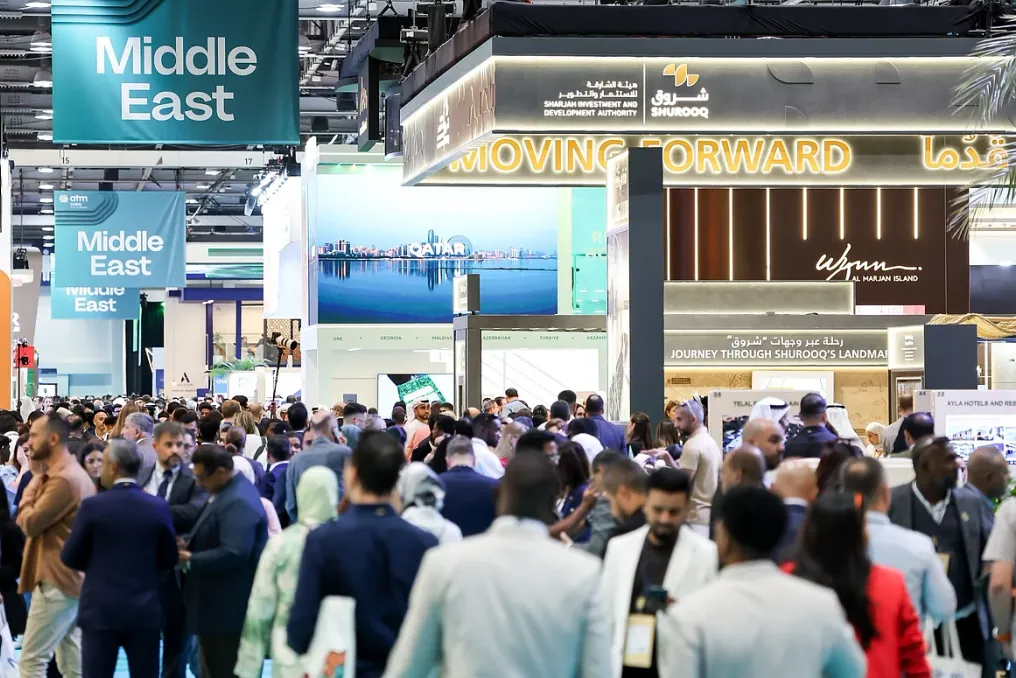
The research findings were presented at the Arabian Travel Market 2026 event in Dubai, where industry leaders discussed the sector's growth potential despite geopolitical and economic uncertainty.
In the broader Middle East, North Africa, and South Asia (MENASA) region, international tourism is forecast to grow by 17 percent in 2027, more than double the global average growth rate of eight percent.
Dave Goodger, Managing Director for EMEA at Tourism Economics, noted that the expected growth goes beyond mere short-term recovery. He expressed optimism about the growth, adding that structural expansion of the travel sector is expected over the next five years.
Goodger emphasized that travelers continue to prioritize experiences, and long-term growth is supported by rising prosperity, favorable demographics, and investments in tourism infrastructure. In the next phase of tourism development, long-haul markets are expected to play a larger role.
China stands out among markets, as the number of tourist nights from Chinese guests in the Middle East is predicted to increase by 160 percent by 2030. This growth could make China an increasingly significant market source as destinations across the region compete to attract international tourists.
The report also showed that in 2025, travel volumes in the MENASA region were nearly 50 percent higher than in 2019, which is approximately three times the global growth. Artificial intelligence is also becoming an increasingly important part of the work of travel companies and tourist vacation planning.
According to data in the report, about 91 percent of tourism businesses in the Middle East are either testing or already using AI in their operations, with 85 percent reporting measurable cost savings. Tourists considering the Middle East are also more likely to use this technology when planning trips; about 28 percent used an AI chatbot for trip planning, compared to 12 percent of travelers interested in other regions.
AI can influence various stages of travel: from choosing a destination and creating an itinerary to booking and receiving support during the trip.
Furthermore, the report indicates that tourism markets are becoming faster at recovering from major shocks. Recovery periods after significant disruptions in travel have shortened from approximately 24 months in the early 2000s to around 10–12 months in recent years.
Despite the expected impact of geopolitical uncertainty on Middle East tourism in 2026, long-term prospects remain focused on growth. The Arabian Travel Market 2026 event took place at the Dubai International Convention & Exhibition Centre from September 14 to 17, bringing together destinations, airlines, travel companies, and technology providers to explore the future of the global travel industry.