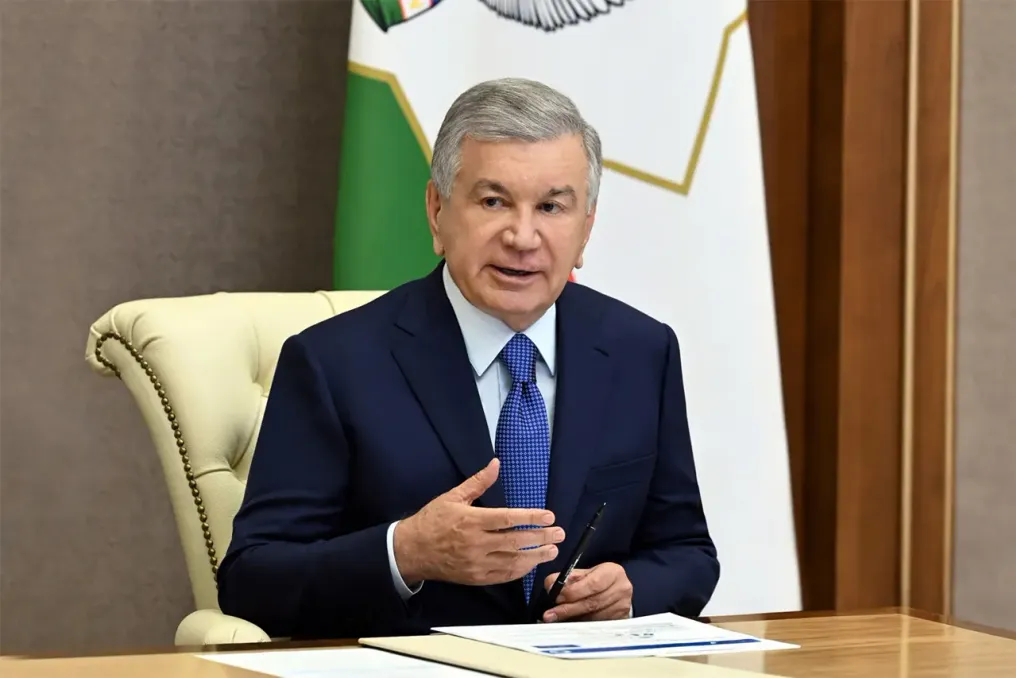
Uzbekistan extends diesel fuel subsidies for farmers until December 2026
Read more
UzDaily
uzdaily.uz

Uzbekistan extends diesel fuel subsidies for farmers until December 2026

Uzbekistan will continue to compensate agricultural enterprises for part of the costs of diesel fuel purchased on commodity exchanges from July 1 to December 1, 2026. This measure is stipulated by a presidential decree dated September 12 concerning the reform of the liquefied gas market.

The subsidy covers the portion of the fuel cost that exceeds 15 million soums per ton, with a maximum compensation of 2 million soums per ton. Payments are made through the Agency for Payments in the Agricultural Sector under the Ministry of Agriculture.

Previously, in May, President Shavkat Mirziyoyev signed a decree on financial support for grain and cotton production in Uzbekistan. This document provided subsidies for agricultural enterprises to purchase diesel fuel between April 1 and July 1 at a price exceeding 13 million soums per ton.

The procedure for providing subsidies was approved by the Minister of Agriculture Ibrohim Abdurakhmonov at the end of July. Payments are made proactively through the AgroSubsidy portal, provided several requirements are met, including the registration of sown areas and the targeted use of fuel purchased on the exchange.

The subsidy amount is calculated automatically based on data from Agroportal and the system of the Republican Commodity Exchange of Uzbekistan (UzRTSB). After the funds are credited, they are transferred to the recipient's account within three business days. Priority use of these funds can be directed towards repaying preferential loans.

According to the National Statistical Committee, in January-July 2026, Uzbekistan produced 683,000 tons of diesel fuel. Production volume increased by 1.4% compared to the same period last year and by 9.4% compared to 2024.

Similar stories

Agricultural enterprises in Uzbekistan will be compensated for part of the diesel fuel costs at high exchange rates
Read more
gazeta.uz

Agricultural enterprises in Uzbekistan will be compensated for part of the diesel fuel costs at high exchange rates

A mechanism to temporarily compensate agricultural enterprises in Uzbekistan for part of their expenses when purchasing diesel fuel through commodity and raw material exchanges is being introduced. This measure was approved by a presidential decree dated September 12, concerning the reform of the liquefied gas market.

The compensation applies to fuel purchased between July 1 and December 1, 2026. If the exchange price of one ton of diesel fuel exceeds the mark of 15 million soums, the agricultural enterprise will be reimbursed the amount exceeding this limit. However, the size of this subsidy is limited to 2 million soums per ton.

A calculation example shows that if one ton of diesel costs 16 million soums, the compensation will be 1 million soums. Even at a price of 18 million soums, the subsidy will not exceed the established maximum of 2 million soums per ton. Payments under this program will be made through the Agency for Payments in the Agrarian Sector.

The decree also includes budgetary financing for another subsidy—in the liquefied gas sector. Starting from 2027, expenses to cover the difference between the regulated retail price of gas for the population and the economically justified costs of the new operator LPG-Trade must be allocated as a separate line item in the state budget parameters.

Furthermore, a unified railway tariff is established for the transportation of liquefied gas produced at local enterprises and intended for consumers by LPG-Trade across the entire republic, which does not depend on the distance traveled.

According to data, diesel fuel production over seven months reached 683.4 thousand tons, slightly exceeding last year's figure (673.7 thousand tons)—only by 1.4%. In July, about 115.4 thousand tons of diesel fuel were produced, which is 1.6% less than in June.

In the first half of the year, diesel fuel imports decreased by 18.7%, amounting to 283 thousand tons, and their total value decreased by 11.1% to 228.9 million dollars. Nevertheless, the average import price increased by 9.4%, reaching 809 dollars per ton. In June, the volume of imports decreased to 2.8 thousand tons compared to 51.8 thousand tons the previous year.

Uzbekistan aims to increase electrical equipment exports to $5 billion by 2030
Read more
podrobno.uz

Uzbekistan aims to increase electrical equipment exports to $5 billion by 2030

Uzbekistan plans to significantly boost the export of electrical engineering products, setting a goal of reaching $5 billion by 2030. Furthermore, it is planned to increase the total production volume in this industry and related sectors to $11 billion.

This information was presented during a presentation on the development of the electrical engineering industry and the stimulation of competitive product output for President Shavkat Mirziyoyev. Previously, production in this sector increased from 4.7 trillion soums in 2018 to 43.1 trillion soums, and exports exceeded $1 billion. Currently, Uzbek products are supplied to 65 different countries.

In the first seven months of 2026 alone, the industry produced goods worth 30 trillion soums and exported products worth $706 million. As part of supporting enterprises that purchase copper raw materials, it is stipulated that they will cover 25% of the cost, while the remaining 75% will be covered by Uzsanoatexport. $50 million will be allocated for the implementation of these measures.

International brands willing to invest at least $50 million will also receive support in the form of tax incentives and access to ready-made production facilities with necessary infrastructure. It should be noted that Uzbekistan and Serbia previously agreed on an Action Plan for industrial cooperation for the period 2026–2028, in which the production of electrical engineering products was defined as one of the key areas of cooperation.

Uzbekistan proposes reforming liquefied gas supply system, including support for vulnerable groups
Read more
uzdaily.uz

Uzbekistan proposes reforming liquefied gas supply system, including support for vulnerable groups

The President of Uzbekistan, Shavkat Mirziyoyev, reviewed proposals for the gradual modernization of the country's liquefied gas supply system. These proposals include creating a new structure for gas procurement and delivery, targeted compensation for socially vulnerable consumers, and increasing the participation of private companies, according to the Presidential Press Service.

Currently, liquefied gas is supplied to approximately 3.8 million consumers and nearly 2,000 social sector facilities. For 2026, the supply of 604,800 tons of liquefied gas is planned for households and social institutions.

The existing supply mechanism, covering resource distribution, pricing, and subsidies, was analyzed within the framework of the presentation. It was noted that in some areas, gas delivery occurs later than scheduled, forcing consumers to purchase additional volumes at market prices from gas stations.

According to the analysis, 22% of consumers receive liquefied gas with an interval exceeding 46 days. Due to such delays, some families effectively spend significantly more on gas than the established subsidized price.

Although households and social institutions currently receive gas at preferential rates, the gap between production, import, procurement, and delivery costs is widening, increasing the need for budgetary subsidies.

Support for Vulnerable Populations

The proposed reform involves establishing LPG-Trade LLC with Hududgaztaminot as a founder. This new structure will purchase liquefied gas through the exchange and organize its delivery to households according to approved procedures. The retail price will be determined using economically justified mechanisms.

It is planned that socially vulnerable groups will receive compensation for every kilogram of purchased liquefied gas. The reform should gradually shift state support from a general subsidy system to targeted assistance for individual consumers. This mechanism is expected to increase the efficiency of public spending and provide more focused support to needy families.

For social sector facilities, liquefied gas will be purchased at exchange prices, and the negative difference arising from selling gas to households at a regulated price will be covered by the state budget.

Another part of the proposals aims to expand the involvement of private business. A pilot project is planned with the involvement of private liquefied gas delivery operators in the Andijan region. Operators must possess the necessary licenses and permits and hire qualified specialists.

At least two operators are expected to participate in the pilot project, along with the introduction of a mobile application and online services for customers. Given the number of consumers and the distance between facilities, the construction of additional facilities in accordance with urban planning standards and fire safety requirements is envisaged. The possibility of extending this approach to other regions will be considered based on the results of the pilot project.

Mirziyoyev emphasized that the reform must be based on accurate calculations, taking into account convenience for the population and the principles of social justice. Responsible agencies have been instructed to ensure timely gas delivery according to schedule, digitize calculations, make distribution more transparent, and prevent artificial shortages and unjustified price increases. They were also tasked with guaranteeing the timely payment of compensation to socially vulnerable groups, adhering to safety requirements at gas stations and during transportation, and strengthening control over private operators.

The reform is expected to reduce liquefied gas delivery times, improve consumer service quality, and ensure more efficient use of budget funds. The presentation also included information on the implementation of additional directives from September 2nd regarding the construction of external infrastructure and a satellite city for the integrated nuclear power plant being built in the Jizzakh region.
Popular