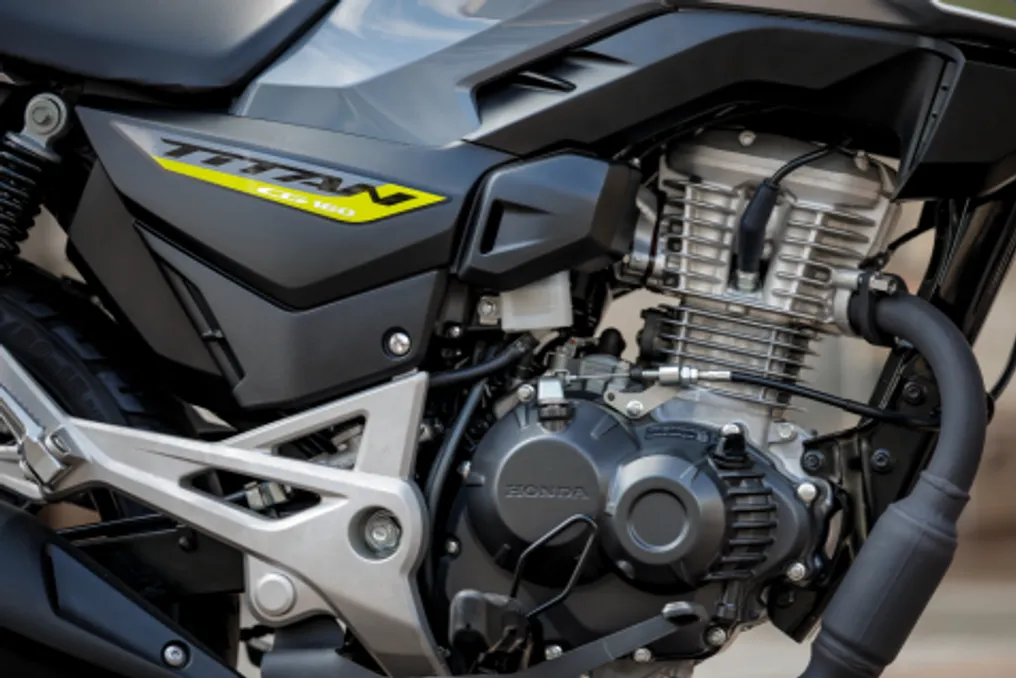
When discussing motorcycle engine maintenance, many Brazilian motorcyclists tend to initially focus on oil replacement. Although this practice is important, specialists warn that the systems related to air intake and fuel combustion require greater attention, as failures in these components can contaminate the lubricant itself.
Bismark do Vale, a research development specialist at Honda, highlighted in an interview with AutoPapo that a lack of technical knowledge when modifying the bike contributes to the problems. He listed several habits that accelerate engine wear, pointing out that all of them are interconnected with the concepts of temperature and balance.
Common maintenance problems
One of the most frequently cited points is the saturation of the air filter, usually caused by the absence of maintenance at the appropriate time. This causes the engine to operate with impaired intake for long stretches. Even more serious, according to Bismark, is the removal of the filter, done by those seeking a sportier sound; this practice allows dirt, sand, and dust to enter the cylinder directly, contaminating the oil.
Regarding fuel, Bismark clarifies that using old gasoline affects combustion efficiency. This is a less common problem for those who use the bike daily, but it is relevant for vehicles that remain parked for extended periods.
The logic presented by the specialist is that any factor influencing the engine's explosion—such as fuel, admitted air, or combustion—must be considered. Changing one of these elements in isolation, without adjusting the others, results in imbalance, not performance gain.
In this context, the priority shifts from common sense: oil remains vital, but it may be more a victim of the process than the cause of the problem. Bismark compares oil to the motorcycle's blood, stating that if the engine is consuming something inadequate or breathing polluted air, the oil will be contaminated.
This means that poor intake management affects the lubricant, which circulates through the cylinders. Regarding oil changes, the specialist advises following the manual's instructions, but with a crucial caveat: checking if the usage is classified as severe. He gives the example of the delivery rider (motoboy), who operates at high RPMs, constantly starting and stopping the bike, resulting in continuous heating and cooling cycles not registered by the odometer. For this profile, oil changes should occur at shorter intervals than standard.
Similarly, those who drive on long, calm trips while keeping the oil at the ideal temperature can extend the lubricant's lifespan.
Secondary factors and engine operation
Lubrication, adjustment, and cleaning of the chain, as well as correct tire calibration, are included in the list for indirect reasons: an misaligned bike requires greater effort from the mechanical assembly. Bismark emphasizes that every component must function perfectly so that the engine does not suffer negative consequences from external failures.
A practical recommendation is to let the bike run stationary for a few seconds, but no more than a minute, during the first start of the day, ensuring lubrication before starting the journey. During the day, when the engine is already hot, this procedure does not need to be repeated.
However, excess also incurs costs. Since most motorcycles sold in Brazil use air cooling, keeping the engine running and stopped for several minutes can raise the temperature beyond the ideal point because there will be no airflow to aid in cooling. Bismark illustrates this with the analogy of running on a treadmill in a closed environment, which differs from running outdoors in cold weather.
The concept of balance underpins the entire discussion. Bismark concludes by saying that engineering is remarkable for its concern with the balance of things. He finishes with the observation that, in pursuit of more performance, the driver inevitably sacrifices durability, citing examples of motorcycles that reach speeds over 200 km/h, but warning that this is only acceptable if the owner knows they are prioritizing performance over daily use.