Korean scientists developed lead-free perovskite sensor for detecting low concentrations of ammonia
Read more
N+1
nplus1.ru

Korean scientists developed lead-free perovskite sensor for detecting low concentrations of ammonia

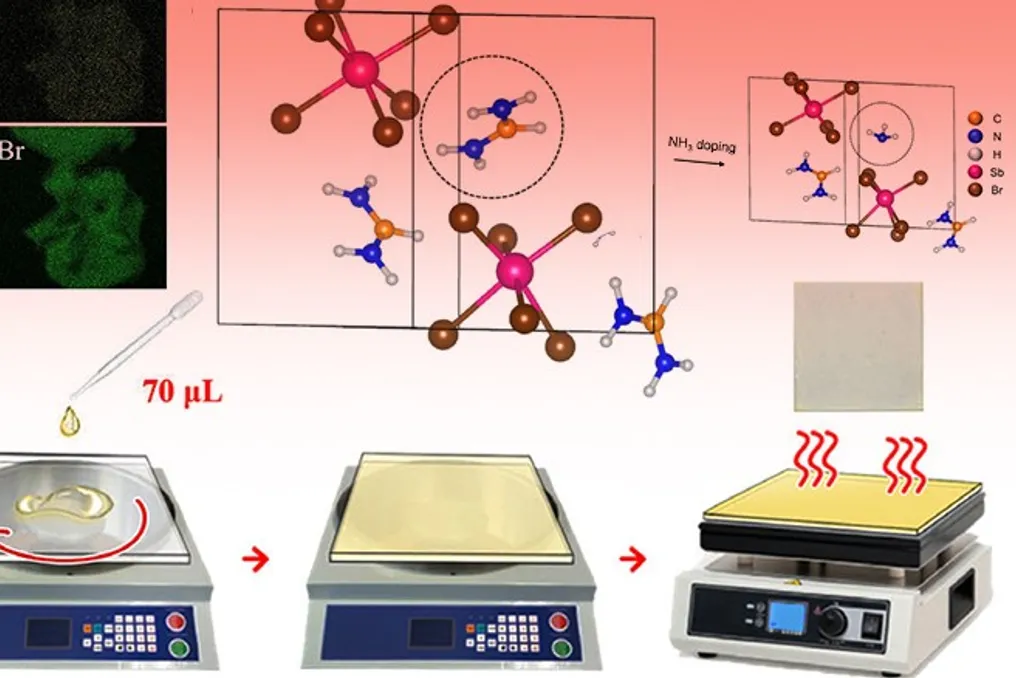
Korean materials science specialists have developed a thin-film gas sensor based on perovskite using antimony. This sensor is capable of detecting ammonia even at very low concentrations, reaching a level of just 1 ppm.

At a gas concentration of 100 ppm, this sensor demonstrates a response expressed as a 235 percent increase in current strength. This development represents an effective replacement for lead perovskites, whose main problem is toxicity, as well as more traditional sensors based on bismuth.

The research results were presented in the scientific journal Small Structures.

Similar stories

Fermionic statistics hinder the operation of a neutrino laser, physicists from the USA have shown
Read more
nplus1.ru

Fermionic statistics hinder the operation of a neutrino laser, physicists from the USA have shown

Physicists working in the USA concluded that the concept of a superradiant neutrino laser cannot be realized due to fundamental properties of neutrinos related to fermionic statistics.

The researchers found that during collective neutrino emission, the maximum speed increases directly proportionally to the number of atoms. This differs from the behavior of photonic superradiance, where the speed increase is proportional to the square of the number of atoms.

The results of this study were presented in the scientific journal Physical Review Letters.

Popular