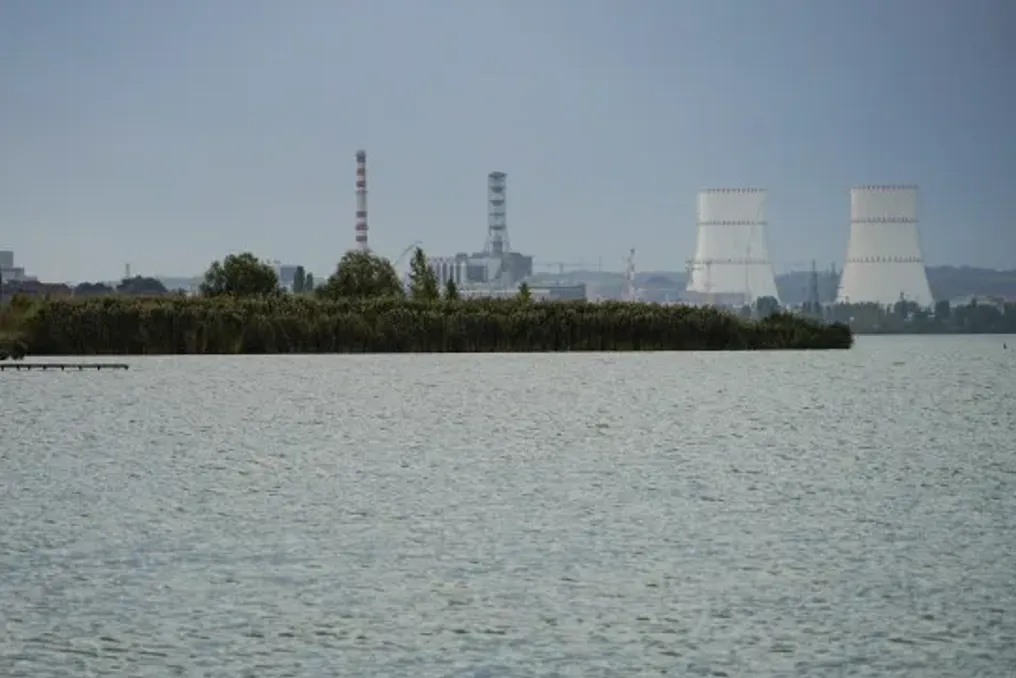
The UN agency reported on social media about the incident that occurred on Thursday morning. The agency did not specify who launched the device nor provide details about possible material damage.
The nuclear power plant in Kursk is located in western Russia, 90 kilometers from the border with Ukraine, and is equipped with four reactors of Soviet design. The IAEA noted that the reactor connected to the cooling tower was operating during the attack and continued to function.
IAEA Director General Rafael Grossi emphasized that any attack on nuclear facilities is 'unacceptable,' regardless of where it takes place, due to the threat it poses to safety. Grossi also reiterated the call for maximum military restraint to prevent the risk of a nuclear accident.
Neither Russia nor Ukraine has yet commented on the information provided by the UN agency. In July, the governor of the Kursk region accused Ukraine of attacking the cooling tower at the Kursk II NPP, which is being built near the original facility erected in the 1970s.
In 2024, Russian President Vladimir Putin accused Kyiv of planning an attack on the NPP, and last year a Ukrainian drone caused a fire near the facilities, but no abnormal levels of radioactivity were detected.
Nuclear power plants have become one of the sources of concern related to Russia's invasion of Ukraine in February 2022. The IAEA regularly warns of the risk of disaster, especially at the Zaporizhzhia NPP, the largest in Europe, which is under Russian control in southern Ukraine, as well as at the Chernobyl NPP north of Kyiv, where the structure for containing radioactive waste released during the 1986 nuclear disaster was hit by a Russian drone.