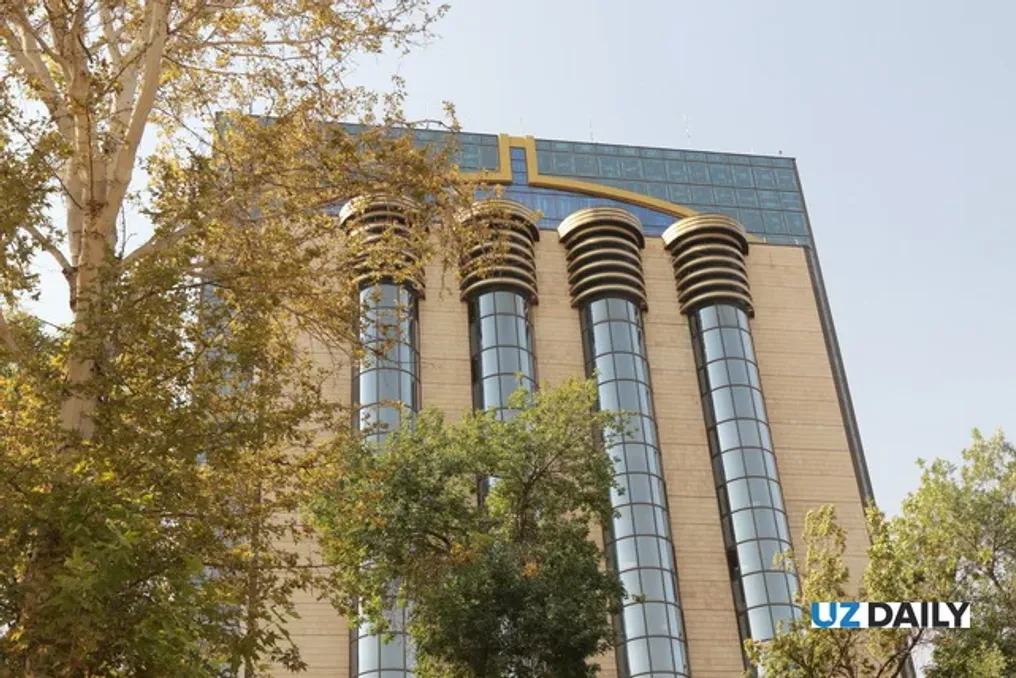
Central Bank of Uzbekistan plans to expand the range of assets for international reserves
Read more
UzDaily
uzdaily.uz

Central Bank of Uzbekistan plans to expand the range of assets for international reserves

The Central Bank of Uzbekistan intends to gradually increase the assortment of assets into which the country's international reserves are invested. The regulator plans to move beyond US treasury bonds and consider other highly liquid instruments while maintaining priorities of safety and liquidity.

Deputy Chairman of the Central Bank Abror Mirzo Olimov announced this on September 18 at the International Forum on Public Asset Management in Tashkent. As of early September, the Central Bank held about 439 tons of gold, valued at approximately 65 billion US dollars at market prices, with gold accounting for about 90% of the country's international reserves.

Olimov emphasized that the high share of gold is due not only to the regulator's decisions. Uzbekistan produces about 120 tons of gold annually, and the Central Bank has the priority right to purchase it. The Deputy Chairman of the Central Bank explained that the large share of gold in reserves is a consequence of the structure of the economy, the ecosystem of domestic gold production, and historically accumulated reserves.

Over the past five years, Uzbekistan's international reserves have almost doubled—from approximately 35 billion dollars in 2021 to over 72 billion dollars. During the same period, gold reserves grew from 360 to 439 tons, and the share of gold in reserves increased from about 60% to 90%. According to Olimov, the growth in the share of gold reflects a combination of increased physical reserves and rising global metal prices.

The Deputy Chairman also noted that gold will play an increasingly significant role in global international reserves. He mentioned that over the last four years, central banks have been acquiring more than 1000 tons of gold annually, which is about twice as much as in previous decades. In light of this, the problem for regulators is no longer about including gold in reserves, but about determining its optimal share and approaches to managing such assets.

As of September 1, Uzbekistan's international reserves exceeded 72 billion dollars. The Central Bank indicated that this amount is approximately 3.4 times the IMF's minimum benchmark, covers about 14 months of imports, and exceeds the country's short-term external debt by 4.4 times.

Olimov stated that the main task in reserve management is now not just accumulating a large buffer, but how to manage such a volume of reserves. The Central Bank is guided by three main priorities: first, safety and capital preservation; second, liquidity; and third, profitability. The regulator clarified that the goal is not profit maximization, but improving returns while considering risk within clearly defined safety and liquidity constraints.

Furthermore, the relationship between purchasing gold from domestic producers and managing internal liquidity was discussed. Producers mine and process gold, after which the Central Bank purchases it in national currency and adds the obtained metal to international reserves. Payments to producers in sums increase liquidity in the economy, which the Central Bank sterilizes using monetary policy tools, as well as open market and foreign exchange market operations.

As reserves grow, the Central Bank is gradually changing its approach to managing them. If the main focus was previously on accumulation, the emphasis is now shifting towards portfolio management. Since 2020, the Central Bank has been cooperating with the World Bank under the Reserve Asset Management Partnership (RAMP) program. The regulator has also begun investing part of the reserves in fixed-income instruments. Initial amounts of such investments were small but have been gradually increasing.

Olimov added that the next step for the Central Bank is to expand the range of investment instruments. In addition to US treasury bonds, the regulator is considering sovereign bonds, bonds issued by subnational authorities, and other fixed-income instruments. However, he warned that diversification should not automatically mean taking on more risk. He stressed that before taking on additional risks, one must possess the appropriate institutional capacity—to understand, measure, and manage these risks.

During the 2026–2027 period, the Central Bank is working with international financial institutions on strategic asset allocation, investment policy and strategy, as well as developing an independent risk management system. Olimov emphasized that there is no universally optimal structure for international reserves applicable to all countries; the structure depends on economic characteristics, state obligations, the need for foreign exchange interventions, the structure of the domestic market, the acceptable level of risk, and the regulatory body's institutional capacity.

As of September 1, the securities portfolio in Uzbekistan's international reserves amounted to about 1.77 billion US dollars, or approximately 2.4% of total reserves. In August, it increased by only 3.4 million dollars, reaching 1.766 billion dollars. For comparison, in July, the portfolio decreased by approximately 1.1 billion dollars, or almost 40%, from 2.86 billion dollars to 1.76 billion dollars. According to the source, this was the first such decrease since the introduction of securities into the structure of international reserves.
Similar stories

Uzbekistan expands support measures for entrepreneurs and families according to presidential decree
Read more
uzdaily.uz

Uzbekistan expands support measures for entrepreneurs and families according to presidential decree

Uzbekistan is implementing expanded support measures for entrepreneurs and families in accordance with the presidential decree 'On measures to increase household incomes through the creation of sustainable jobs and accelerated development of small businesses' (UP-193 dated September 11, 2026).

This document provides for the possibility of issuing unsecured loans to certain leading entrepreneurs. Decisions on such measures can be made by district and city headquarters responsible for creating sustainable jobs and increasing population income.

Entrepreneurs who attract families included in the Social Register into joint programs will be eligible for unsecured loans of up to 5 billion soums, with 50 million soums allocated for each participating family.

The authority to manage preferential credit resources within the framework of family and youth entrepreneurship development programs is transferred to district and city headquarters.

Starting from October 1, 2026, a mechanism will be introduced to compensate part of the interest expenses on commercial bank loans for self-employed individuals and small and medium-sized enterprises. This compensation will be provided based on decisions of district and city headquarters, using funds from the Joint Stock Company 'Entrepreneurship Development Company' or other designated sources.

The headquarters will make decisions based on local conditions, project effectiveness, and priority areas, and will be responsible for the targeted and effective use of funds. The headquarters' decision will serve as the basis for providing compensation.

Furthermore, no additional requirements regarding credit history, entrepreneur category, sustainability rating, or other criteria will be established. Entrepreneurs retain the right to apply directly to the Entrepreneurship Development Company for compensation in accordance with the general procedure established by law. Simultaneous compensation of the same interest expenses on the same financing is prohibited.

The decree also introduces changes to the sphere of social support. The authority to manage the funds of the 'Sahovat va Ko‘mak', 'Women's Notebook', and 'Youth Notebook' funds, as well as to organize social assistance and services financed through these funds, is transferred to district and city headquarters.

Starting January 1, 2027, the need for people in social assistance and services, as well as decisions on inclusion in the Social Register, will be determined using a multidimensional evaluation system. In addition to financial circumstances, this system will take into account chronic illnesses of family members, disability, external labor migration, the presence of many children, and other factors.

The socio-economic status of families will be assessed using a scoring system. Based on the results obtained, families will be assigned corresponding categories and will gain access to social support measures and services.

From the same date, the State Social Insurance Fund will begin paying childcare benefits to women employed under employment contracts, starting from the end of maternity leave until the child reaches one year of age.

Additionally, families classified as 'families receiving state support' in the Social Register will become entitled to additional interest-free loans within the framework of family entrepreneurship development programs. 100 billion soums will be allocated for this purpose in 2026, and 300 billion soums in 2027.

Senate of Uzbekistan approved the expansion of Zarafshan city using lands from Tamdysky district
Read more
uzdaily.uz

Senate of Uzbekistan approved the expansion of Zarafshan city using lands from Tamdysky district

The Senate of Uzbekistan approved changes to the boundaries of Zarafshan city and Tamdysky district in Navoi region, transferring 2459 hectares of land from the district to the city.

Discussion of the issue in parliament

This issue was considered at the 19th plenary session of the upper house of parliament. This decision is aimed at creating prerequisites for the long-term development of Zarafshan, increasing the utilization of the territory's economic potential, attracting investments, creating new jobs, and improving the living conditions of the population.

More than 250 industrial and production projects are planned on the transferred territories. In addition, plans include the construction of 90 social facilities, as well as more than 500 trade, domestic, and other service institutions.

The expansion is also driven by Zarafshan's growing need for housing, social facilities, and engineering and communal infrastructure against the backdrop of increased industrial capacity, population size, and economic activity.

Including the new lands within the city limits should open up opportunities for housing construction and the development of necessary infrastructure, including water supply systems, electricity supply, road paving, sewerage, and other engineering-related infrastructure.

It is expected that the development of new territories will provide additional employment opportunities, including for youth and individuals entering the labor market.

Senators' requirements for land development

Senators who spoke at the meeting emphasized the need for comprehensive and systematic development of the transferred lands. In their opinion, including this land in the city's composition should not be limited to merely an administrative boundary change but should be accompanied by conditions for its full development.

After discussion, the Senate adopted the relevant resolution.

Popular