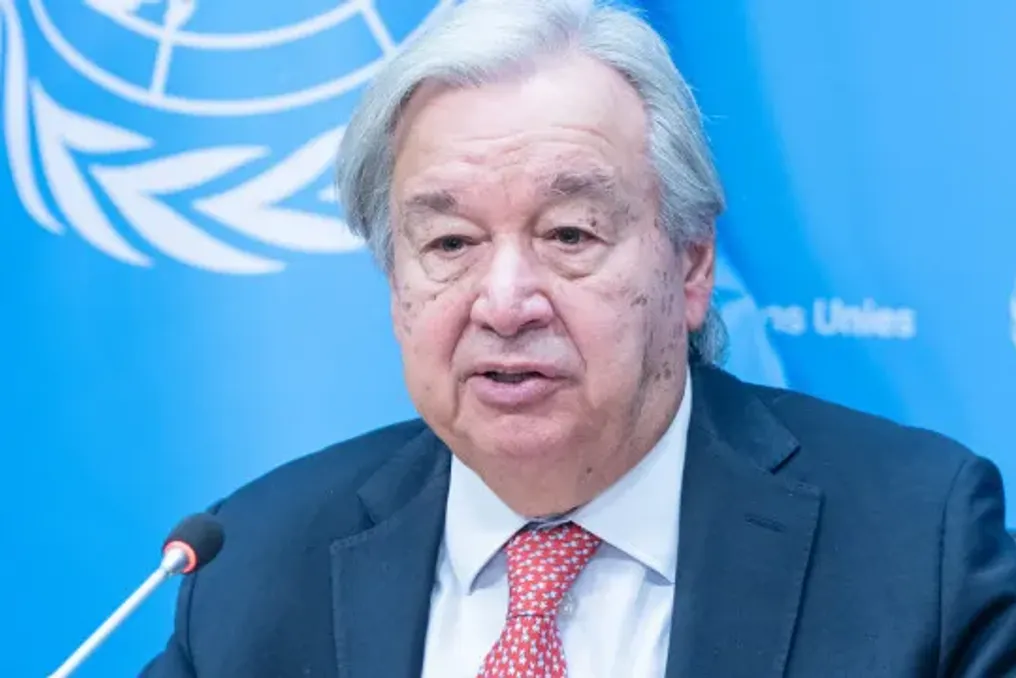
António Guterres called on governments to implement the Sustainable Development Goals (SDGs), emphasizing that despite the ambition of these goals and the enormous challenges undertaken, commitments must be accompanied by transformative actions. He stated that fulfilling these promises is an obligation and represents the greatest opportunity to build a fairer, safer, and more sustainable world.
These appeals were made by Guterres at the opening of the 'SDG Moment' event, which marked the beginning of the High-Level Week of the 81st session of the United Nations General Assembly. The event plans to discuss both global and national initiatives that contribute to accelerating progress toward the SDGs, even in the face of growing global problems.
The SDGs are a set of 17 global development goals established by the UN General Assembly, which must be achieved by 2030. Guterres reminded that these goals were formulated by member states and adopted by all governments in 2015 with the aim of creating healthier, safer, and more prosperous societies, eradicating hunger and poverty, combating inequality and exclusion, eliminating diseases, protecting the planet, and ensuring that no one is left behind.
Although there has been a decline in child and maternal mortality and an expansion of access to education, social protection, clean water, sanitation, electricity, renewable energy, and the internet since 2015, the UN chief expressed regret over significant setbacks in recent years. He noted that the main reason was the global pandemic crisis, which nullified years of progress and exposed deep vulnerabilities.
Guterres stressed that progress was never automatic but was achieved through the determination of people, communities, and countries. However, he also pointed to serious obstacles currently facing development, such as conflicts, division, and mistrust, which weaken international cooperation.
He listed issues including crises in the Middle East and other regions that continue to cause economic instability and disrupt flows of food, energy, and trade. Furthermore, the climate crisis is accelerating, dangerously approaching the 1.5-degree threshold, and the rights of women and girls are under threat. Guterres also drew attention to the fact that developing countries remain trapped in debt, have limited fiscal space, and underinvest, while the world spends record amounts on military actions, while development suffers from resource shortages.
Emphasizing that the promises made by governments when adopting the Goals are not being fulfilled, Guterres strongly demanded their implementation. In this regard, he identified four areas for urgent action: tackling inequality, caring for the planet, financing sustainable development, and accelerating progress using available tools.
Concluding his address before the UN General Assembly in New York, he called for renewed efforts to establish peace, naming peace as both the foundation and the enabling condition for long-term, sustainable, and resilient development. The core message of the 'SDG Moment' event is that no country, institution, company, or community can achieve the Goals alone, especially in a world marked by successive and complex crises. According to the UN, progress depends on shared responsibility and collective action.