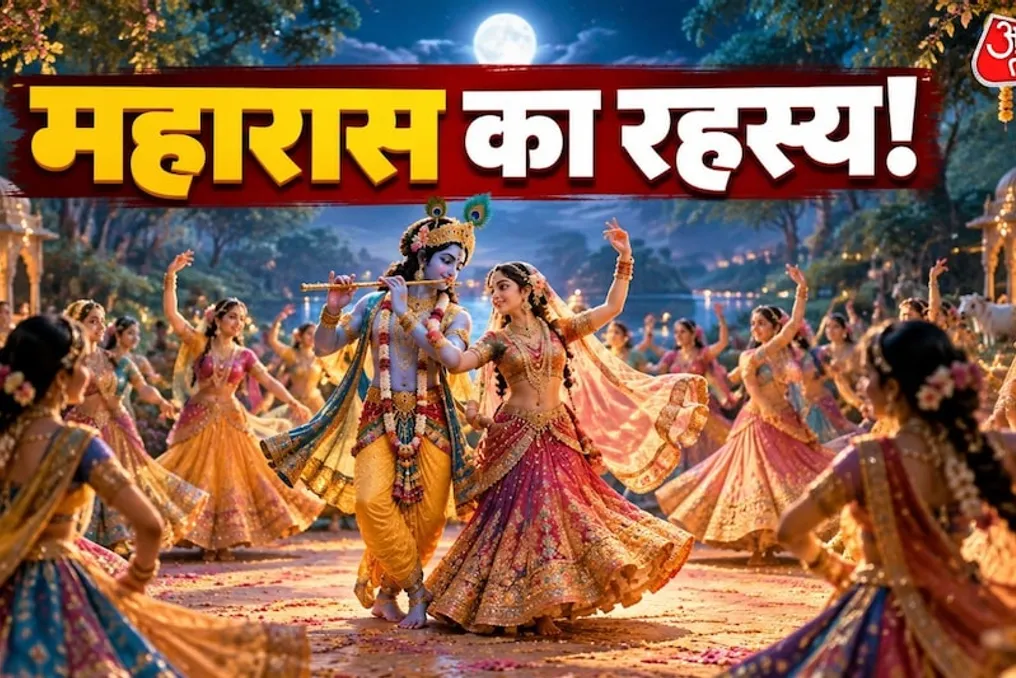
The relationship between Radharani and Shri Krishna cannot be viewed within the framework of worldly love. In the tradition of Vaishnava devotion, Radharani is revered as the energy that brings pleasure to Krishna. Krishna is the embodiment of bliss, and Radha is the power that allows this bliss to be experienced. Therefore, their connection should be understood as the highest form of divine love and devotion, and not separated.
Often, the love of Radha and Krishna, as well as Maharasata, is ridiculed when viewed from an ordinary worldly perspective. Perceiving Maharasata solely as an event of dance or singing limits its spiritual meaning. In reality, Maharasata is perceived as a high state of devotion where ego, worldly attachment, and personal selfishness recede, awakening a feeling of complete self-sacrifice before God.
The path of devotion is not considered easy. The practitioner must overcome numerous internal attachments and vices. They advance their spiritual path by cultivating feelings such as renunciation, asceticism, self-control, devotion, rejection of ego, and selfless love for the Supreme Power. In this sense, Maharasata can be understood as a state where ordinary worldly consciousness takes a backseat.
Entering Maharasata is related not to external permission, but to internal capacity and a feeling of complete devotion. The goal of this state is not worldly entertainment, but the manifestation of love between a living being and God, where the devotee completely dedicates their existence to the feet of God.
Associating Maharasata with sensuality and lust is also a consequence of misunderstanding its spiritual nature. Lord Shiva is remembered as one who conquered Kamadeva. There is a belief that Shiva himself appeared in the guise of a companion to witness Maharasata and danced with Krishna. This episode indicates that Maharasata should be understood not at the level of worldly desire, but from the perspective of supreme spiritual bliss.
When even Bholenath, who conquered sensuality, arrived as a witness to this divine play, considering it only from the perspective of worldly attraction or entertainment dance narrows its deep spiritual meaning.
The love of Radha and Krishna is connected not to the desire to receive, but to the feeling of giving and self-dedication. Radha's love for Krishna is not based on any worldly expectations. It is this selflessness that makes her an example of devotion. Radha's complete self-sacrifice in Krishna and Krishna accepting Radha's love demonstrates the depth of the connection between the devotee and God. To grasp the greatness of Maharasata, it is not enough to simply listen to stories; one must understand the spiritual feeling hidden behind them. That love in which ego disappears, there is no selfishness, and in which the entire heart of the devotee is dedicated to God, leads to a high state of devotion.