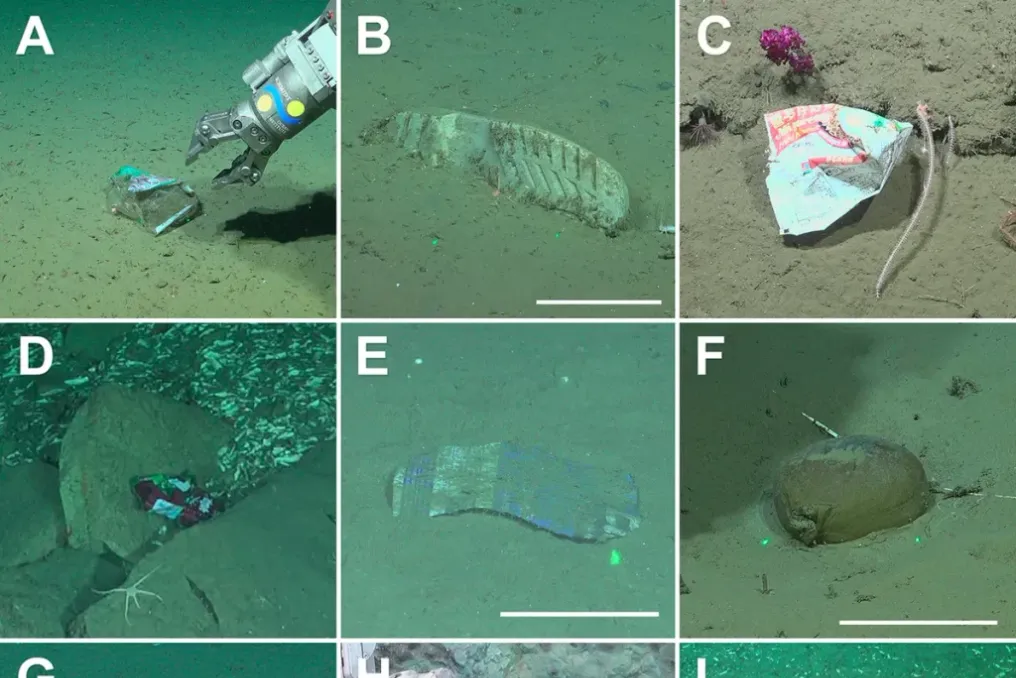
Argentine scientists conducted research in the Mal-del-Plata underwater canyon, discovering 29 pieces of debris accumulated on the seabed. The expedition used an underwater robot at depths of up to 3820 meters, showing that human waste reaches remote areas of the South Atlantic.
The research results were published in the journal PLOS One. The mission included 17 dives using the remotely operated vehicle (ROV) SuBastian from July to August 2025. The robot helped record about 40 species that may be new to science, but the team also found human-made waste.
Marine biologist Daniel Laurett noted that the most memorable piece of debris was a single boot found on the seafloor. During ten dives, the team recorded various types of debris on the ocean floor.
Debris can create obstacles for scientific research itself; for example, during one dive, fishing line suddenly appeared in front of the ROV, forcing the team to stop to avoid a collision. Diego Urteaga, marine biologist and participant in the study, emphasized that he was struck by the appearance of fishing line directly in front of the ROV, which required an immediate stop to prevent an accident.
The team believes commercial fishing is the most likely source of the discovered waste, but does not rule out other causes. Ocean currents are capable of transporting materials over long distances and may also contribute to the pollution of commercial vessels, recreational boats, and land-based activities.
The discovered items were not isolated from marine life. A starfish attached to a plastic bag was observed, and deep-sea worms colonized a set of fishing lines.
Impact of Waste on the Ecosystem
According to researchers, waste can function as artificial surfaces on the ocean floor, altering local communities. Furthermore, it can facilitate the transport of organisms to areas where they are not usually found. The consequences of this process are still insufficiently studied.