As dawn barely breaks, Nikhil Patel heads out to his field. For years, crop irrigation was accompanied by constant worry: would there be access to electricity when needed, or would he have to rely on the diesel pump again?
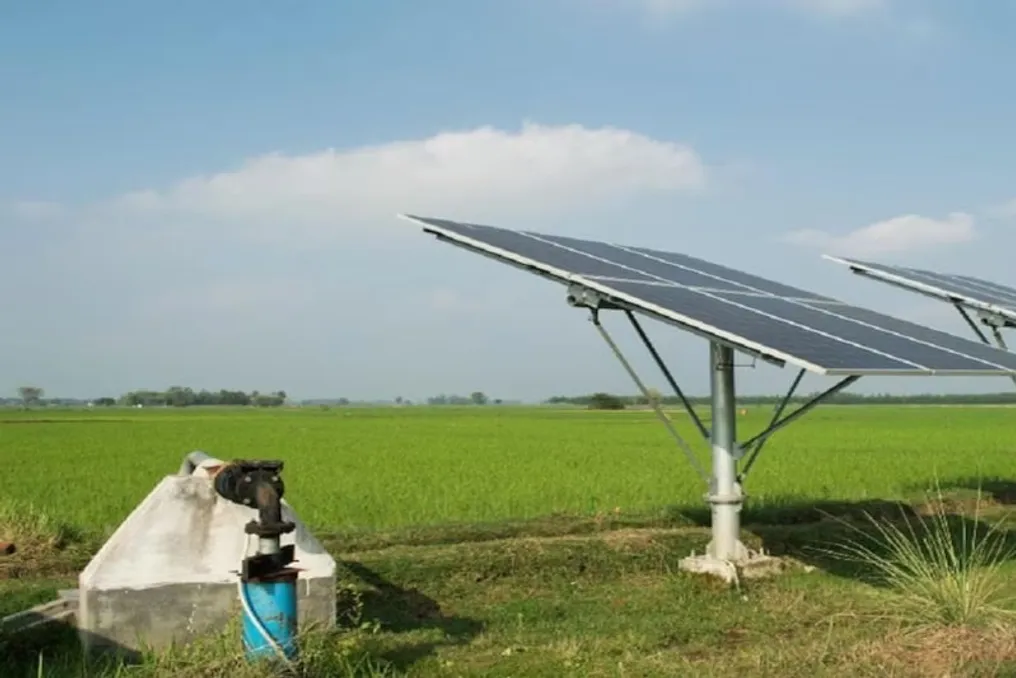
However, the scene is different today. Rows of solar panels stand along the edge of his land, and a solar-powered pump begins supplying water to the crops. Another change has occurred: his farm can now generate income thanks to the sun illuminating it.
Nikhil is not alone in this transformation. Across Madhya Pradesh, Rajasthan, Chhattisgarh, Telangana, Uttar Pradesh, and Odisha, thousands of farmers are implementing solar energy in a similar manner.
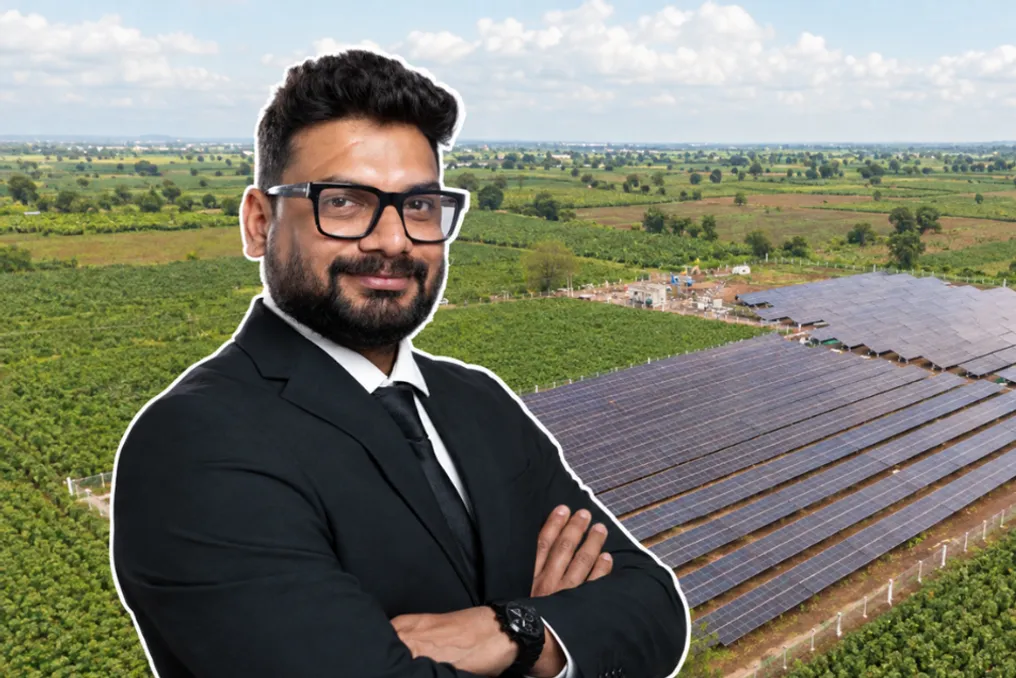
Behind this movement is Bhavesh Patidar, who grew up in a farming family in Halghat, Madhya Pradesh, and personally witnessed how difficult it could be for a farmer to achieve a stable income. After studying at IIT, he built a career in technology before founding Solarsure.
Since its launch in November 2024, the company claims to have installed over 300 MW of solar capacity and covered more than 50,000 farmers with its projects.
"I didn't study the problem; I lived it"
Growing up in a farming family, Bhavesh witnessed the uncertainty that defined agricultural life. His father worked tirelessly on the farm for decades, but financial security always seemed out of reach. Yet, he often heard his father say, "Pura jeevan kheti mein laga diya, par kabhi achhi kamai nahi hui" (I spent my whole life in farming, but never earned well).
These words stayed with him long after he left home. They accompanied him during his studies at IIT-BHU and while building his tech career. He founded the agritech startup Neurafarms, which was later acquired, and spent years working with data-driven systems and climate technologies. But even as his work took him in a different direction, the problem he saw at home remained familiar.
"The problem wasn't something I discovered through research," says Bhavesh. "I lived it and saw it every day growing up."
Years later, the government's PM-KUSUM scheme gave him an opportunity to make a difference. This scheme allows farmers to use solar energy in various ways: from powering irrigation pumps to setting up larger grid-connected installations and selling the generated electricity. Bhavesh became interested in the latter: could the land itself become an additional source of income?
He decided to test this idea on his family's land. Under this scheme, he installed a 2 MW solar power plant and began selling electricity back to the grid. Unlike farm income, which could fluctuate based on weather and market prices, the income from the sun was more predictable.
Neighboring farmers noticed the installation and inquired about its operation and the possibility of doing something similar on their own land. This experiment eventually evolved into Solarsure.
Bhavesh launched the Indian company Solarsure, which handles renewable energy EPC (Engineering, Procurement, and Construction), based in Indore, in November 2024. Today, the company operates in Madhya Pradesh, Rajasthan, Chhattisgarh, Telangana, Uttar Pradesh, and Odisha, helping farmers install solar projects on unused or less fertile land. Solarsure reports that over 50,000 farmers have participated in its projects, and the company estimates that income growth exceeds 30 percent. Currently, the company has installed over 300 MW of solar capacity and has a project portfolio exceeding 1.5 GW.
What if farmers could sell energy?
For many farmers, the definition of solar energy is limited to irrigation pumps, but Bhavesh believes the possibilities are much broader. "Farmers shouldn't just consume energy," he asserts. "They should also have the ability to produce and sell it."
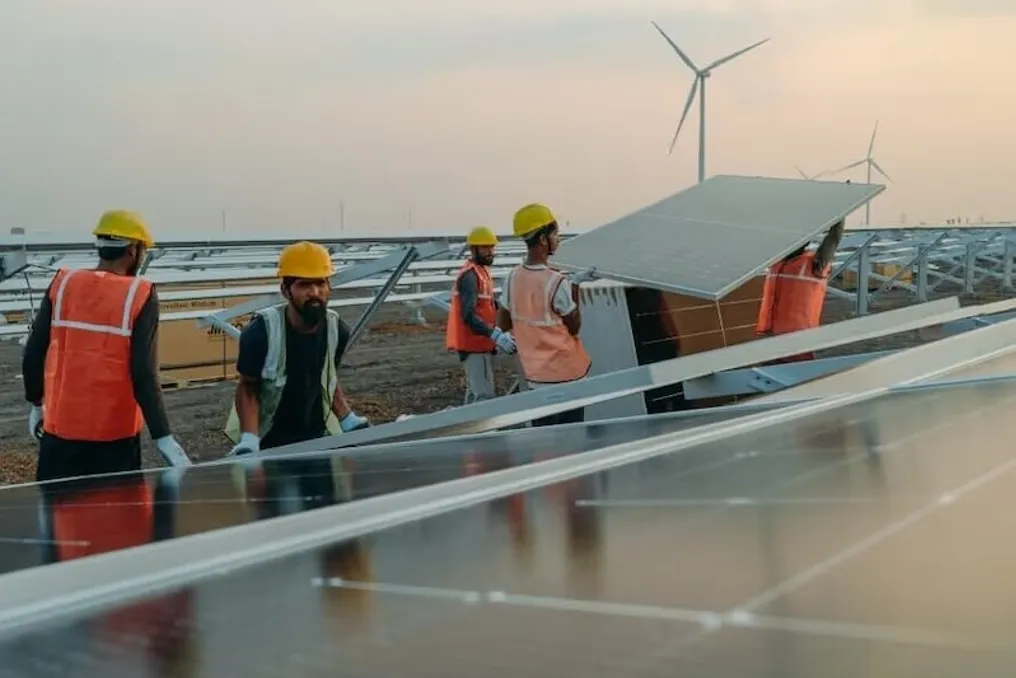
Thanks to Solarsure, farmers receive support at every stage of the process—from project design and financing assistance to installation, maintenance, and grid integration. The company develops both ground-mounted and rooftop solar systems while helping farmers access government programs and funding options.
Before launching a project, Solarsure also uses artificial intelligence and satellite data from agencies like ISRO and NASA to study climate risks, wind conditions, and long-term site viability. The goal is to understand how well the site is likely to perform and optimize energy generation over time.
The company also provides the digital infrastructure necessary for efficient grid integration, ensuring that electricity generated by solar plants can reliably feed into the grid. For Bhavesh, all this technology is important because of how it can change a farmer's income.
"Too much in agriculture depends on factors outside the farmer's control," he says. "The sun creates a second, predictable, and long-term source of income."
"Now I have a fixed monthly income"
Returning to Nikhil's field, one can see the beautiful unfolding of the transformation. Nikhil, a farmer by profession, first learned about solar projects under the PM-KUSUM scheme through social media. Curiosity prompted him to look into the concept, and eventually, he contacted Solarsure.
At the time, financial pressure was mounting. "There was a cash crisis," he recalls. "I wanted to understand if this could really work."
After learning more about the process, he decided to move forward. Looking back, he calls it one of the best decisions of his life. "I faced many financial problems before," he says. "Now I receive a fixed income every month. My loan payments are managed, and I can plan for the future."
The additional income has also given him confidence to explore other opportunities. "Today I can make decisions easily. Whether for my family or for a small side business, I have the confidence to move forward."
For Nikhil, the biggest change may be the ability to plan ahead. And seeing what the sun has done for his personal finances, he wants other farmers to at least understand the option available to them.
"The weather is unpredictable, and farm incomes are not fixed. If farmers want better earnings and a better life, they must understand solar energy and learn about the PM-KUSUM scheme."
While Nikhil points to a fixed monthly income, another farmer, Mitesh, experienced financial benefit in a different way: by reducing household electricity costs. Living in a multi-generational family home of 20 people, he previously paid about 12,000 rupees per month for electricity. After installing a 5 kW solar system, this amount dropped sharply. "Today my electricity bill is only about 1,000–1,200 rupees. I save almost 10,000–12,000 rupees every month."
From loan payments to planning the future
For a farmer, an additional income stream can change very ordinary decisions. Loan payments are made on time. The electricity bill no longer consumes the monthly income. There is a little more room to think about the next harvest, a child's education, or household expenses without worrying about where the money will come from.
This is what makes solar energy interesting for Bhavesh. Farming will still depend on rain, crop prices, and hundreds of things the farmer cannot control. But the sunlight falling on the same land can give the family something else to rely on.
Sometimes it means cheaper electricity. Sometimes it means water for the field. And sometimes, as Nikhil discovered, it means knowing that some money will come in, even if the farming season is unsuccessful.
This brings Bhavesh back to what he heard from his father for years: that a life dedicated to farming had still not brought the financial security he hoped for.
Today, Bhavesh hopes to help other farming families write a different story—a story where the earth beneath their feet and the sun above their heads can help them build a more secure future. "If farmers can earn with dignity and provide financial security for their families, then we have achieved something significant," he smiles.