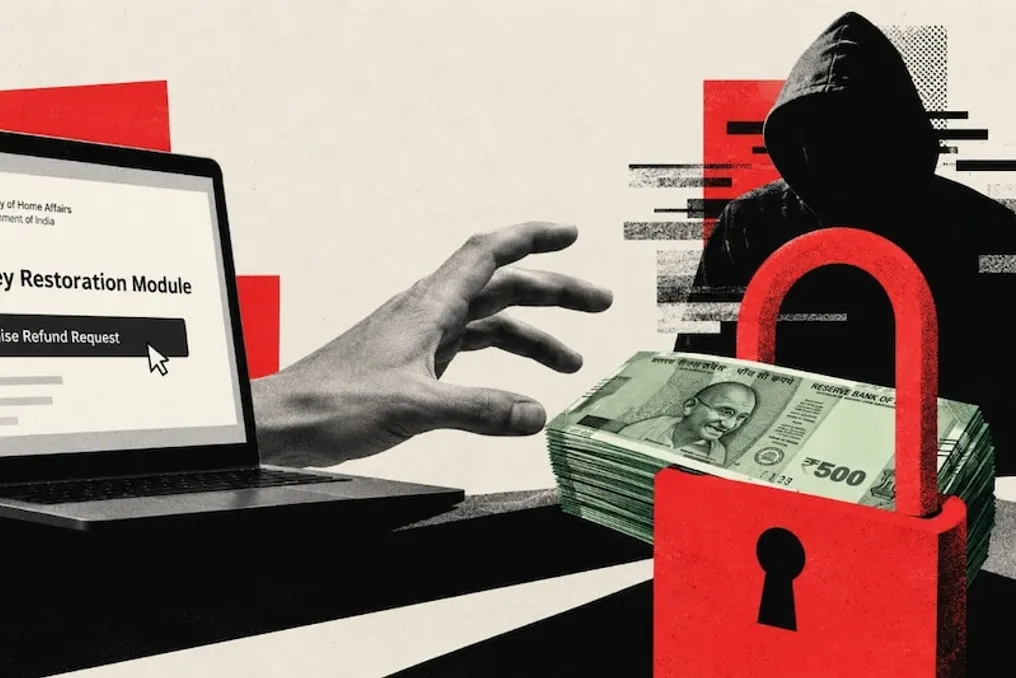
Since the funds were deposited into the salary account, the date for the monthly installment payment (EMI) is approaching, and the client needs to pay utility bills and tuition fees for their children. The client may face problems if a withdrawal ban is placed on the bank account. Such situations can arise during checks for cyber fraud or suspicious transactions. The Reserve Bank of India (RBI) has presented a draft regulation aimed at reducing inconvenience for regular customers when conducting operations against suspected cyber fraud and accounts used for money laundering.
The proposed structure by the RBI provides for imposing a temporary withdrawal block only on the disputed amount, rather than freezing the entire bank account, where possible.
What will change in procedures?
The RBI has released a draft amendment to the 'Know Your Customer' (KYC) directives. It proposes a Standard Operating Procedure (SOP) for suspicious accounts and transactions related to cyber fraud and money laundering. According to the proposal, if the bank's transaction monitoring system detects a suspicious transaction of ₹1000 or more related to cyber fraud or money laundering activities, the bank may impose a temporary withdrawal block on it. It is important to note that every transaction of ₹1000 or more will not be automatically frozen; the bank's system will determine its suspicion based on transaction patterns, customer profile, and other indicators. The RBI proposal also mentions the use of Artificial Intelligence (AI) and Machine Learning (ML) monitoring systems.
Blocking the disputed amount, using the remaining funds!
The most significant change is that if there is suspicion of cyber fraud regarding a specific transaction, the bank can impose a temporary block only on that amount, eliminating the need to block the entire account for use. This will allow the client to continue using the remaining legitimate funds. However, if the bank deems the entire account as a suspicious account for money laundering, the draft provides for a temporary block on the entire account. Simply put, the block will depend on the status of the disputed amount or the account, not on the automatic freezing of the entire account due to one suspicious transaction.
Client will get 20 days to provide explanations
The proposed RBI rules also include an option for the client to state their position. After imposing a temporary withdrawal block, the bank must notify the client. The client is given 20 days to provide explanations, documents confirming the legitimacy of the transaction or account, as well as documents regarding the reason or source of the funds. After this, the bank must review the responses and provided information. If the client responds, the bank must make a decision within 10 days of receiving the response. If the response is deemed satisfactory, the bank must immediately lift the temporary block and notify the client. If the client does not respond, the bank must make a decision within 30 days from the date the temporary block was imposed. If the client's response is unsatisfactory, the bank may continue the temporary block and forward the case to competent law enforcement agencies through NCRP-CFCFRMS, while the bank must explain the reason for maintaining the block and forwarding the case to the police.
Temporary block may last up to 60 days
The RBI proposal also suggests setting a validity period for the temporary withdrawal block. Unless there are specific instructions from the regulatory or competent authority, the maximum duration of the temporary block is set at 60 days. This means the bank cannot indefinitely hold the disputed amount. If the case is forwarded to the police or another competent authority, further actions will be determined by their instructions.
Courts have questioned the complete freezing of accounts!
The issue of completely freezing bank accounts in cases of cyber fraud has also been raised in courts. In August 2026, the Allahabad High Court ruled that if an investigative agency points out only a specific amount in the account as disputed, a withdrawal ban cannot be applied to the entire account. In one case, the court ordered users of the account to continue operations while maintaining a lien on the disputed amount of ₹36,000. In September, the Allahabad High Court also directed that the account be opened for normal use, blocking the disputed amount. However, the court specified that further action may be taken in the future in accordance with the law upon receiving new complaints or instructions from investigative bodies. Thus, the RBI proposal aims to strike a balance between reducing customer problems and continuing the investigation into cyber fraud.
Why did RBI put forward this proposal?
According to the RBI, this SOP was developed following the Supreme Court's order of August 4, 2026. The Supreme Court instructed the RBI to develop a standard operating procedure regarding temporary withdrawal blocks in cases related to money laundering and cyber fraud. The RBI's goal is to create a unified and timely procedure for banks to quickly block disputed amounts and prevent long and unnecessary inconvenience to real customers.