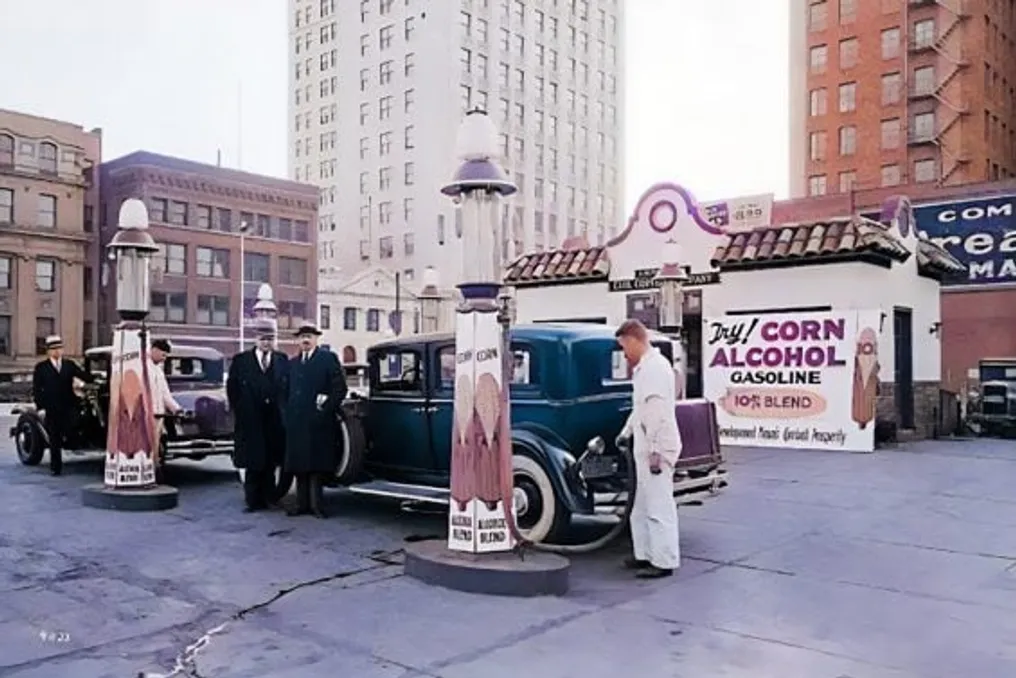
Alcohol car idea, valued in Brazil, was advocated by Henry Ford a century ago
Read more
AutoPapo
autopapo.com.br

Alcohol car idea, valued in Brazil, was advocated by Henry Ford a century ago

Brazil is the country that has invested the most in ethanol, implementing it in three distinct phases: the Proálcool program in the 1970s, the adoption of the flex system starting in 2003, and more recently, integration with hybrid vehicles that also use alcohol.

The concept behind these three waves of ethanol incentives is over a hundred years old and originated outside of Brazil, being advocated by Henry Ford.

At the beginning of the 20th century, the automotive future was still uncertain. While many engineers leaned towards electricity, Ford advocated for ethyl alcohol because it had domestic production, burned cleaner than the gasoline of the time, and freed the industry from dependence on imported oil. For him, tomorrow's fuel should come from the countryside.

The discovery of vast oil reserves in the United States at the beginning of the 20th century caused a drop in gasoline prices, parallel to the expansion of refinery infrastructure. However, during the Prohibition period, between 1920 and 1933, alcohol manufacturing remained practically prohibited, even for industrial purposes.

The topic returned to the Brazilian debate after the 1973 oil shock. Since the country imported more than 80% of what it consumed, the government of Ernesto Geisel instituted Proálcool in 1975 with the aim of encouraging sugarcane cultivation and the use of alcohol in vehicle tanks. In just one decade, vehicles powered exclusively by ethanol reached 85% of new model sales, setting a record in 1985.

This leadership did not last long. The subsequent drop in oil prices and the increase in sugar made sugarcane economically more viable for food production than for vehicle fuel, coupled with supply instability, which shook driver confidence. Ethanol only regained relevance in the 2000s with the introduction of the flex system, which eliminated the need for the consumer to choose a single type of fuel.

The current third phase is underway. Since August 2025, the gasoline available at stations contains 30% anhydrous ethanol, an increase from the previous 27%. Furthermore, electrification has adapted to alcohol: Toyota launched the Corolla in 2019, becoming the first flex hybrid produced in Brazil, and BYD manufactures the plug-in flex Song Pro and Atto 2 in Camaçari (BA).

In Europe, the success of this bet depended on local tax policy. In France, Superethanol E85, which contains between 65% and 85% alcohol, costs approximately R$ 5.24 (€0.88), less than half the price of regular gasoline, which is R$ 13.27 (€2.23), due to the fact that the ethanol portion is almost exempt from taxes. Consumption soared by 83% between 2021 and 2022, a movement driven by the context of the yellow vest revolt.

France accounts for 25% of European bioethanol production and holds 8% of the superethanol market. Other countries such as Germany (16%), the United Kingdom (12%), and Spain (11%) produce on a large scale but do not actively promote E85; in these locations, ethanol is taxed like gasoline and is intended for E5 and E10 blends or export. Sweden was an exception in this scenario, between 2002 and 2008.

In Brazil, ethanol registered a national average price of R$ 4.05 in August, compared to R$ 6.65 for regular gasoline, according to ANP data. The price parity hovers around 70%, making it advantageous for flex vehicles, although the expansion of sugarcane cultivation remains under review due to its link with deforestation.
Similar stories

Analysis of the predominance of European trucks over American ones in the Brazilian market
Read more
autopapo.com.br

Analysis of the predominance of European trucks over American ones in the Brazilian market

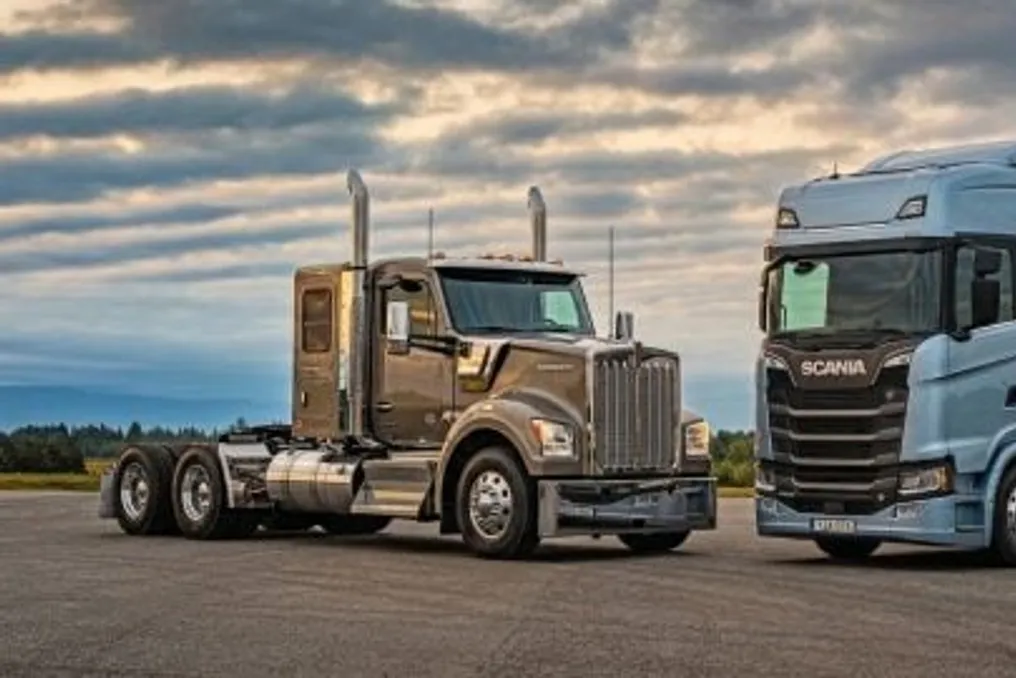
Observing the truck brands with local factories in Brazil currently, there is a clear dominance of European companies; even considering Volkswagen Caminhões e Ônibus, which has a national trajectory, it follows the European pattern.

Historically, American manufacturers Ford, Chevrolet, and International operated in the country. The Ford TT was the first truck to circulate in Brazil, dating back to 1925, and these three companies contributed significantly to socioeconomic development and the introduction of trucks in Brazil.

In 1929, the Brazilian automotive industry began to progress. Engineer José Augusto Prestes conceived and manufactured a truck in Rio de Janeiro with a fully national engine, named Bandeirante, which is considered the first Brazilian automobile or autocamion of that time.

In the 1930s and 1940s, the Brazilian truck sector did not show major advances. This situation changed at the end of the 1940s, when the National Engine Factory (FNM) established a collaboration with the Italian Isotta Fraschini, resulting in the birth of the FNM D-7300, recognized as the first national truck.

During the administration of President Juscelino Kubitschek, the Goals Plan was implemented. On July 16, 1956, Decree No. 39,412 was published, defining the guidelines for the creation of the Brazilian automotive industry and establishing the Executive Group of the Automotive Industry (GEIA).

Kubitschek was leading Brazil towards a development model focused on road transport, which required attracting new manufacturers to the national territory. In addition to this decree, Decree No. 39,568, also issued in July 1956, specifically created the National Plan for the Automotive Industry focused on trucks.

This second decree stipulated that manufacturers must nationalize component production by up to 60%. With this, the government aimed to attract manufacturers not only through the CKD regime, where vehicles are assembled in the country using imported parts, but also to foster local production, generate jobs, and boost the economy.

The plan was successful. Even before it, Mercedes-Benz and Scania—then known as Scania-Vabis—were already starting their activities in Brazil. From that point on, however, the environment became even more favorable for the installation of factories and the national production of trucks.

To understand the preference for European trucks, it is necessary to analyze the regional technological context. In the United States, manufacturers still offered many gasoline-powered models, despite having diesel options; the first truck with a diesel engine left the factory with a Kenworth equipped with a Cummins engine in 1933.

In Europe, this technology had been available for longer. In 1923, ten years earlier, Benz and Daimler launched the world's first diesel truck.

The geography and road network of each region also influenced vehicle design. American roads, characterized by being long and well-planned, favored longer trucks with lower load concentration per axle. In Europe, narrower roads and rugged terrain demanded more compact trucks (with advanced cabs or 'cara-chata'), capable of concentrating high load capacity, which perfectly suited the developing Brazilian road infrastructure.

Thanks to the decrees from the Kubitschek government, European manufacturers felt more secure investing in an expanding market like Brazil. Although building a factory was a costly and complex process, the nationalization policies and incentives for the automotive industry helped mitigate the risks of this investment.

American manufacturers, meanwhile, maintained their focus on their robust domestic market and the light and medium segments, making investments in the Australian market, whose characteristics are more similar, although weight combinations there are considerably larger.

Thus, due to a combination of political, socioeconomic factors, and the bet on European technology, as exemplified by FNM with the Italian Isotta Fraschini, Brazil consolidated itself as a destination for European manufacturers, and gradually, the Americans were pushed out, with Ford being the last to leave the market in February 2019, although its Cargo line had an extended lifespan thanks to the partnership between Ford and Iveco.

Flex Engine History: Brazilian Technology That Allowed for the Use of Different Fuels
Read more
olhardigital.com.br

Flex Engine History: Brazilian Technology That Allowed for the Use of Different Fuels

The Flex technology, developed in Brazil, allows most current vehicles to use gasoline, ethanol, or a combination of both. This system was commercially launched in the country in 2003.

Initially, the creation of this technology served as a response to consumer distrust regarding alcohol, motivated by supply crises and price fluctuations of the product during the 1990s.

By offering the driver the freedom to choose the most economical fuel at the pump, the system quickly gained popular acceptance. More than two decades after its launch, the Flex engine is seen by the automotive industry as an option to reduce pollutant emissions, alongside electric cars.

Previously, the choice was restricted: the driver had to acquire a car designed exclusively for gasoline or another for hydrated ethanol. Due to the loss of credibility in alcohol-powered vehicles in the 90s, some drivers began mixing fuels themselves in the tank, a practice known as 'rabo de galo' mixture, which frequently resulted in mechanical problems in workshops.

It was in this scenario of difficulties that engineering identified an opportunity: to develop an engine capable of operating with any proportion of alcohol and gasoline without suffering damage.

Professor Renato Romio, responsible for the engines and vehicles department at the Mauá Institute of Technology, mentioned that there was a previous program, Proálcool, which was declining. He stated that the emergence of Flex cars allowed this program to be rescued, ensuring the maintenance of ethanol at gas stations.

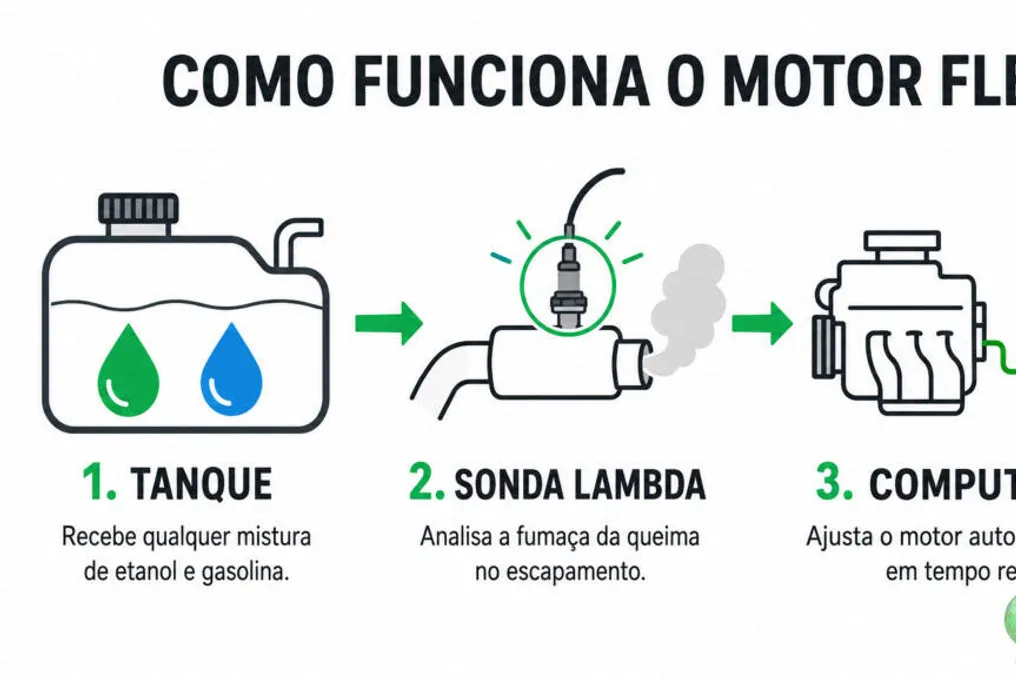
Although the idea of a dual-fuel car already existed in the United States, where they used a sophisticated and costly tank sensor to monitor the mixture, Brazilian engineers opted for a more accessible approach. They dispensed with the tank sensor and used the lambda probe, a part already present in vehicles and significantly cheaper.

Positioned in the exhaust system, the lambda probe acts as an electronic detector. Instead of analyzing the tank contents, it examines the smoke generated by the combustion of the fuel exiting the exhaust. An embedded software, such as systems developed by Magneti Marelli or Bosch, interprets this data in real time. By detecting the composition of the ethanol and gasoline burn, the system makes automatic adjustments to the engine's operation.

With the technical solution established, manufacturers began a competition to introduce the innovation to the market. Volkswagen led the launch, presenting the Gol 1.6 Total Flex in March 2003. Subsequently, Fiat and Chevrolet followed with the Palio 1.3 and the Corsa 1.8, respectively, using the same technology, marking the beginning of the Flex car era in Brazil.

A crucial advantage of the Flex vehicle is the possibility of keeping pure ethanol available at gas stations. According to engineer Renato Romio, the Brazilian differential lies not only in the Flex technology but also in the availability of hydrated ethanol at stations, something other countries do not have.

The implementation of the Flex engine required engineers to solve practical issues to increase the longevity and ease of use of the cars. The first obstacle was material resistance, as ethanol causes corrosion in common metals. Therefore, manufacturers began to use more robust components in the construction of the engines.

Another problem was the cold start system, necessary because ethanol requires more heat to burn than gasoline. Flex cars came equipped with a small gasoline reservoir under the hood to inject some of this fuel on cold days, aiding ignition. With engineering advancements, systems were created that heat the fuel before combustion or inject it under high pressure directly into the engine, eliminating the need for this aid.

Currently, Flex technology is integrated into the energy transition movement alongside electric vehicles, starting with Flex hybrid cars, which combine an electric motor and an internal combustion engine. In these models, the battery assists during periods of lower energy demand, while the ethanol engine takes over when higher power or autonomy is needed, resulting in efficient and low-pollution vehicles.

The next stage involves converting ethanol into electricity. Brazilian researchers developed the microreformer, a component that extracts ethanol from the tank and converts it into hydrogen gas inside the vehicle itself. This hydrogen then undergoes a chemical reaction that generates electrical energy to charge the battery and move the automobile, allowing the driver to refuel with ethanol and drive an electric vehicle.

The professor at Mauá Institute considers the battery electric vehicle to be the future, but recognizes the importance of ethanol as a viable source for prolonged use until battery vehicles achieve large-scale application.

Popular