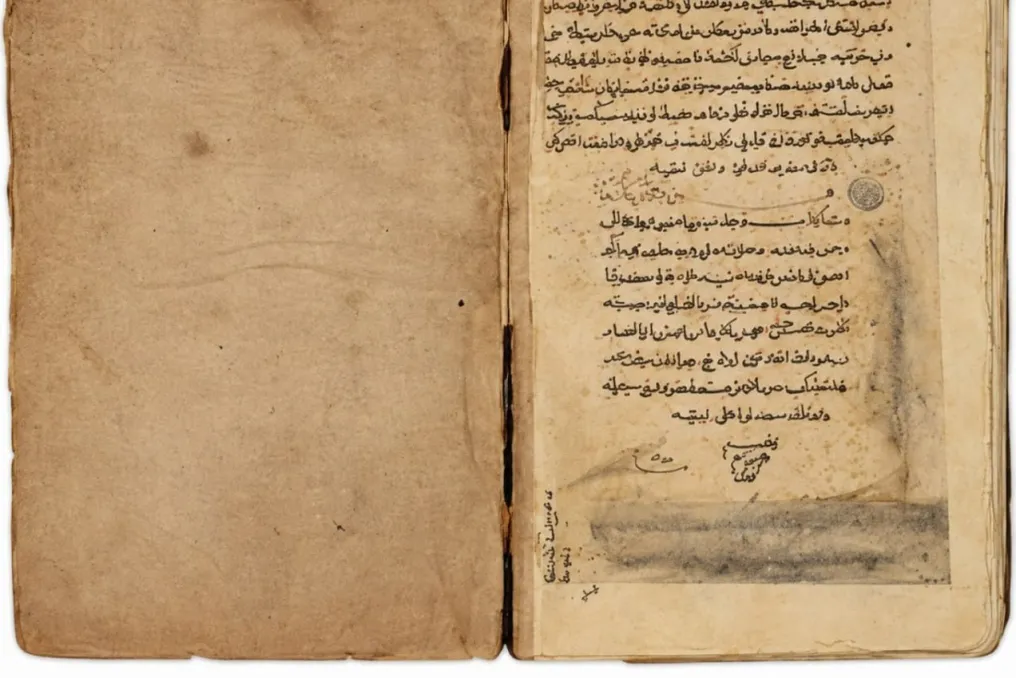
In the Center for Islamic Civilization in Uzbekistan, a manuscript titled 'Tarjuma-i Yamini,' which was copied over seven centuries ago, was presented. This historical document recounts events from the time of the Ghaznavids, including the reign of Sultan Mahmud of Ghazni and his military campaigns in India.
The basis for 'Tarjuma-i Yamini' was an Arabic work called 'Tarikh-i Yamini,' written by Abu Nasr Muhammad ibn Abdullah al-Utbi. He served as the secretary to Sultan Mahmud and personally witnessed many of the events described in the book.
Later, this work was translated into Persian by Nasih ibn Zafar al-Jurbadkani. The translation was carried out between 1206 and 1207, but the translator did not limit himself to a simple transfer of the original. He enriched the text with information about the Seljuks and Atabegs, added poems and his own comments, which caused 'Tarjuma-i Yamini' to evolve into a significant historical and literary monument over time.
The most valuable exhibit is the manuscript copy displayed at the Center. It was copied in Persia during the Ilkhanid rule, and the work was completed on November 30, 1311, corresponding to 11 Rajab 711 AH. The manuscript consists of 154 leaves; the Persian text is written in Naskh script on paper, with 19 to 21 lines on each page. Black and brown inks were used for writing, and the binding is made of brown leather.
The special significance of this copy is due to its age: it was created approximately a hundred years after the appearance of the Persian translation. The initial part of the manuscript bears resemblance to the Khorasan tradition of design based on several characteristic features.
The content covers the period from the reign of Sabukti Beg, the founder of the Ghaznavid dynasty, up to 1021. It contains information about the interaction of the Ghaznavids with the Samanids and Buyids, as well as Mahmud of Ghazni's expeditions to the Indian subcontinent.
Furthermore, last year in Akhsikent, an ancient settlement located on the right bank of the Syr Darya within the current Namangan region, archaeologists discovered an 8th-century manuscript and coins minted during the Abbasid era.