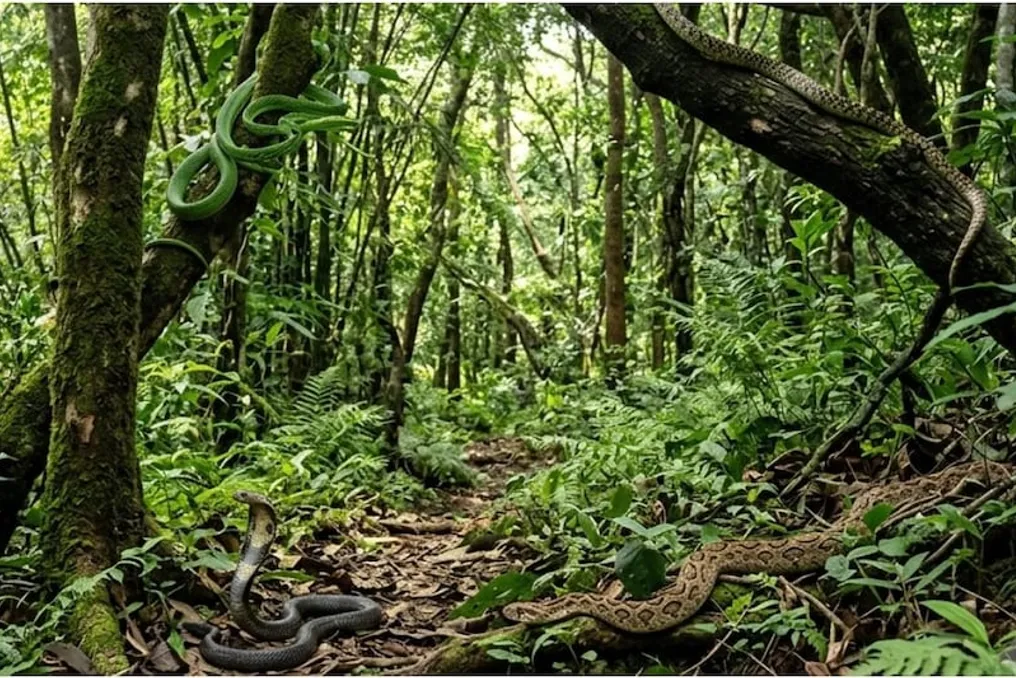
Kimada Grande Island in Brazil: Territory Inhabited by Venomous Snakes with Restricted Access
Read more
Aaj Tak
www.aajtak.in

Kimada Grande Island in Brazil: Territory Inhabited by Venomous Snakes with Restricted Access

When a snake appears in a building or on the street, it causes a commotion. However, there is a place on Earth where every step is accompanied by encounters with venomous snakes. This refers to Kimada Grande, an island near the coast of Brazil, which looks like a picturesque tourist destination with blue water and many trees, but whose actual situation is completely different.

This island, known as Snake Island, is located approximately 35 kilometers from the southern coast of the state of São Paulo in Brazil. There are so many snakes here that ordinary tourists are prohibited from entering. Prior permission from the authorities, as well as thorough preparation and approval, is required for a visit.

A large number of snakes inhabit the island, including a highly dangerous species called Bothrops insularis, which is extremely venomous. It is believed that this island is home to these snakes, and they are found nowhere else in the world. Nevertheless, this population is under threat of extinction. Although it is assumed that there are many snakes there, the exact number is unknown; estimates reach three thousand individuals on a relatively small territory, meaning a snake could appear at any moment.

The island's territory includes forested areas, rocky regions, and marine zones. Besides snakes, other types of animals inhabit the island, and it also serves as an important stopover for migratory birds.

The reason for restricting access is not limited only to the fear of snakes. Kimada Grande is part of a protected federal territory, and protecting the endangered species there is of paramount importance. Therefore, access to the island is strictly controlled, and visits are permitted only to authorized personnel.

Scientific groups and researchers can visit the island after obtaining the appropriate permits to conduct research. Thus, the statement that 'nobody can visit this island' is not entirely accurate. In fact, free entry for ordinary tourists is forbidden, but access is possible under special permits for scientific research activities. Furthermore, the island has dense vegetation.

The history of the island's name is also quite interesting. In the past, local residents and fishermen tried to drive away the snakes by setting fire to the vegetation on the island. Sometimes these fires spread over large areas of the territory. This is why the island received the name Kimada Grande, which roughly translates to 'large burnt place.'
Similar stories

Ranking of the Most Venomous Snakes in the World and Brazil
Read more
super.abril.com.br

Ranking of the Most Venomous Snakes in the World and Brazil

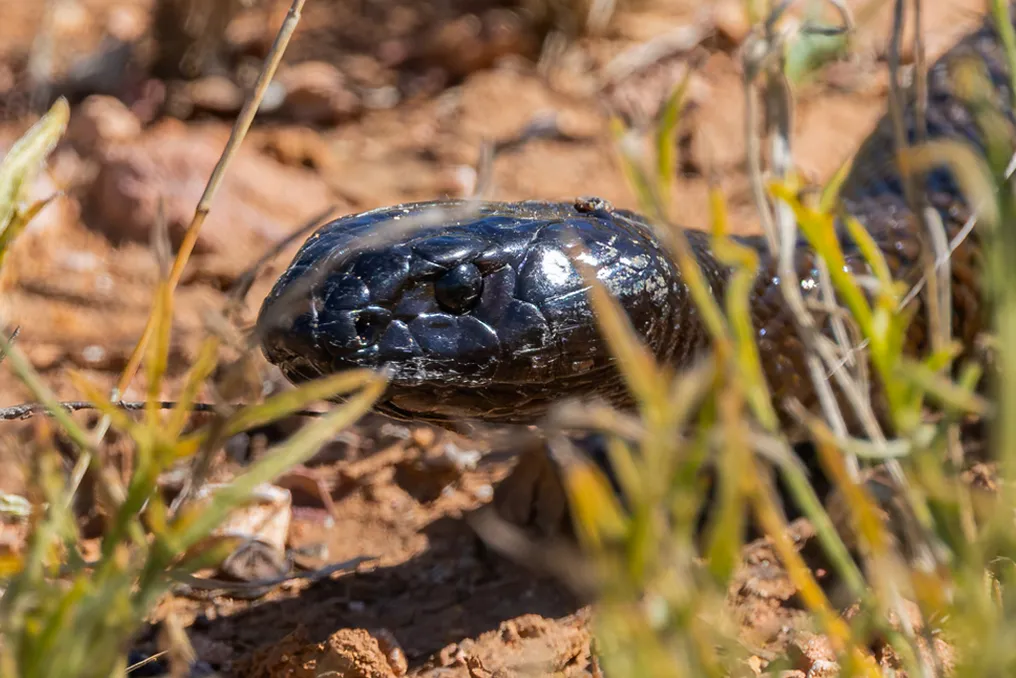
The world title for the most venomous snake belongs to the Inland Taipan (Oxyuranus microlepidotus), a species found exclusively in Australia. Its bite can inject enough venom to kill over one hundred people.

In Brazil, the title of the most venomous snake is held by the True Coral Snake (Micrurus sp.), which is a distant relative of the taipan.

Both snakes belong to the family Elapidae, which includes 240 highly toxic species worldwide, excluding Europe, according to biologist Otavio Marques from the Butantan Institute in São Paulo. It is estimated that annually between one and two million snake incidents occur, whether venomous or not, of which about 50,000 end fatally.

Venomous snakes (the technical term for animals that inject toxins, as in the case of snakes) are classified into three different categories based on the action of their venoms.

The first group, which includes the taipan and the coral snake, possesses venom that acts on the peripheral nervous system, causing respiratory arrest. Vipers, on the other hand, inject substances that provoke blood clotting disorders, hemorrhages, and local necrosis. Finally, sea snakes secrete myotoxin, responsible for muscle fiber destruction and acute kidney failure, according to biologist Fatima Viveiros, also from the Butantan Institute.

Situation in Brazil

Among dangerous snakes in Brazil, the following species stand out:

  • True Coral Snake (Micrurus sp.): Although it is the most venomous snake, it is rarely bitten, accounting for only 1% of all snake incidents in the country.
  • Rattlesnake (Crotalus durissus): Approximately 30% of victims of this snake die if they do not receive antivenom in time.
  • Surucucu Pico-de-Jaca (Lachesis muta): This is the largest venomous snake in Latin America, exceeding three meters in length. Its bite causes severe swelling and bleeding.

Global Situation

Globally, the most dangerous are considered to be:

  • Inland Taipan (Oxyuranus microlepidotus): An Australian snake whose bite can cause respiratory paralysis and death within minutes, and it is considered the most venomous in the world.
  • Brown Snake (Pseudonaja textilis): Another Australian species; a single drop of its potent venom is enough to be fatal to a human.
  • Malay Ground Snake (Bungarus candidus): Found in Southeast Asia and so dangerous that 50% of victims do not survive even after receiving antivenom.

Popular