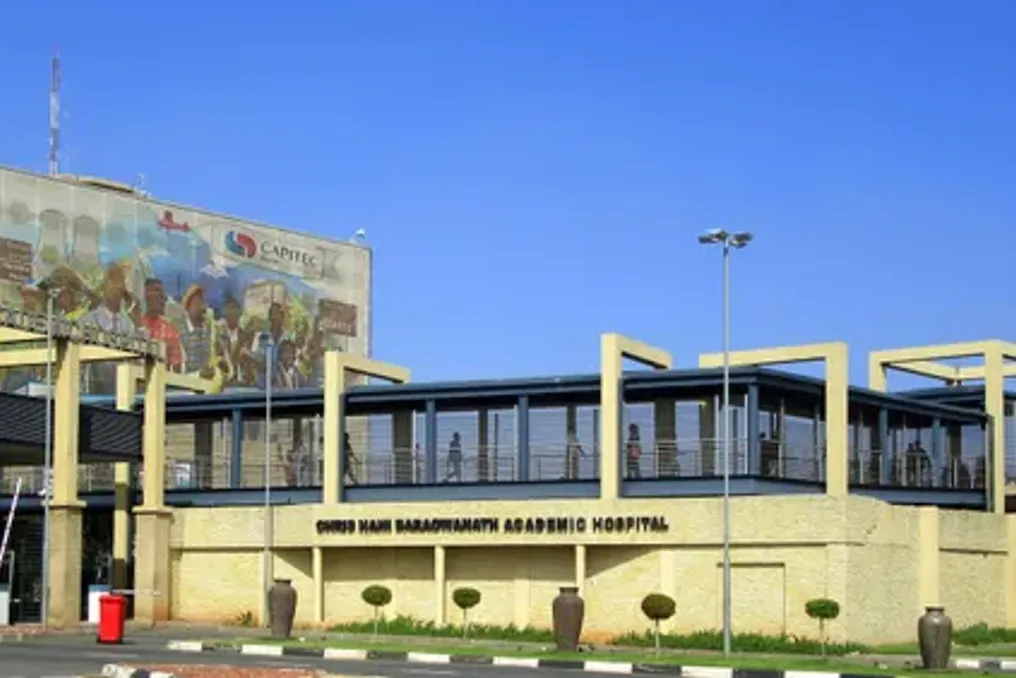
Virtual Gas Network (VGN) demanded over 200 million rand from the Gauteng Department of Infrastructure Development (GDID) as compensation for damages. This amount was intended to cover lost profits, future losses, and unpaid rent for the gas infrastructure installed in several hospitals.
Although the Gauteng High Court in Johannesburg ruled that the department breached the contract terms, Judge Stuart Wilson did not determine the amount of compensation. He referred the damages claim to a trial, meaning the final cost for the province and ultimately for taxpayers remains unknown.
This financial uncertainty is exacerbated by existing fiscal strain in the province. In March, Lebogang Mabile, the Minister of Finance and Economic Development of Gauteng, noted that the province operates in a 'constrained fiscal environment' and is actively seeking alternative funding sources to meet growing public needs amid a weak economic situation.
The dispute history, which began in 2015
The dispute, which could potentially cost Gauteng's economy millions, dates back more than a decade. In September 2015, GDID signed a contract with VGN to install gas infrastructure, known as 'subsidiary stations,' and supply natural gas to four Gauteng hospitals for a period of three years.
Under the original agreement, the department was obligated to pay for a minimum volume of gas regardless of the actual consumption by the hospitals. The annual volume was slightly less than 410,000 gigajoules. However, a problem arose because the four hospitals used significantly less gas than stipulated in the VGN tender and agreed upon for payment by GDID.
In November 2016, the parties signed an addendum that extended the contract and added six more hospitals. The purpose of this expansion was to increase the healthcare system's ability to use gas by installing gas boilers and subsidiary stations in additional medical facilities. To finance this additional infrastructure, VGN secured 39 million rand from the Industrial Development Corporation.
After this, the relationship began to face payment issues.
Payment defaults and legal action
Court documents indicate that GDID 'regularly defaulted' on its payment obligations, leading VGN to obtain arbitration awards to secure payment. These amounts were subsequently paid.
The dispute that eventually reached the High Court arose after GDID notified the termination of the agreement regarding the six hospitals in January 2023, while simultaneously stating that the agreement for the remaining four had either not expired or had not commenced. Nevertheless, this notification allegedly terminated the entire agreement.
VGN objected to this, arguing that the department had no right to do so, as the agreement was supposed to be valid for five years after the completion of the additional infrastructure in the six hospitals. The company viewed the department's decision as a breach of contract and claimed compensation for the rent of the subsidiary stations, lost past and future profits, as well as interest on the IDC loan.
GDID, however, argued that the contract could only be valid for a maximum of five years after the 2016 addendum and therefore expired in November 2021.
The court's ruling on contract interpretation
Judge Wilson rejected this interpretation, deeming it inconsistent with the wording of the agreement and commercially unviable. He concluded that the purpose of the agreement was to remain in effect for five years after the completion and certification of the last necessary infrastructure in the additional hospitals.
Wilson stated: 'It follows that GDID had no right to terminate the contract when it did, and that its termination notice was essentially a repudiation of the agreement.' Furthermore, GDID had attempted to seek a review and cancellation of its decision to enter into the 2016 addendum. It argued, among other things, that this addendum increased VGN's contract value beyond the 15% variation permitted by National Treasury instructions.
Wilson dismissed this challenge, noting that the Treasury instruction is an internal administrative document, not a law that could support the department's attempt to review its own conduct.
The issue of compensation amount
The judge also established that there was no proof that the addendum increased the contract value beyond the 15% limit. Although VGN claimed an amount exceeding 200 million rand, this ruling does not mean that Gauteng is obliged to pay such an amount.
The central issue lies in the clause of the 2016 addendum, which states that the original 'take-or-pay' scheme no longer applies, and instead, GDID will pay for the gas actually delivered monthly. VGN insisted that this change did not cancel GDID's obligation to purchase a minimum annual volume of gas. Wilson found that the significance of this clause could not be resolved based on the submitted documents and required oral testimony.
Therefore, the court ruled that VGN is in principle entitled to compensation for the breach by GDID, but deferred the determination of the amount to a trial. GDID was also ordered to pay VGN legal costs to date.