As artificial intelligence changes both the nature and speed of cyber threats, organizations in the Middle East are forced to rethink their approaches to protecting increasingly complex digital environments. Resilience issues are becoming critically important in cybersecurity discussions, alongside problems such as ransomware, identity-based attacks, and growing challenges in AI governance.
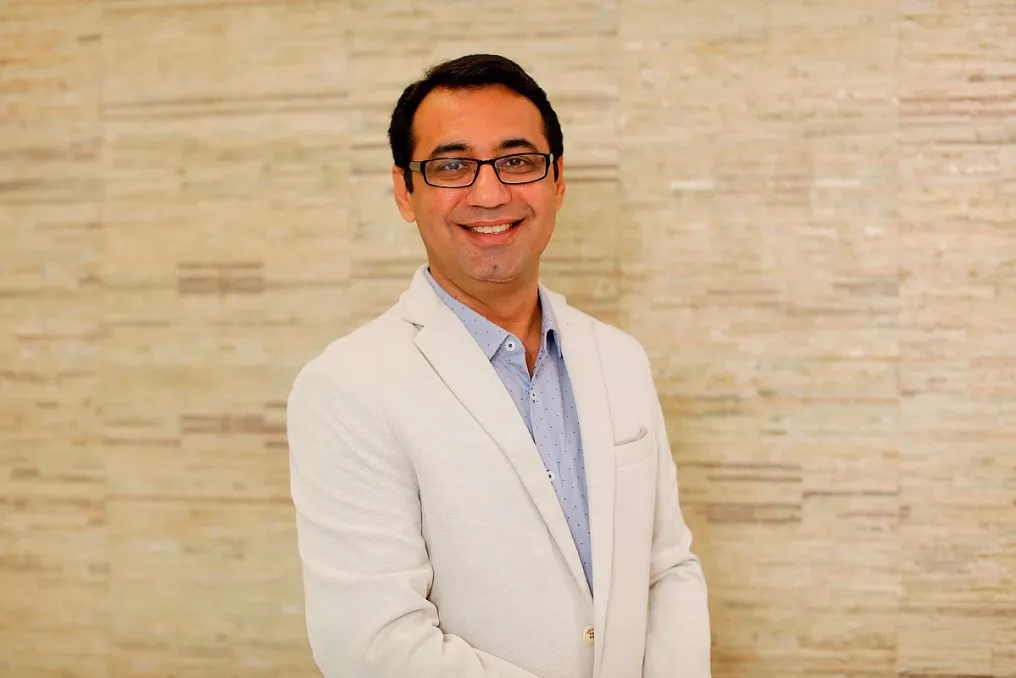
Harris Chib, Vice President of Emerging Markets, Middle East & Africa at Sophos, discusses the trends shaping the region, changing client priorities, and what Sophos will present at the GISEC 2026 event.
At GISEC 2026, Sophos will focus on how organizations can protect themselves in an AI-enhanced threat landscape. In such environments, attacks happen faster, more coordinatedly, and become harder to manage when using disparate tools. The main emphasis will be on Sophos Fusion—the most comprehensive AI-powered cybersecurity system in the industry. This system unifies security operations, endpoint protection, network, identity, email, cloud, managed detection and response, and third-party integrations into a single, coordinated defense architecture.
Sophos will demonstrate how a unified approach helps organizations prevent, detect, investigate, and respond to threats at AI speed while keeping human expertise, accountability, and operational control at the center of cybersecurity.
Sophos Fusion is positioned as the first natively AI-powered cybersecurity system in the industry. Security system fragmentation creates blind spots. When endpoint, network, firewall, identity, email, and cloud tools operate in isolation, threats can move silently across the gaps between them, and security teams spend more time aligning data than responding to risks.
Sophos Fusion solves this problem by bringing these capabilities together within one coordinated architecture. Endpoint protection, network, firewall, identity, email, cloud, MDR, XDR, next-gen SIEM, and consulting services function based on shared telemetry. This allows detection, investigation, and response actions to influence each other rather than existing as separate data points. Furthermore, the platform is designed with openness in mind, supporting integrations with over 500 third-party security and IT technologies. Thus, organizations do not need to replace existing infrastructure; current tools can be incorporated into a broader defense architecture, preserving previous investments while expanding visibility and control.
The platform uses agentic AI, automation, and shared telemetry, augmented by the human expertise of Sophos's analyst teams. These capabilities allow security teams to gain a broader view of their environment, accelerate investigations, coordinate responses more effectively, and reduce the operational complexity inherent in managing disparate systems.
Security leaders are facing a landscape that is vastly different from even a year ago. AI-enhanced attacks are accelerating, and identity has become a central security concern. Organizations now need to protect not only their data but also the AI tools that process it. Simultaneously, security teams are under pressure to consolidate toolsets and achieve more with fewer resources.
The most acute issue is the growing gap between AI adoption and AI governance. This gap is becoming more significant as generative AI and AI agents gain access to sensitive business systems and data. Ransomware remains one of the clearest examples of these risks materializing. According to Sophos's 2026 Ransomware Report, 79 percent of global ransomware attacks started with an identity-based entry point. Malicious email and phishing have now surpassed vulnerability exploitation as the primary cause. In the UAE, ransomware victims reported an average recovery cost of $665,000. This data points to a clear set of priorities: enhanced identity security, phishing-resistant controls, continuous monitoring, well-tested recovery processes, and coordinated detection and response across the entire environment.
There is a clear shift in how organizations view security investments: they are moving away from buying numerous individual tools toward achieving stronger outcomes with less complexity. Most organizations already have solutions for endpoint protection, firewall, email, identity, cloud, and network. However, these tools rarely work together. As attacks become faster and span multiple parts of the environment, this fragmentation becomes a vulnerability: blind spots emerge, investigations slow down, and response coordination becomes complicated.
This is changing the demands of regional clients. There is a growing demand for integrated, open, and AI-driven approaches that enhance visibility, speed, and resilience without requiring a complete replacement of existing investments. Specifically, there is increased interest in managed detection and response, AI-native protection, next-generation SIEM, identity-aware protection, and platforms capable of unifying native and third-party technologies into a single coordinated architecture.
Prevention has its limits. Geopolitical tension, supply chain risk, AI-enhanced attacks, and infrastructure expanding faster than most teams can protect it have made this evident. Therefore, while prevention remains important, it can no longer be the sole criterion for readiness. At some point, an attack will succeed or a system will fail, and then the deciding factor will be the speed at which the organization notices the problem, localizes it, responds, and returns to normal operations.
This changes the very definition of resilience for a CISO. Stopping attacks is only part of the job. Resilience is everything else: does the business keep running when something goes wrong? Can teams see what is happening, coordinate a response, and actually execute a plan that was tested under pressure, rather than just looking good on paper?
In practice, resilience depends on the synergy of several elements: identity protection, non-stop monitoring, backups that work when needed, and incident response plans that have been rehearsed, not just archived. It also means the ability to move simultaneously between endpoint, network, email, cloud, identity, and third-party systems, instead of one team handling one piece while another catches up. This is what drives Sophos toward creating a unified defense system—the idea that risk reduction and faster response depend on how well the pieces work together, especially when the threat landscape does not cooperate.